
Tristana in Spanish, with English translation
Benito Pérez Galdós · 1892 · Opening, ~760 words · level B2–C1
In the Madrid district of Chamberí lives an ageing gentleman, Don Lope, with strict ideas of honour and none about women, and with him the orphaned Tristana, who wants to be free.
Add the whole book to your wishlist Only the opening is ready so far. Free: the books readers ask for most are the next ones we prepare in full. Read the opening in Lexico.The opening, as you read it in Lexico
The first 750 words of the Spanish text. Tap any sentence for its English translation, then any word for its meaning: that is what the app does on every page.
En el populoso barrio de Chamberí, más cerca del Depósito de Aguas que de Cuatro Caminos, vivía, no ha muchos años, un hidalgo de buena estampa y nombre peregrino; no aposentado en casa solariega, pues por allí no las hubo nunca, sino en plebeyo cuarto de alquiler, de los baratitos, con ruidoso vecindario de taberna, merendero, cabrería, y estrecho patio interior de habitaciones numeradas. La primera vez que tuve conocimiento del tal personaje y pude observar su catadura militar de antiguo cuño, algo así como una reminiscencia pictórica de los tercios viejos de Flandes, dijéronme que se llamaba D. Lope de Sosa, nombre que transciende al polvo de los teatros, o a romance de los que traen los librillos de retórica; y en efecto, nombrábanle así algunos amigos maleantes; pero él respondía por D. Lope Garrido. Andando el tiempo, supe que la partida de bautismo rezaba D. Juan López Garrido, resultando que aquel sonoro don Lope era composición del caballero, como un precioso afeite aplicado a embellecer la personalidad; y tan bien caía en su cara enjuta, de líneas firmes y nobles, tan buen acomodo hacía el nombre con la espigada tiesura del cuerpo, con la nariz de caballete, con su despejada frente y sus ojos vivísimos, con el mostacho entrecano y la perilla corta, tiesa y provocativa, que el sujeto no se podía llamar de otra manera. O había que matarle o decirle don Lope.
In the populous district of Chamberí, nearer the Depósito de Aguas than Cuatro Caminos, there lived, not many years ago, a gentleman of good bearing and unusual name; not settled in an ancestral home, for there were never any in those parts, but in a lowly rented room, one of the cheap kind, with the noisy neighborhood of a tavern, a snack bar, a goat dairy, and a narrow inner courtyard of numbered rooms. The first time I became acquainted with that so-called character and could observe his military bearing of an old stamp, something like a pictorial reminiscence of the old tercios of Flanders, I was told he was called Don Lope de Sosa, a name that smacks of theater dust or of the ballads found in rhetoric primers; and indeed some shady friends did call him so, but he went by Don Lope Garrido. In time I learned that the baptismal record read Don Juan López Garrido, and it turned out that this resounding Don Lope was a fabrication of the gentleman, like a fine cosmetic applied to beautify his personality; and it suited his lean face of firm and noble lines so well, and fit the name so well to the slender stiffness of his body, with the aquiline nose, his clear forehead and very lively eyes, with his greying moustache and short, stiff, provocative goatee, that the man could not be called otherwise. Either he had to be killed or be called Don Lope.
La edad del buen hidalgo, según la cuenta que hacía cuando de esto se trataba, era una cifra tan imposible de averiguar como la hora en un reloj descompuesto, cuyas manecillas se obstinaran en no moverse. Se había plantado en los cuarenta y nueve, como si el terror instintivo de los cincuenta le detuviese en aquel temido lindero del medio siglo; pero ni Dios mismo con todo su poder le podía quitar los cincuenta y siete, que no por bien conservados eran menos efectivos. Vestía con toda la pulcritud y esmero que su corta hacienda le permitía, siempre de chistera bien planchada, buena capa en invierno, en todo tiempo guantes oscuros, elegante bastón en verano y trajes más propios de la edad verde que de la madura. Fue D. Lope Garrido, dicho sea para hacer boca, gran estratégico en lides de amor, y se preciaba de haber asaltado más torres de virtud y rendido más plazas de honestidad que pelos tenía en la cabeza. Ya gastado y para poco, no podía desmentir la pícara afición, y siempre que tropezaba con mujeres bonitas, o aunque no fueran bonitas, se ponía en facha, y sin mala intención les dirigía miradas expresivas, que más tenían en verdad de paternales que de maliciosas, como si con ellas dijera: «¡De buena habéis escapado, pobrecitas! Agradeced a Dios el no haber nacido veinte años antes. Precaveos contra los que hoy sean lo que yo fui, aunque, si me apuran, me atreveré a decir que no hay en estos tiempos quien me iguale. Ya no salen jóvenes, ni menos galanes, ni hombres que sepan su obligación al lado de una buena moza.»
The good gentleman's age, by the reckoning he gave whenever this was discussed, was a figure as impossible to ascertain as the time on a broken clock whose hands were stubbornly set against moving. He had stuck at forty-nine, as if the instinctive terror of fifty had made him halt at that dreaded boundary of middle age; but not even God himself with all his power could take away the fifty-seven, which, well preserved as they were, were no less real. He dressed with all the neatness and care his modest means allowed, always in a well-pressed top hat, a good cloak in winter, dark gloves in all seasons, an elegant cane in summer, and suits more fitting for green youth than for maturity. He was Don Lope Garrido, if I may say so, a great strategist in the battles of love, and he boasted of having stormed more towers of virtue and taken more strongholds of chastity than he had hairs on his head. Already worn out and good for little, he could not disown his roguish fondness, and whenever he ran into pretty women, or even plain ones, he would strike a pose and, without ill intent, cast them expressive glances that were more paternal than malicious, as if he were saying to them: "You have had a lucky escape, poor things!" Thank God for not having been born twenty years earlier. Be on guard against those who today may be what I was; although, if pressed, I dare say that in these times there is no one to match me. No longer do young men come out, nor less so gallants, nor men who know their duty beside a fine woman.
Sin ninguna ocupación profesional, el buen D. Lope, que había gozado en mejores tiempos de una regular fortuna, y no poseía ya más que un usufructo en la provincia de Toledo, cobrado a tirones y con mermas lastimosas, se pasaba la vida en ociosas y placenteras tertulias de casino, consagrando también metódicamente algunos ratos a visitas de amigos, a trincas de café, y a otros centros, o más bien rincones, de esparcimiento, que no hay para qué nombrar ahora. Vivía en lugar tan excéntrico por la sola razón de la baratura de las casas, que aun con la gabela del tranvía, salen por muy poco en aquella zona, amén del despejo, de la ventilación y de los horizontes risueños que allí se disfrutan. No era ya Garrido trasnochador: se ponía en planta a punto de las ocho, y en afeitarse y acicalarse, pues cuidaba de su persona con esmero y lentitudes de hombre de mundo, se pasaban dos horitas. A la calle hasta la una, hora infalible del almuerzo frugal. Después de este, calle otra vez, hasta la comida, entre siete y ocho, no menos sobria que el almuerzo, algunos días con escaseces no bien disimuladas por las artes de cocina más elementales. Lo que principalmente debe hacerse constar es que si D. Lope era todo afabilidad y cortesanía fuera de casa, y en las tertulias cafeteriles o casinescas a que concurría, en su domicilio sabía hermanar las palabras atentas y familiares con la autoridad de amo indiscutible.
Without any professional occupation, good Don Lope, who in better times had enjoyed a modest fortune and now owned no more than a life interest in the province of Toledo, collected in fits and starts and with pitiful shortfalls, spent his life in idle and pleasant gatherings at the club, also devoting some moments methodically to visiting friends, to café circles, and to other haunts, or rather corners, of entertainment, which there is no need to name now. He lived in a place so remote, solely for the cheapness of the houses, which even with the tram fare come out very cheap in that district, besides the open air, the ventilation, and the cheerful views one enjoys there. He was no longer a night owl: he got himself up and out at around eight, and between shaving and grooming, since he took care of his person with care and the deliberate slowness of a man of the world, it took him a couple of hours. Out into the street until one, the unfailing hour for his frugal lunch. After this, out again until dinner, between seven and eight, no less sparing than lunch, some days with shortages scarcely concealed by the most basic cooking arts. What must chiefly be noted is that if Don Lope was all affability and courtesy outside the home, and at the cafés and clubs he frequented, at home he knew how to combine courteous and familiar words with the authority of an undisputed master.
Want the rest? Lexico has the opening of Tristana so far. Add the book to your wishlist: the titles readers ask for most are the next ones we prepare in full, with the same sentence-by-sentence translation, every word explained in context, and flashcards from the words you look up.
Add the whole book to your wishlistWords from this passage
20 words from the opening worth knowing for the rest of the book, with the meaning they have here.
| Spanish | English |
|---|---|
| populoso | populous |
| el barrio | district |
| el depósito | tank, reservoir |
| el agua | water |
| el camino | way, route (here: caminos) |
| vivir | to live |
| el año | year |
| el hidalgo | gentleman |
| la estampa | bearing |
| el nombre | name |
| peregrino | unusual |
| aposentado | lodged |
| la casa | house |
| solariego | ancestral |
| plebeyo | lowly |
| el cuarto | room |
| el alquiler | rent |
| barato | cheap |
| ruidoso | loud, noisy |
| el vecindario | neighborhood |
More Spanish books with English translation
El almohadón de plumas
Horacio Quiroga · 1907 · ~1,000 words · level B1 · in English: The Feather Pillow
A young bride wastes away in a cold, silent house, and nobody can find out why. Horacio Quiroga’s best-known horror story, and the shortest book on Lexico.
La gallina degollada
Horacio Quiroga · 1909 · ~4,500 words · level B1–B2 · in English: The Decapitated Chicken
An illness leaves a couple’s four sons severely disabled, and all their hopes move to their healthy daughter. A short, brutal horror story by Quiroga.
Los ojos sombríos
Horacio Quiroga · ~6,000 words · level B2 · in English: The Dark Eyes
At a dance, a man just out of a break-up listens to an old friend’s tangled love story. Quiroga in a romantic, feverish mood.
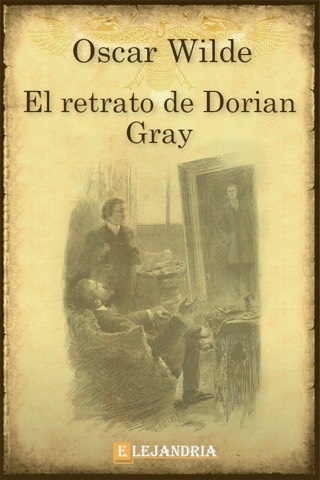
El retrato de Dorian Gray
Oscar Wilde · 1890 · Preface and chapters 1–2, ~10,500 words · level B2 · in English: The Picture of Dorian Gray
A young man stays beautiful while his portrait ages with every sin. Oscar Wilde’s only novel, in an anonymous Spanish translation.