Los ojos sombríos in Spanish, with English translation
Horacio Quiroga · ~6,000 words · level B2 · in English: The Dark Eyes
At a dance, a man just out of a break-up listens to an old friend’s tangled love story. Quiroga in a romantic, feverish mood.
Read the whole book free in Lexico In your browser. Tap any word for its meaning and keep it as a flashcard.The opening, as you read it in Lexico
The first 700 words of the Spanish text. Tap any sentence for its English translation, then any word for its meaning: that is what the app does on every page.
Después de las primeras semanas de romper con Elena, una noche no pude evitar asistir a un baile. Hallábame hacía largo rato sentado y aburrido en exceso, cuando Julio Zapiola, viéndome allí, vino a saludarme. Es un hombre joven, dotado de rara elegancia y virilidad de carácter. Lo había estimado muchos años atrás, y entonces volvía de Europa, después de larga ausencia.
After the first weeks of breaking up with Elena, one night I couldn't avoid attending a dance. I had been sitting for a long time, bored excessively, when Julio Zapiola, seeing me there, came to greet me. He is a young man, endowed with rare elegance and virility of character. I had esteemed him many years ago, and then he was returning from Europe after a long absence.
Así nuestra charla, que en otra ocasión no hubiera pasado de ocho o diez frases, se prolongó esta vez en larga y desahogada sinceridad. Supe que se había casado; su mujer estaba allí mismo esa noche. Por mi parte, lo informé de mi noviazgo con Elena—y su reciente ruptura. Posiblemente me quejé de la amarga situación, pues recuerdo haberle dicho que creía de todo punto imposible cualquier arreglo.
Thus our conversation, which on another occasion would not have passed eight or ten phrases, was prolonged this time in a long and relaxed sincerity. I learned that he had married; his wife was right there that night. As for me, I informed him about my courtship with Elena—and its recent breakup. Possibly I complained about the bitter situation, for I remember having told him I believed any arrangement was totally impossible.
—No crea en esas sacudidas—me dijo Zapiola con aire tranquilo y serio. —Casi nunca se sabe al principio lo que pasará o se hará después. Yo tengo en mi matrimonio una novela infinitamente más complicada que la suya; lo cual no obsta para que yo sea hoy el marido más feliz de la tierra. Oigala, porque a usted podrá serle de gran provecho. Hace cinco años me vi con gran frecuencia con Vezzera, un amigo del colegio a quien había querido mucho antes, y sobre todo él a mí. Cuanto prometía el muchacho se realizó plenamente en el hombre; era como antes inconstante, apasionado, con depresiones y exaltamientos femeniles. Todas sus ansias y suspicacias eran enfermizas, y usted no ignora de qué modo se sufre y se hace sufrir con este modo de ser.
“Don’t believe in those shocks,” Zapiola told me with a calm and serious air. Almost never does one know at the start what will happen or be done later. I have in my marriage a novel infinitely more complicated than yours; which does not prevent me from being today the happiest husband on earth. Listen to it, because it may be of great benefit to you. Five years ago I saw Vezzera, a school friend whom I had loved much before, and especially he loved me. Everything the boy promised was fully realized in the man; he was as before inconstant, passionate, with feminine depressions and exaltations. All his anxieties and suspicions were unhealthy, and you do not know how one suffers and causes suffering with this way of being.
Un día me dijo que estaba enamorado, y que posiblemente se casaría muy pronto. Aunque me habló con loco entusiasmo de la belleza de su novia, esta apreciación suya de la hermosura en cuestión no tenía para mí ningún valor. Vezzera insistió, irritándose con mi orgullo.
One day he told me he was in love, and that he would possibly get married very soon. Although he spoke to me with crazy enthusiasm about the beauty of his girlfriend, this appreciation of hers for the beauty in question had no value for me. Vezzera insisted, getting irritated by my pride.
—No sé qué tiene que ver el orgullo con esto—le observé.
I don’t know what pride has to do with this, I observed to him.
—¡Si es eso! Yo soy enfermizo, excitable, expuesto a continuos mirajes y debo equivocarme siempre. ¡Tú, no! ¡Lo que dices es la ponderación justa de lo que has visto!
That’s exactly it! I am sickly, excitable, prone to continuous illusions and I must always be mistaken. You, no! What you say is the fair assessment of what you have seen!
—Te juro…
I swear to you...
—¡Bah; déjame en paz! —concluyó cada vez más irritado con mi tranquilidad, que era para él otra manifestación de orgullo.
Bah; leave me alone! He concluded increasingly irritated with my calmness, which for him was another sign of pride.
Cada vez que volví a verlo en los días sucesivos, lo hallé más exaltado con su amor. Estaba más delgado, y sus ojos cargados de ojeras brillaban de fiebre.
Each time I saw him again on the following days, I found him more exalted with his love. He was thinner, and his eyes, darkened from sleeplessness, shone with fever.
—¿Quiere hacer una cosa? Vamos esta noche a su casa. Ya le he hablado de ti. Vas a ver si es o no como te he dicho.
Do you want to do something? Let's go to her house tonight. I have already told her about you. You're going to see whether it is or not as I told you.
Fuimos. No sé si usted ha sufrido una impresión semejante; pero cuando ella me extendió la mano y nos miramos, sentí que por ese contacto tibio, la espléndida belleza de aquellos ojos sombríos y de aquel cuerpo mudo, se infiltraba en una caliente onda en todo mi ser.
We went. I don’t know if you have suffered a similar impression; but when she extended her hand to me and we looked at each other, I felt that through that warm contact, the splendid beauty of those shadowy eyes and that mute body infiltrated a warm wave throughout my whole being.
Cuando salimos, Vezzera me dijo:
When we went out, Vezzera said to me:
—¿Y?… ¿es como te he dicho?
—And?… is it as I told you?
—Sí—le respondí.
—Yes—I answered him.
—¿La gente impresionable puede entonces comunicar una impresión conforme a la realidad?
—Can impressionable people then communicate an impression consistent with reality?
—Esta vez, sí—no pude menos de reirme.
—This time, yes—I couldn't help but laugh.
Vezzera me miró de reojo y se calló por largo rato.
Vezzera looked at me sideways and was silent for a long time.
—¡Parece—me dijo de pronto—que no hicieras sino concederme por suma gracia su belleza!
—It seems—he told me suddenly—that you did nothing but grant me their beauty as a supreme grace!
—¿Pero estás loco? —le respondí.
—But are you crazy? I answered him.
Vezzera se encogió de hombros como si yo hubiera esquivado su respuesta. Siguió sin hablarme, visiblemente disgustado, hasta que al fin volvió otra vez a mí sus ojos de fiebre.
Vezzera shrugged his shoulders as if I had dodged his answer. He continued not to speak to me, visibly upset, until finally his feverish eyes turned to me once again.
—De veras, de veras me juras que te parece linda?
—Really, really do you swear to me that she seems pretty to you?
—¡Pero claro, idiota! Me parece lindísima; ¿quieres más?
—Of course, idiot! She seems very beautiful to me; do you want more?
Se calmó entonces, y con la reacción inevitable de sus nervios femeninos, pasó conmigo una hora de loco entusiasmo, abrasándose al recuerdo de su novia.
He calmed down then, and with the inevitable reaction of his feminine nerves, he spent an hour of mad enthusiasm with me, burning himself with the memory of his girlfriend.
Fuí varias veces más con Vezzera. Una noche, a una nueva invitación, respondí que no me hallaba bien y que lo dejaríamos para otro momento. Diez días más tarde respondí lo mismo, y de igual modo en la siguiente semana. Esta vez Vezzera me miró fijamente a los ojos:
I went several more times with Vezzera. One night, at a new invitation, I replied that I wasn’t feeling well and that we would leave it for another time. Ten days later I responded the same, and likewise the following week. This time Vezzera looked me straight in the eyes:
—¿Por qué no quieres ir?
—Why don’t you want to go?
—No es que no quiera ir, sino que me hallo hoy con poco humor para esas cosas.
—It’s not that I don’t want to go, but that I’m in a bad mood today for those things.
—¡No es eso! ¡Es que no quieres ir más!
—It’s not that! It’s that you don’t want to go anymore!
—¿Yo?
—Me?
—Sí; y te exijo como a un amigo, o como a ti, que me digas justamente esto: ¿Por qué no quieres ir más?
—Yes; and I demand of you like a friend, or like yourself, that you tell me exactly this: Why don’t you want to go anymore?
Keep reading. The rest of Los ojos sombríos is free in Lexico, with the same sentence-by-sentence translation, every word explained in context, and flashcards from the words you look up.
Continue in LexicoWords from this passage
20 words from the opening worth knowing for the rest of the book, with the meaning they have here.
| Spanish | English |
|---|---|
| primero | first, first up |
| la semana | week |
| evitar | to avoid, to bypass |
| asistir | to attend |
| hallar | to find something, deliberately or not |
| largo | long |
| sentado | seated |
| venir | to come |
| saludar | to greet |
| joven | young, youthful |
| el carácter | character |
| mucho | many |
| la ausencia | absence |
| otro | another |
| la frase | phrase |
| prolongar | to prolong, drag out |
| casar | to get married, marry |
| la parte | part, side |
| la situación | situation, scenario |
| recordar | to remember |
More Spanish books with English translation
El almohadón de plumas
Horacio Quiroga · 1907 · ~1,000 words · level B1 · in English: The Feather Pillow
A young bride wastes away in a cold, silent house, and nobody can find out why. Horacio Quiroga’s best-known horror story, and the shortest book on Lexico.
La gallina degollada
Horacio Quiroga · 1909 · ~4,500 words · level B1–B2 · in English: The Decapitated Chicken
An illness leaves a couple’s four sons severely disabled, and all their hopes move to their healthy daughter. A short, brutal horror story by Quiroga.
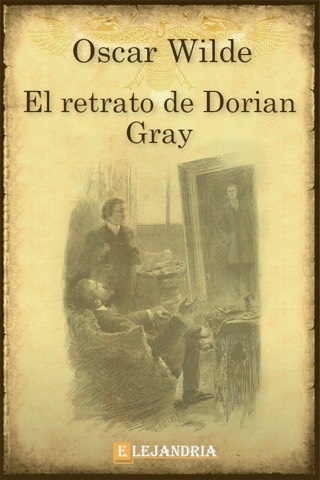
El retrato de Dorian Gray
Oscar Wilde · 1890 · Preface and chapters 1–2, ~10,500 words · level B2 · in English: The Picture of Dorian Gray
A young man stays beautiful while his portrait ages with every sin. Oscar Wilde’s only novel, in an anonymous Spanish translation.