Niebla in Spanish, with English translation
Miguel de Unamuno · 1914 · Opening, ~713 words · level B2 · in English: Mist
Augusto Pérez steps out of his house, holds out his hand to see if it is raining, and follows the first pretty woman who passes. Unamuno’s “nivola”, in which a character ends up arguing with his author.
Add the whole book to your wishlist Only the opening is ready so far. Free: the books readers ask for most are the next ones we prepare in full. Read the opening in Lexico.The opening, as you read it in Lexico
The first 700 words of the Spanish text. Tap any sentence for its English translation, then any word for its meaning: that is what the app does on every page.
Al aparecer Augusto a la puerta de su casa extendió el brazo derecho, con la mano palma abajo y abierta, y dirigiendo los ojos al cielo quedóse un momento parado en esta actitud estatuaria y augusta. No era que tomaba posesión del mundo exterior, sino era que observaba si llovía. Y al recibir en el dorso de la mano el frescor del lento orvallo frunció el sobrecejo. Y no era tampoco que le molestase la llovizna, sino el tener que abrir el paraguas. ¡Estaba tan elegante, tan esbelto, plegado y dentro de su funda! Un paraguas cerrado es tan elegante como es feo un paraguas abierto.
Upon appearing at his front door, Augusto extended his right arm, palm down and open, and, lifting his eyes to the sky, he stood motionless for a moment in this statuesque and majestic pose. It was not that he was taking possession of the outside world; rather, he was checking whether it was raining. And on feeling the cool touch of the slow drizzle on the back of his hand, he frowned. And it was not that the drizzle bothered him either, but rather having to open the umbrella. It looked so elegant, so slender, folded and inside its case! A closed umbrella is as elegant as an open umbrella is ugly.
«Es una desgracia esto de tener que servirse uno de las cosas—pensó Augusto—; tener que usarlas. El uso estropea y hasta destruye toda belleza. La función más noble de los objetos es la de ser contemplados. ¡Qué bella es una naranja antes de comida! Esto cambiará en el cielo, cuando todo nuestro oficio se reduzca, o más bien se ensanche a contemplar a Dios y todas las cosas en Él. Aquí, en esta pobre vida, no nos cuidamos sino de servirnos de Dios; pretendemos abrirlo, como a un paraguas, para que nos proteja de toda suerte de males.»
"It is a misfortune, this having to make use of things," thought Augusto; having to use them. Use spoils and even destroys all beauty. The noblest function of objects is to be contemplated. How beautiful an orange is before it is eaten! This will change in heaven, when all our work is reduced, or rather expanded to contemplate God and all things in Him. Here, in this poor life, we only concern ourselves with making use of God; we intend to open Him, as one would an umbrella, so that He may protect us from all sorts of ills.
Díjose así y se agachó a recojerse los pantalones. Abrió el paraguas por fin y se quedó un momento suspenso y pensando: «y ahora, ¿hacia dónde voy? ¿tiro a la derecha o a la izquierda?» Porque Augusto no era un caminante, sino un paseante de la vida. «Esperaré a que pase un perro—se dijo—y tomaré la dirección inicial que él tome.»
He said so and bent down to roll up his trousers. He finally opened his umbrella and stood for a moment, puzzled and thinking: "And now, where am I going? Should I turn right or left?" For Augusto was not a walker, but a stroller through life. "I will wait until a dog passes," he said to himself, "and I will take the initial direction he takes."
En esto pasó por la calle no un perro, sino una garrida moza, y tras de sus ojos se fué, como imantado y sin darse de ello cuenta, Augusto.
At that moment there passed along the street not a dog but a graceful young woman, and Augusto went off behind her eyes, as if magnetized and without realizing it.
Y así una calle y otra y otra.
And so, one street after another, and another.
«Pero aquel chiquillo—iba diciéndose Augusto, que más bien que pensaba hablaba consigo mismo—, ¿qué hará allí, tirado de bruces en el suelo? ¡Contemplar a alguna hormiga, de seguro! ¡La hormiga, ¡bah!, uno de los animales más hipócritas! Apenas hace sino pasearse y hacernos creer que trabaja. Es como ese gandul que va ahí, a paso de carga, codeando a todos aquellos con quienes se cruza, y no me cabe duda de que no tiene nada que hacer. ¡Qué ha de tener que hacer, hombre, qué ha de tener que hacer! Es un vago, un vago como... ¡No, yo no soy un vago! Mi imaginación no descansa. Los vagos son ellos, los que dicen que trabajan y no hacen sino aturdirse y ahogar el pensamiento. Porque, vamos a ver, ese mamarracho de chocolatero que se pone ahí, detrás de esa vidriera, a darle al rollo majadero, para que le veamos, ese exhibicionista del trabajo, ¿qué es sino un vago? Y a nosotros ¿qué nos importa que trabaje o no? ¡El trabajo! ¡El trabajo! ¡Hipocresía! Para trabajo el de ese pobre paralítico que va ahí medio arrastrándose. Pero ¿y qué sé yo? ¡Perdone, hermano! —esto se lo dijo en voz alta. —¿Hermano? ¿Hermano en qué? ¡En parálisis! Dicen que todos somos hijos de Adán. Y éste, Joaquinito, ¿es también hijo de Adán? ¡Adiós, Joaquín! ¡Vaya, ya tenemos el inevitable automóvil, ruido y polvo! ¿Y qué se adelanta con suprimir así distancias? La manía de viajar viene de topofobía y no de filotopía; el que viaja mucho va huyendo de cada lugar que deja y no buscando cada lugar a que llega. Viajar. viajar. Qué chisme más molesto es el paraguas. Calla, ¿qué es esto?
"But that kid," Augusto kept saying to himself, or rather talking to himself, "what will he be doing there, sprawled face down on the ground? Contemplating some ant, surely! The ant, bah! One of the most hypocritical animals!" He hardly does anything but stroll about and make us believe he works. He is like that loafer who walks over there at a brisk pace, elbowing everyone he passes, and I have no doubt that he has nothing to do. What can he possibly have to do, man, what can he possibly have to do! He is a loafer, a loafer like... No, I am not a loafer! My imagination does not rest. The loafers are those who say they work and do nothing but daze themselves and stifle thought. Because, let's see, that ridiculous chocolate vendor who stands there behind that shop window, going on with his tedious spiel so that we can see him, that show-off of work, what else is he but a loafer? And what do we care whether he works or not? The work! The work! Hypocrisy! As for work, that of that poor paralytic who goes along there half dragging himself. But what do I know? Excuse me, brother! He said this to him out loud. Brother? Brother in what sense? In paralysis! They say we are all children of Adam. And is this one, Joaquinito, also a son of Adam? Goodbye, Joaquín! Well, now we have the inevitable automobile, noise and dust! What is gained by eliminating distances in this way? The mania for travelling comes from topophobia, not from philotopy; he who travels much is fleeing from every place he leaves, not seeking each place he arrives at. To travel. To travel. What an annoying thing the umbrella is! Hush, what is this?
Y se detuvo a la puerta de una casa donde había entrado la garrida moza que le llevara imantado tras de sus ojos. Y entonces se dio cuenta Augusto de que la había venido siguiendo. La portera de la casa le miraba con ojillos maliciosos, y aquella mirada le sugirió a Augusto lo que entonces debía hacer. «Esta Cerbera aguarda—se dijo—que le pregunte por el nombre y circunstancias de esta señorita a que he venido siguiendo, y, ciertamente, esto es lo que procede ahora. Otra cosa sería dejar mi seguimiento sin coronación, y eso no, las obras deben acabarse. ¡Odio lo imperfecto!» Metió la mano al bolsillo y no encontró en él sino un duro. No era cosa de ir entonces a cambiarlo; se perdería tiempo y ocasión en ello.
And he stopped at the door of a house which the graceful young woman had entered, the one who had drawn him along, magnetized, behind her eyes. And then Augusto realized that he had been following her. The concierge of the house was looking at him with mischievous little eyes, and that look suggested to Augusto what he should do then. "This Cerbera is waiting," he told himself, "for him to ask her the name and circumstances of this young lady I have been following, and, certainly, this is what is proper now." Another thing would be to abandon my pursuit without a conclusion, and that, no, the works must be finished. I hate the unfinished! He put his hand into his pocket and found in it nothing but a duro coin. It was no time to go and change it then; time and opportunity would be lost on it.
Want the rest? Lexico has the opening of Niebla so far. Add the book to your wishlist: the titles readers ask for most are the next ones we prepare in full, with the same sentence-by-sentence translation, every word explained in context, and flashcards from the words you look up.
Add the whole book to your wishlistWords from this passage
20 words from the opening worth knowing for the rest of the book, with the meaning they have here.
| Spanish | English |
|---|---|
| aparecer | to appear, to turn up |
| la puerta | door |
| la casa | house |
| extender | to extend, to expand |
| el brazo | arm |
| derecho | right, right-hand |
| la mano | hand |
| la palma | palm of the hand |
| abierto | open |
| dirigir | to direct |
| el ojo | eye |
| el cielo | sky, heaven |
| quedar | to be, to end up |
| el momento | moment, instant |
| parado | standing |
| la actitud | posture, pose |
| estatuario | statuesque |
| augusto | majestic |
| tomar | to take |
| la posesión | possession |
More Spanish books with English translation
El almohadón de plumas
Horacio Quiroga · 1907 · ~1,000 words · level B1 · in English: The Feather Pillow
A young bride wastes away in a cold, silent house, and nobody can find out why. Horacio Quiroga’s best-known horror story, and the shortest book on Lexico.
La gallina degollada
Horacio Quiroga · 1909 · ~4,500 words · level B1–B2 · in English: The Decapitated Chicken
An illness leaves a couple’s four sons severely disabled, and all their hopes move to their healthy daughter. A short, brutal horror story by Quiroga.
Los ojos sombríos
Horacio Quiroga · ~6,000 words · level B2 · in English: The Dark Eyes
At a dance, a man just out of a break-up listens to an old friend’s tangled love story. Quiroga in a romantic, feverish mood.
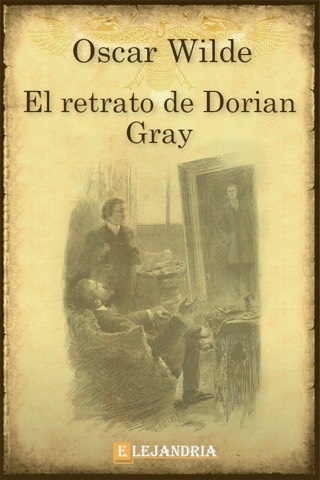
El retrato de Dorian Gray
Oscar Wilde · 1890 · Preface and chapters 1–2, ~10,500 words · level B2 · in English: The Picture of Dorian Gray
A young man stays beautiful while his portrait ages with every sin. Oscar Wilde’s only novel, in an anonymous Spanish translation.