Misericordia in Spanish, with English translation
Benito Pérez Galdós · 1897 · Opening, ~730 words · level C1
The church of San Sebastián in Madrid has two faces, and at one of its doors the beggars take up their posts each morning. Among them is Benina, who begs in secret to feed her ruined mistress.
Add the whole book to your wishlist Only the opening is ready so far. Free: the books readers ask for most are the next ones we prepare in full. Read the opening in Lexico.The opening, as you read it in Lexico
The first 750 words of the Spanish text. Tap any sentence for its English translation, then any word for its meaning: that is what the app does on every page.
Dos caras, como algunas personas, tiene la parroquia de San Sebastián... mejor será decir la iglesia... dos caras que seguramente son más graciosas que bonitas: con la una mira a los barrios bajos, enfilándolos por la calle de Cañizares; con la otra al señorío mercantil de la Plaza del Ángel. Habréis notado en ambos rostros una fealdad risueña, del más puro Madrid, en quien el carácter arquitectónico y el moral se aúnan maravillosamente. En la cara del Sur campea, sobre una puerta chabacana, la imagen barroca del santo mártir, retorcida, en actitud más bien danzante que religiosa; en la del Norte, desnuda de ornatos, pobre y vulgar, se alza la torre, de la cual podría creerse que se pone en jarras, soltándole cuatro frescas a la Plaza del Ángel. Por una y otra banda, las caras o fachadas tienen anchuras, quiere decirse, patios cercados de verjas mohosas, y en ellos tiestos con lindos arbustos, y un mercadillo de flores que recrea la vista. En ninguna parte como aquí advertiréis el encanto, la simpatía, el ángel, dicho sea en andaluz, que despiden de sí, como tenue fragancia, las cosas vulgares, o algunas de las infinitas cosas vulgares que hay en el mundo. Feo y pedestre como un pliego de aleluyas o como los romances de ciego, el edificio bifronte, con su torre barbiana, el cupulín de la capilla de la Novena, los irregulares techos y cortados muros, con su afeite barato de ocre, sus patios floridos, sus hierros mohosos en la calle y en el alto campanario, ofrece un conjunto gracioso, picante, majo, por decirlo de una vez. Es un rinconcito de Madrid que debemos conservar cariñosamente, como anticuarios coleccionistas, porque la caricatura monumental también es un arte. Admiremos en este San Sebastián, heredado de los tiempos viejos, la estampa ridícula y tosca, y guardémoslo como un lindo mamarracho.
The parish of San Sebastián, like some people, has two faces... or rather, let us say the church... two faces that are surely funnier than pretty: with one it looks down on the low neighborhoods, lining them up along Cañizares street; with the other it faces the merchant gentry of the Plaza del Ángel. You will have noticed in both faces a cheerful ugliness, pure Madrid, in whom the architectural and the moral character come together marvelously. On the south face a baroque image of the holy martyr sprawls over a vulgar door, twisted, in an attitude more dancing than religious; on the north face, bare of ornament, poor and plain, the tower rises, of which one could believe it stands with its hands on its hips, letting loose four cheeky remarks at the Plaza del Ángel. On both sides the faces or façades have widths, that is to say, courtyards enclosed by rusty iron railings, and in them flowerpots with pretty shrubs, and a little flower market that delights the eye. Nowhere else like here will you notice the charm, the warmth, the grace, so to speak in Andalusian, that the ordinary things give off from themselves like a faint fragrance, or some of the countless ordinary things there are in the world. Ugly and pedestrian like a broadsheet of aleluyas or like the ballads of the blind, the two-faced building, with its swaggering tower, the little dome of the chapel of the Novena, the irregular roofs and broken walls, with its cheap ochre makeup, its flowered courtyards, its rusty ironwork in the street and on the high belfry, offers a charming, spicy, cheeky ensemble, to put it in one word. It is a little corner of Madrid that we must lovingly preserve, like antiquarian collectors, because monumental caricature is also an art. Let us admire in this San Sebastián, inherited from the old times, its ridiculous and crude appearance, and let us keep it like a pretty monstrosity.
Con tener honores de puerta principal, la del Sur es la menos favorecida de fieles en días ordinarios, mañana y tarde. Casi todo el señorío entra por la del Norte, que más parece puerta excusada o familiar. Y no necesitaremos hacer estadística de los feligreses que acuden al sagrado culto por una parte y otra, porque tenemos un contador infalible: los pobres. Mucho más numerosa y formidable que por el Sur es por el Norte la cuadrilla de miseria, que acecha el paso de la caridad, al modo de guardia de alcabaleros que cobra humanamente el portazgo en la frontera de lo divino, o la contribución impuesta a las conciencias impuras que van a donde lavan.
Despite having the honors of a main door, the southern one is the least favored by the faithful on ordinary days, morning and afternoon. Almost all the gentry enters through the northern one, which looks more like a side or private door. And we will not need to make statistics of the parishioners who attend the sacred worship from one side and the other, because we have an infallible counter: the poor. Much more numerous and formidable than on the south side is the band of misery on the north side, which lies in wait for the passage of charity, in the manner of a guard of tax collectors who humanely collects the toll at the frontier of the divine, or the contribution imposed on the impure consciences who go where they launder.
Los que hacen la guardia por el Norte ocupan distintos puestos en el patinillo y en las dos entradas de este por las calles de las Huertas y San Sebastián, y es tan estratégica su colocación, que no puede escaparse ningún feligrés como no entre en la iglesia por el tejado. En rigurosos días de invierno, la lluvia o el frío glacial no permiten a los intrépidos soldados de la miseria destacarse al aire libre (aunque los hay constituidos milagrosamente para aguantar a pie firme las inclemencias de la atmósfera), y se repliegan con buen orden al túnel o pasadizo que sirve de ingreso al templo parroquial, formando en dos alas a derecha e izquierda. Bien se comprende que con esta formidable ocupación del terreno y táctica exquisita, no se escapa un cristiano, y forzar el túnel no es menos difícil y glorioso que el memorable paso de las Termópilas. Entre ala derecha y ala izquierda, no baja de docena y media el aguerrido contingente, que componen ancianos audaces, indómitas viejas, ciegos machacones, reforzados por niños de una acometividad irresistible (entiéndase que se aplican estos términos al arte de la postulación), y allí se están desde que Dios amanece hasta la hora de comer, pues también aquel ejército se raciona metódicamente, para volver con nuevos bríos a la campaña de la tarde. Al caer de la noche, si no hay Novena con sermón, Santo Rosario con meditación y plática, o Adoración Nocturna, se retira el ejército, marchándose cada combatiente a su olivo con tardo paso. Ya le seguiremos en su interesante regreso al escondrijo donde mal vive. Por de pronto, observémosle en su rudo luchar por la pícara existencia, y en el terrible campo de batalla, en el cual no hemos de encontrar charcos de sangre ni militares despojos, sino pulgas y otras feroces alimañas.
Those who keep guard on the north side occupy various posts in the little courtyard and in its two entrances, through the streets of Huertas and San Sebastián, and their placement is so strategic that no parishioner can escape unless he enters the church through the roof. On harsh winter days, rain or intense cold does not allow the fearless soldiers of misery to stand out in the open air (although some are miraculously built to withstand the inclemency of the atmosphere, firm as a rock), and they fall back in good order to the tunnel or passage that leads into the parish church, forming two wings to the right and left. It is clearly understood that with this formidable occupation of the ground and exquisite tactics, not a Christian escapes, and forcing the tunnel is no less difficult and glorious than the memorable pass of Thermopylae. Between the right wing and the left wing, the spirited force numbers no less than a dozen and a half, made up of bold elders, indomitable old women, persistent blind men, reinforced by children of irresistible zeal (let it be understood that these terms apply to the art of begging), and there they stay from dawn until mealtime, since that army also rations itself methodically, so as to return with new vigor to the afternoon campaign. At nightfall, if there is no Novena with sermon, Holy Rosary with meditation and talk, or Nocturnal Adoration, the army withdraws, each combatant leaving for his olive tree at a slow pace. We will follow him later on his interesting return to the hideout where he lives poorly. For now, let us observe him in his rough struggle for the rogue's existence, and on the terrible battlefield in which we are not to find pools of blood or military spoils, but fleas and other fierce vermin.
Want the rest? Lexico has the opening of Misericordia so far. Add the book to your wishlist: the titles readers ask for most are the next ones we prepare in full, with the same sentence-by-sentence translation, every word explained in context, and flashcards from the words you look up.
Add the whole book to your wishlistWords from this passage
20 words from the opening worth knowing for the rest of the book, with the meaning they have here.
| Spanish | English |
|---|---|
| la persona | person (here: people) |
| la parroquia | parish |
| la iglesia | church |
| gracioso | funny, amusing |
| bonito | pretty, cute |
| mirar | to look at |
| el barrio | neighbourhood (here: neighborhoods) |
| bajo | low, ground |
| enfilar | to line up |
| el señorío | gentry |
| mercantil | merchant |
| la plaza | plaza, town square |
| notar | to show, to be noticed |
| el rostro | face |
| la fealdad | ugliness |
| risueño | cheerful |
| puro | pure, clear |
| el carácter | character |
| arquitectónico | architectural, architectonic |
| la moral | morals, standard |
More Spanish books with English translation
El almohadón de plumas
Horacio Quiroga · 1907 · ~1,000 words · level B1 · in English: The Feather Pillow
A young bride wastes away in a cold, silent house, and nobody can find out why. Horacio Quiroga’s best-known horror story, and the shortest book on Lexico.
La gallina degollada
Horacio Quiroga · 1909 · ~4,500 words · level B1–B2 · in English: The Decapitated Chicken
An illness leaves a couple’s four sons severely disabled, and all their hopes move to their healthy daughter. A short, brutal horror story by Quiroga.
Los ojos sombríos
Horacio Quiroga · ~6,000 words · level B2 · in English: The Dark Eyes
At a dance, a man just out of a break-up listens to an old friend’s tangled love story. Quiroga in a romantic, feverish mood.
El retrato de Dorian Gray
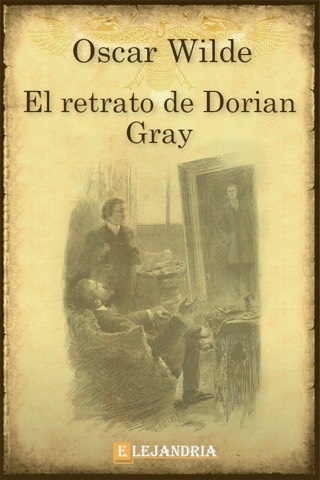
Oscar Wilde · 1890 · Preface and chapters 1–2, ~10,500 words · level B2 · in English: The Picture of Dorian Gray
A young man stays beautiful while his portrait ages with every sin. Oscar Wilde’s only novel, in an anonymous Spanish translation.