Miau in Spanish, with English translation
Benito Pérez Galdós · 1888 · Opening, ~824 words · level B2–C1
At four in the afternoon the boys pour out of a Madrid school, and one of them is teased with the nickname his family carries: Miau. His grandfather is a civil servant dismissed two months short of his pension.
Add the whole book to your wishlist Only the opening is ready so far. Free: the books readers ask for most are the next ones we prepare in full. Read the opening in Lexico.The opening, as you read it in Lexico
The first 800 words of the Spanish text. Tap any sentence for its English translation, then any word for its meaning: that is what the app does on every page.
Á las cuatro de la tarde, la chiquillería de la escuela pública de la plazuela del Limón salió atropelladamente de clase, con algazara de mil demonios. Ningún himno á la libertad, entre los muchos que se han compuesto en las diferentes naciones, es tan hermoso como el que entonan los oprimidos de la enseñanza elemental al soltar el grillete de la disciplina escolar y echarse á la calle piando y saltando. La furia insana con que se lanzan á los más arriesgados ejercicios de volatinería, los estropicios que suelen causar á algún pacífico transeunte, el delirio de la autonomía individual que á veces acaba en porrazos, lágrimas y cardenales, parecen bosquejo de los triunfos revolucionarios que en edad menos dichosa han de celebrar los hombres... Salieron, como digo, en tropel; el último quería ser el primero, y los pequeños chillaban más que los grandes. Entre ellos había uno de menguada estatura, que se apartó de la bandada para emprender solo y calladito camino de su casa. Y apenas notado por sus compañeros aquel apartamiento que más bien parecía huida, fueron tras él y le acosaron con burlas y cuchufletas, no del mejor gusto. Uno lo cogía del brazo, otro le refregaba la cara con sus manos inocentes, que eran un dechado completo de cuantas porquerías hay en el mundo; pero él logró desasirse y... pies, para qué os quiero. Entonces dos ó tres de los más desvergonzados le tiraron piedras, gritando Miau; y toda la partida repitió con infernal zipizape: Miau, Miau.
At four in the afternoon, the schoolchildren of the public school on the Plazuela del Limón rushed out of class with a devilish racket. No anthem to liberty, among the many composed in the various nations, is as beautiful as the one sung by the oppressed of elementary schooling when they shed the shackle of school discipline and rush out into the street chirping and jumping. The insane fury with which they hurl themselves at the most daring acrobatics, the damage they usually cause to some peaceful passerby, the delirium of individual freedom that sometimes ends in blows, tears and bruises, seem to foreshadow the revolutionary triumphs that men are to celebrate in a less fortunate age... They went out, as I say, in a crowd; the last one wanted to be first, and the little ones shouted louder than the big ones. Among them there was one of small stature who broke away from the flock to set off alone and quietly toward his home. And hardly had his companions noticed that departure, which looked more like a flight, than they went after him and harassed him with mockery and jeers, not in the best taste. One grabbed him by the arm, another rubbed his face with his innocent hands, which were a perfect model of every filth there is in the world; but he managed to break free and run for it: feet, what do I need you for! Then two or three of the most shameless ones threw stones at him, shouting "Miau"; and the whole gang repeated, in an infernal uproar: "Miau, Miau."
El pobre chico de este modo burlado se llamaba Luisito Cadalso, y era bastante mezquino de talla, corto de alientos, descolorido, como de ocho años, quizás de diez, tan tímido que esquivaba la amistad de sus compañeros, temeroso de las bromas de algunos, y sintiéndose sin bríos para devolverlas. Siempre fué el menos arrojado en las travesuras, el más soso y torpe en los juegos, y el más formalito en clase, aunque uno de los menos aventajados, quizás porque su propio encogimiento le impidiera decir bien lo que sabía ó disimular lo que ignoraba. Al doblar la esquina de las Comendadoras de Santiago para ir á su casa, que estaba en la calle de Quiñones, frente á la Cárcel de Mujeres, uniósele uno de sus condiscípulos, muy cargado de libros, la pizarra á la espalda, el pantalón hecho una pura rodillera, el calzado con tragaluces, boina azul en la pelona, y el hocico muy parecido al de un ratón. Llamaban al tal Silvestre Murillo, y era el chico más aplicado de la escuela y el amigo mejor que Cadalso tenía en ella. Su padre, sacristán de la iglesia de Monserrat, le destinaba á seguir la carrera de Derecho, porque se le había metido en la cabeza que el mocoso aquél llegaría á ser personaje, quizás orador célebre, ¿por qué no ministro? La futura celebridad habló así á su compañero:
The poor boy, mocked in this way, was called Luisito Cadalso, and he was rather small of stature, short of breath, pale, about eight years old, maybe ten, so shy that he avoided his companions' friendship, fearful of the teasing of some, and feeling unable to answer back. He was always the least daring at pranks, the dullest and clumsiest at games, and the most well-behaved in class, although one of the least advanced, perhaps because his own shyness kept him from saying well what he knew or hiding what he did not know. Upon turning the corner of the Comendadoras de Santiago on his way home, which was on Quiñones street, opposite the Women's Prison, one of his classmates joined him, heavily laden with books, slate on his back, trousers reduced to a mass of knee patches, shoes full of holes, a blue beret on his bare head, and a snout very much like a mouse's. They called the boy Silvestre Murillo, and he was the most diligent boy at school and the best friend Cadalso had there. His father, sexton of the Monserrat church, meant him to study law, because the idea had got into his head that the brat would become someone important, perhaps a famous orator; why not a minister? The future celebrity spoke thus to his companion:
—Mia tú, Caarso, si á mí me dieran esas chanzas, de la galleta que les pegaba les ponía la cara verde. Pero tú no tienes coraje. Yo digo que no se deben poner motes á las presonas. ¿Sabes tú quién tié la culpa? Pues Posturitas, el de la casa de empréstamos. Ayer fué contando que su mamá había dicho que á tu abuela y á tus tías las llaman las Miaus, porque tienen la fisonomía de las caras, es á saber, como las de los gatos. Dijo que en el paraíso del Teatro Real les pusieron este mal nombre, y que siempre se sientan en el mismo sitio, y que cuando las ven entrar, dice toda la gente del público: «Ahí están ya las Miaus».
Look, you, Cadalso: if they played such jokes on me, I would turn their faces green with the slap I gave them. But you don't have the courage. I say that one should not give nicknames to people. Do you know who is to blame? Well, Posturitas, the one from the pawnshop. Yesterday he went on saying that his mother had said that your grandmother and your aunts are called the Miaus, because they have the features of cats' faces, that is to say, like those of cats. She said that in the gallery of the Teatro Real they gave them this bad name, and that they always sit in the same seat, and that when they see them come in, the whole audience says: "There go the Miaus!"
Luisito Cadalso se puso muy encarnado. La indignación, la vergüenza y el estupor que sentía, no le permitieron defender la ultrajada dignidad de su familia.
Luisito Cadalso blushed deeply. The indignation, shame and astonishment he felt did not allow him to defend his family's outraged dignity.
—Posturitas es un ordinario y un disinificante—añadió Silvestre,—y eso de poner motes es de tíos. Su padre es un tío, su madre una tía, y sus tías unas tías. Viven de chuparle la sangre al pobre, y ¿qué te crees? al que no desempresta la capa, le despluman, es á saber, que se la venden y le dejan que se muera de frío. Mi mamá las llama las arpidas. ¿No las has visto tú cuando están en el balcón colgando las capas para que les dé el aire? Son más feas que un túmulo, y dice mi papá que con las narices que tienen se podrían hacer las patas de una mesa y sobraba maera... Pues también. Posturitas es un buen mico; siempre pintándola y haciendo gestos como los clos del Circo. Claro, como á él le han puesto mote, quiere vengarse, encajándotelo á ti. Lo que es á mí no me lo pone, ¡contro!, porque sabe que tengo yo mu malas pulgas, pero mu malas... Como tú eres así tan poquita cosa, es á saber, que no achuchas cuando te dicen algo, vele ahí por qué no te guarda el rispeto.
"Posturitas is a vulgar, insignificant creep," added Silvestre, "and that business of giving nicknames is for lowlifes." His father is a jerk, his mother a jerk, and their aunts a bunch of jerks. They live by sucking the blood of the poor, and, what do you think? Whoever does not redeem his cloak, they fleece him; that is to say, they sell it and let him freeze to death. My mom calls them the harpies. Haven't you seen them when they're on the balcony hanging out the cloaks so that the air gets to them? They are uglier than a tomb, and my dad says that with the noses they have you could make the legs of a table, and there would be wood left over... Well, that too. Posturitas is a real clown, always making a fool of her and pulling faces like the clowns of the circus. Of course, since they've given him a nickname, he wants revenge, pinning it on you. As for me, he does not give it to me, damn, because he knows I have a bad temper, a very bad one... As you are such a little thing, that is to say, you don't flinch when they say something to you, that's why he doesn't show you respect.
Want the rest? Lexico has the opening of Miau so far. Add the book to your wishlist: the titles readers ask for most are the next ones we prepare in full, with the same sentence-by-sentence translation, every word explained in context, and flashcards from the words you look up.
Add the whole book to your wishlistWords from this passage
20 words from the opening worth knowing for the rest of the book, with the meaning they have here.
| Spanish | English |
|---|---|
| la tarde | afternoon |
| la chiquillería | schoolchildren |
| la escuela | school |
| público | public |
| el plaza | plaza, town square (here: small square) |
| salir | to go out, to come out |
| la clase | class |
| la algazara | hoo-ha, uproar |
| el demonio | demon, devil |
| el himno | hymn |
| la libertad | liberty, freedom |
| componer | to compose |
| diferente | different |
| la nación | nation |
| hermoso | gorgeous, beautiful |
| entonar | to croon, sing |
| el oprimido | oppressed |
| la enseñanza | education |
| elemental | elementary |
| soltar | to release |
More Spanish books with English translation
El almohadón de plumas
Horacio Quiroga · 1907 · ~1,000 words · level B1 · in English: The Feather Pillow
A young bride wastes away in a cold, silent house, and nobody can find out why. Horacio Quiroga’s best-known horror story, and the shortest book on Lexico.
La gallina degollada
Horacio Quiroga · 1909 · ~4,500 words · level B1–B2 · in English: The Decapitated Chicken
An illness leaves a couple’s four sons severely disabled, and all their hopes move to their healthy daughter. A short, brutal horror story by Quiroga.
Los ojos sombríos
Horacio Quiroga · ~6,000 words · level B2 · in English: The Dark Eyes
At a dance, a man just out of a break-up listens to an old friend’s tangled love story. Quiroga in a romantic, feverish mood.
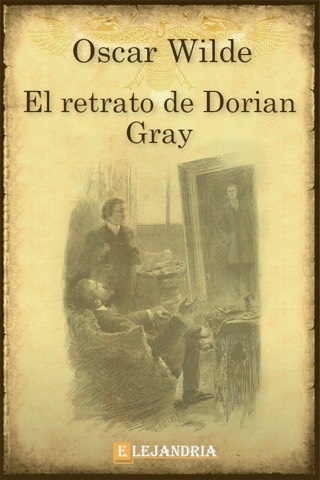
El retrato de Dorian Gray
Oscar Wilde · 1890 · Preface and chapters 1–2, ~10,500 words · level B2 · in English: The Picture of Dorian Gray
A young man stays beautiful while his portrait ages with every sin. Oscar Wilde’s only novel, in an anonymous Spanish translation.