
Marianela in Spanish, with English translation
Benito Pérez Galdós · 1878 · Opening, ~738 words · level B2
A traveller loses his way at nightfall among the mines of northern Spain and is guided by a blind young man. The young man’s own guide is Marianela, a poor orphan girl who loves him.
Add the whole book to your wishlist Only the opening is ready so far. Free: the books readers ask for most are the next ones we prepare in full. Read the opening in Lexico.The opening, as you read it in Lexico
The first 750 words of the Spanish text. Tap any sentence for its English translation, then any word for its meaning: that is what the app does on every page.
Tras el breve crepúsculo vino tranquila y oscura la noche, en cuyo negro seno murieron poco a poco los últimos rumores de la tierra soñolienta, y el viajero siguió adelante en su camino, apresurando su paso a medida que avanzaba la noche. Iba por angosta vereda, de esas que sobre el césped traza el constante pisar de hombres y brutos, y subía sin cansancio por un cerro en cuyas vertientes se alzaban pintorescos grupos de guinderos, hayas y robles. (Ya se ve que estamos en el Norte de España.)
After the brief twilight came the calm, dark night, in whose black bosom the last sounds of the drowsy earth died away little by little, and the traveler kept on along his way, quickening his pace as the night advanced. He was going along a narrow path, one of those that the constant treading of men and beasts traces across the grass, and he climbed without tiring up a hill on whose slopes picturesque groups of cherry trees, beeches and oaks rose. (It is clear we are in the North of Spain.)
Era un hombre de mediana edad, de complexión recia, buena talla, ancho de espaldas, resuelto de ademanes, firme de andadura, basto de facciones, de mirar osado y vivo, ligero a pesar de su regular obesidad, y (dígase de una vez aunque sea prematuro) excelente persona por doquiera que se le mirara. Vestía el traje propio de los señores acomodados que viajan en verano, con el redondo sombrerete, que debe a su fealdad el nombre de hongo, gemelos de campo pendientes de una correa, y grueso bastón que, entre paso y paso, le servía para apalear las zarzas cuando extendían sus ramas llenas de afiladas uñas para atraparle la ropa.
He was a man of middle age, of sturdy build, good height, broad-shouldered, resolute in his gestures, firm in his gait, rough in his features, bold and lively in his look, light on his feet despite his considerable stoutness, and (let it be said at once, though it may be premature) an excellent person wherever one looked at him. He wore the traveling clothes proper to well-to-do gentlemen who travel in summer, with the round little hat that owes its name of "hongo" (mushroom) to its ugliness, field binoculars hanging from a strap, and a thick cane which, between one step and the next, served him to beat back the brambles when they stretched out their branches full of sharp claws to snatch at his clothes.
Detúvose, y mirando a todo el círculo del horizonte, parecía impaciente y desasosegado. Sin duda no tenía gran confianza en la exactitud de su itinerario y aguardaba el paso de algún aldeano que le diese buenos informes topográficos para llegar pronto y derechamente a su destino.
He stopped, and gazing all around the circle of the horizon, he seemed impatient and uneasy. Without a doubt he did not have much confidence in the accuracy of his itinerary, and he was waiting for some villager to pass who might give him good topographical information so as to arrive quickly and directly at his destination.
—No puedo equivocarme—murmuró—. Me dijeron que atravesara el río por la pasadera... así lo hice. Después que marchara adelante, siempre adelante. En efecto, allá, detrás de mí queda esa apreciable villa, a quien yo llamaría Villafangosa por el buen surtido de lodos que hay en sus calles y caminos.... De modo que por aquí, adelante, siempre adelante (me gusta esta frase, y si yo tuviera escudo no le pondría otra divisa) he de llegar a las famosas minas de Socartes.
"I cannot be mistaken," he murmured. They told me to cross the river at the footbridge... so I did. After I went on ahead, always ahead. Indeed, over there behind me lies that worthy town, which I would call Villafangosa because of the fine supply of mud in its streets and roads... So, onward this way, always onward (I like this phrase, and if I had a coat of arms I would put no other motto on it) I must reach the famous mines of Socartes.
Después de andar largo trecho, añadió:
After walking a long stretch, he added:
—Me he perdido, no hay duda de que me he perdido.... Aquí tienes, Teodoro Golfín, el resultado de tu adelante, siempre adelante. Estos palurdos no conocen el valor de las palabras. O han querido burlarse de ti, o ellos mismos ignoran dónde están las minas de Socartes. Un gran establecimiento minero ha de anunciarse con edificios, chimeneas, ruido de arrastres, resoplido de hornos, relincho de caballos, trepidación de máquinas, y yo no veo, ni huelo, ni oigo nada.... Parece que estoy en un desierto... ¡qué soledad! Si yo creyera en brujas, pensaría que mi destino me proporcionaba esta noche el honor de ser presentado a ellas.... ¡Demonio!, ¿pero no hay gente en estos lugares?... Aún falta media hora para la salida de la luna. ¡Ah!, bribona, tú tienes la culpa de mi extravío.... Si al menos pudiera conocer el sitio donde me encuentro.... ¿Pero qué más da? (Al decir esto, hizo un gesto propio del hombre esforzado que desprecia los peligros). Golfín, tú que has dado la vuelta al mundo, ¿te acobardarás ahora?... ¡Ah!, los aldeanos tenían razón: adelante, siempre adelante. La ley universal de la locomoción no puede fallar en este momento.
I have gotten lost, there is no doubt that I have gotten lost... Here you have it, Teodoro Golfín, the result of your onward, always onward. These bumpkins do not know the value of words. Either they have wanted to make fun of you, or they themselves do not know where the mines of Socartes are. A great mining establishment must announce itself with buildings, chimneys, the noise of haulage carts, the snorting of furnaces, the neighing of horses, the rattle of machines, and I see, smell, and hear nothing... It seems I am in a desert... what solitude! If I believed in witches, I would think my destiny was granting me tonight the honor of being introduced to them... Devil! But are there no people in these places?... There is still half an hour before the moon rises. Ah, you rascal, you are to blame for my going astray... If only I could know the place where I am... But what does it matter? (As he said this, he made a gesture befitting a bold man who scorns dangers.) Golfín, you who have gone around the world, will you lose your nerve now?... Ah, the villagers were right: onward, always onward. The universal law of locomotion cannot fail at this moment.
Y puesta denodadamente en ejecución aquella osada ley, recorrió un kilómetro, siguiendo a capricho las veredas que le salían al paso y se cruzaban y se quebraban en ángulos mil, cual si quisiesen engañarle y confundirle más. Por grande que fuera su resolución e intrepidez, al fin tuvo que pararse. Las veredas, que al principio subían, luego empezaron a bajar, enlazándose; y al fin bajaron tanto, que nuestro viajero hallose en un talud, por el cual sólo habría podido descender echándose a rodar.
And this bold law being boldly put into effect, he covered a kilometer, following at whim the paths that came out to meet him and crossed and broke off at a thousand angles, as if they wanted to deceive and confuse him further. However great his resolve and daring, in the end he had to stop. The paths, which at first went up, then began to go down, intertwining; and in the end they went down so far that our traveler found himself on a slope, down which he could only have descended by rolling himself.
—¡Bonita situación! —exclamó sonriendo y buscando en su buen humor lenitivo a la enojosa contrariedad—. ¿En dónde estás, querido Golfín? Esto parece un abismo. ¿Ves algo allá abajo? Nada, absolutamente nada... pero el césped ha desaparecido, el terreno está removido. Todo es aquí pedruscos y tierra sin vegetación, teñida por el óxido de hierro.... Sin duda estoy en las minas... pero ni alma viviente, ni chimeneas humeantes, ni ruido, ni un tren que murmure a lo lejos, ni siquiera un perro que ladre.... ¿Qué haré?, hay por aquí una vereda que vuelve a subir. ¿Seguirela? ¿Desandaré lo andado?... ¡Retroceder! ¡Qué absurdo! O yo dejo de ser quien soy, o llegaré esta noche a las famosas minas de Socartes y abrazaré a mi querido hermano. Adelante, siempre adelante.
What a lovely situation! he exclaimed, smiling and seeking in his good humor a balm for the vexing setback. Where are you, dear Golfín? This seems like an abyss. Do you see anything down there? Nothing, absolutely nothing... but the grass has disappeared, the ground has been disturbed. Everything here is boulders and earth without vegetation, dyed by iron oxide... Without a doubt I am in the mines... but not a living soul, no smoking chimneys, no noise, not a train murmuring in the distance, not even a dog barking... What shall I do? There is a path here that goes back up. Shall I follow it? Shall I retrace what I have walked?... To go back! How absurd! Either I stop being who I am, or I will reach the famous mines of Socartes tonight and embrace my dear brother. Onward, always onward.
Want the rest? Lexico has the opening of Marianela so far. Add the book to your wishlist: the titles readers ask for most are the next ones we prepare in full, with the same sentence-by-sentence translation, every word explained in context, and flashcards from the words you look up.
Add the whole book to your wishlistWords from this passage
20 words from the opening worth knowing for the rest of the book, with the meaning they have here.
| Spanish | English |
|---|---|
| breve | brief, short |
| el crepúsculo | twilight |
| venir | to come |
| tranquilo | calm, peaceful |
| oscuro | dark |
| negro | black |
| el seno | bosom |
| morir | to die |
| último | last |
| el rumor | rumor (here: sounds) |
| la tierra | Earth |
| soñoliento | drowsy |
| el viajero | traveler |
| seguir | to follow |
| el camino | road, way |
| apresurar | to quicken |
| la medida | measure |
| avanzar | to advance |
| angosto | narrow |
| el césped | grass |
More Spanish books with English translation
El almohadón de plumas
Horacio Quiroga · 1907 · ~1,000 words · level B1 · in English: The Feather Pillow
A young bride wastes away in a cold, silent house, and nobody can find out why. Horacio Quiroga’s best-known horror story, and the shortest book on Lexico.
La gallina degollada
Horacio Quiroga · 1909 · ~4,500 words · level B1–B2 · in English: The Decapitated Chicken
An illness leaves a couple’s four sons severely disabled, and all their hopes move to their healthy daughter. A short, brutal horror story by Quiroga.
Los ojos sombríos
Horacio Quiroga · ~6,000 words · level B2 · in English: The Dark Eyes
At a dance, a man just out of a break-up listens to an old friend’s tangled love story. Quiroga in a romantic, feverish mood.
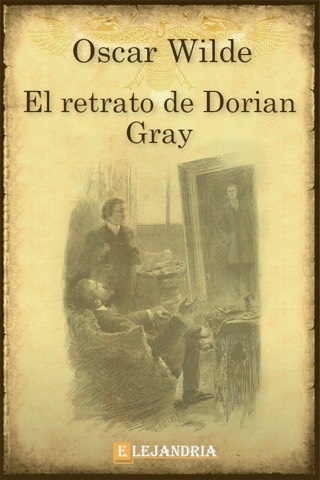
El retrato de Dorian Gray
Oscar Wilde · 1890 · Preface and chapters 1–2, ~10,500 words · level B2 · in English: The Picture of Dorian Gray
A young man stays beautiful while his portrait ages with every sin. Oscar Wilde’s only novel, in an anonymous Spanish translation.