Los pazos de Ulloa in Spanish, with English translation
Emilia Pardo Bazán · 1886 · Opening, ~784 words · level C1 · in English: The House of Ulloa
A young priest, a bad rider on a restless horse, makes his way into the Galician hills to take up his post as chaplain at a decaying manor. Pardo Bazán’s novel of a brutal rural aristocracy.
Add the whole book to your wishlist Only the opening is ready so far. Free: the books readers ask for most are the next ones we prepare in full. Read the opening in Lexico.The opening, as you read it in Lexico
The first 800 words of the Spanish text. Tap any sentence for its English translation, then any word for its meaning: that is what the app does on every page.
Por más que el jinete trataba de sofrenarlo agarrándose con todas sus fuerzas a la única rienda de cordel y susurrando palabritas calmantes y mansas, el peludo rocín seguía empeñándose en bajar la cuesta a un trote cochinero que descuadernaba los intestinos, cuando no a trancos desigualísimos de loco galope. Y era pendiente de veras aquel repecho del camino real de Santiago a Orense en términos que los viandantes, al pasarlo, sacudían la cabeza murmurando que tenía bastante más declive del no sé cuántos por ciento marcado por la ley, y que sin duda al llevar la carretera en semejante dirección, ya sabrían los ingenieros lo que se pescaban, y alguna quinta de personaje político, alguna influencia electoral de grueso calibre debía andar cerca.
However hard the rider tried to rein him in, clutching the single cord rein with all his might and murmuring soothing, gentle little words, the shaggy nag kept insisting on going down the slope at a jolting trot that shook one's insides loose, if not at wildly uneven gallop bounds. And that slope was truly steep, so that the passersby, as they went past it, would shake their heads, muttering that it had considerably more gradient than the "I don't know how many percent" set by law, and that surely, in laying the road in such a direction, the engineers must have known what they were getting into, and that some political bigwig's electoral influence of heavy caliber must be somewhere nearby.
Iba el jinete colorado, no como un pimiento, sino como una fresa, encendimiento propio de personas linfáticas. Por ser joven y de miembros delicados, y por no tener pelo de barba, pareciera un niño, a no desmentir la presunción sus trazas sacerdotales. Aunque cubierto de amarillo polvo que levantaba el trote del jaco, bien se advertía que el traje del mozo era de paño negro liso, cortado con la flojedad y poca gracia que distingue a las prendas de ropa de seglar vestidas por clérigos. Los guantes, despellejados ya por la tosca brida, eran asimismo negros y nuevecitos, igual que el hongo, que llevaba calado hasta las cejas, por temor a que los zarandeos de la trotada se lo hiciesen saltar al suelo, que sería el mayor compromiso del mundo. Bajo el cuello del desairado levitín asomaba un dedo de alzacuello, bordado de cuentas de abalorio. Demostraba el jinete escasa maestría hípica: inclinado sobre el arzón, con las piernas encogidas y a dos dedos de salir despedido por las orejas, leíase en su rostro tanto miedo al cuartago como si fuese algún corcel indómito rebosando fiereza y bríos.
The rider went along red-faced, not like a pepper but like a strawberry, a flush typical of lymphatic people. Being young and of delicate build, and having no beard, he looked like a boy, so as not to contradict the presumption of his priestly bearing. Although covered with yellow dust raised by the nag's trot, it was plainly evident that the young man's suit was of plain black cloth, cut with the looseness and little grace that distinguishes lay clothing worn by clergymen. The gloves, already worn through by the coarse rein, were likewise black and brand-new, just like the hat, which he wore pulled down to his eyebrows for fear that the jolting of the trot might make it fly off onto the ground, which would be the greatest embarrassment in the world. Under the collar of the shabby frock coat peeked out a strip of clerical collar, embroidered with glass beads. The rider showed little equestrian skill: leaning over the saddle-bow, legs drawn up, and within an inch of being pitched over the horse's ears, his face showed as much fear of the nag as if it were some untamed charger overflowing with fierceness and spirit.
Al acabarse el repecho, volvió el jaco a la sosegada andadura habitual, y pudo el jinete enderezarse sobre el aparejo redondo, cuya anchura inconmensurable le había descoyuntado los huesos todos de la región sacro-ilíaca. Respiró, quitóse el sombrero y recibió en la frente sudorosa el aire frío de la tarde. Caían ya oblicuamente los rayos del sol en los zarzales y setos, y un peón caminero, en mangas de camisa, pues tenía su chaqueta colocada sobre un mojón de granito, daba lánguidos azadonazos en las hierbecillas nacidas al borde de la cuneta. Tiró el jinete del ramal para detener a su cabalgadura, y ésta, que se había dejado en la cuesta abajo las ganas de trotar, paró inmediatamente. El peón alzó la cabeza, y la placa dorada de su sombrero relució un instante.
When the slope ended, the nag returned to its calm, usual gait, and the rider was able to straighten up on the round saddle, whose immeasurable width had dislocated all the bones of his sacroiliac region. He caught his breath, took off his hat, and received on his sweaty forehead the cold air of the afternoon. The rays of the sun were already slanting down onto the brambles and hedges, and a road laborer, in shirtsleeves since he had his jacket laid over a granite post, was giving languid hoe-strokes to the little grasses growing at the edge of the ditch. The rider pulled on the halter to stop his mount, and the latter, which had left its desire to trot behind on the slope, came to a stop immediately. The laborer raised his head, and the golden badge on his hat gleamed for a moment.
—¿Tendrá usted la bondad de decirme si falta mucho para la casa del señor marqués de Ulloa?
Would you kindly tell me whether it is far to the house of the Marquis of Ulloa?
—¿Para los Pazos de Ulloa? —contestó el peón repitiendo la pregunta.
For the Pazos de Ulloa? the laborer answered, repeating the question.
—Eso es.
That's it.
—Los Pazos de Ulloa están allí—murmuró extendiendo la mano para señalar a un punto en el horizonte. —Si la bestia anda bien, el camino que queda pronto se pasa.... Ahora tiene que seguir hasta aquel pinar ¿ve? y luego le cumple torcer a mano izquierda, y luego le cumple bajar a mano derecha por un atajito, hasta el crucero.... En el crucero ya no tiene pérdida, porque se ven los Pazos, una costrución muy grandísima....
"The Pazos de Ulloa are over there," he murmured, extending his hand to point at a spot on the horizon. "If the beast goes well, the road that's left will soon be over. Now you have to keep going as far as that pine grove, see? And then you must turn to the left, and then you must go down to the right by a little path, as far as the crossroads.... At the crossroads you can't miss it, because you can see the Pazos, a very huge building...."
—Pero..... ¿como cuánto faltará? —preguntó con inquietud el clérigo.
"But... how much farther will it be?" the priest asked anxiously.
Meneó el peón la tostada cabeza.
The laborer shook his sun-browned head.
—Un bocadito, un bocadito....
"Just a little bit, just a little bit..."
Y sin más explicaciones, emprendió otra vez su desmayada faena, manejando el azadón lo mismo que si pesase cuatro arrobas.
And without further explanation, he resumed his listless task, handling the hoe as if it weighed four arrobas.
Se resignó el viajero a continuar ignorando las leguas de que se compone un bocadito, y taloneó al rocín. El pinar no estaba muy distante, y por el centro de su sombría masa serpeaba una trocha angostísima, en la cual se colaron montura y jinete. El sendero, sepultado en las oscuras profundidades del pinar, era casi impracticable; pero el jaco, que no desmentía las aptitudes especiales de la raza caballar gallega para andar por mal piso, avanzaba con suma precaución, cabizbajo, tanteando con el casco, para sortear cautelosamente las zanjas producidas por la llanta de los carros, los pedruscos, los troncos de pino cortados y atravesados donde hacían menos falta. Adelantaban poco a poco, y ya salían de las estrecheces a senda más desahogada, abierta entre pinos nuevos y montes poblados de aliaga, sin haber tropezado con una sola heredad labradía, un plantío de coles que revelase la vida humana. De pronto los cascos del caballo cesaron de resonar y se hundieron en blanda alfombra: era una camada de estiércol vegetal, tendida, según costumbre del país, ante la casucha de un labrador. A la puerta una mujer daba de mamar a una criatura. El jinete se detuvo.
The traveler resigned himself to going on, disregarding the leagues that a "little bit" is made up of, and spurred on the nag. The pine grove was not very far, and through the middle of its shadowy mass wound a very narrow path, along which horse and rider slipped. The path, buried in the dark depths of the pine grove, was almost impassable; but the nag, which did not belie the special aptitude of the Galician horse breed for going over bad ground, advanced with great care, head down, feeling with its hoof, to skillfully avoid the ruts made by cart wheels, the stones, and the cut and crosswise pine trunks where they were least needed. They advanced little by little, and now they were coming out of the narrows onto a more open path, opened between young pines and scrubland covered with gorse, without having stumbled upon a single cultivated estate, a patch of cabbages that would reveal human life. Suddenly the horse's hooves stopped ringing and sank into soft carpet: it was a bed of vegetable manure, spread out, according to the custom of the country, in front of a farmhand's shack. At the door a woman was nursing a baby. The rider stopped.
Want the rest? Lexico has the opening of Los pazos de Ulloa so far. Add the book to your wishlist: the titles readers ask for most are the next ones we prepare in full, with the same sentence-by-sentence translation, every word explained in context, and flashcards from the words you look up.
Add the whole book to your wishlistWords from this passage
20 words from the opening worth knowing for the rest of the book, with the meaning they have here.
| Spanish | English |
|---|---|
| tratar | to try, to seek |
| sofrenar | to rein in |
| agarrar | to grab or take hold of |
| la fuerza | strength |
| único | single |
| la rienda | rein |
| el cordel | cord |
| susurrar | to whisper, susurrate |
| el palabra | word |
| calmante | relaxing, soothing |
| manso | gentle |
| peludo | shaggy |
| el rocín | nag |
| seguir | to follow |
| empeñar | to strive, make an effort |
| bajar | to go down, come down |
| la cuesta | slope |
| el trote | trot |
| cochinero | jolting |
| descuadernar | was shaking loose |
More Spanish books with English translation
El almohadón de plumas
Horacio Quiroga · 1907 · ~1,000 words · level B1 · in English: The Feather Pillow
A young bride wastes away in a cold, silent house, and nobody can find out why. Horacio Quiroga’s best-known horror story, and the shortest book on Lexico.
La gallina degollada
Horacio Quiroga · 1909 · ~4,500 words · level B1–B2 · in English: The Decapitated Chicken
An illness leaves a couple’s four sons severely disabled, and all their hopes move to their healthy daughter. A short, brutal horror story by Quiroga.
Los ojos sombríos
Horacio Quiroga · ~6,000 words · level B2 · in English: The Dark Eyes
At a dance, a man just out of a break-up listens to an old friend’s tangled love story. Quiroga in a romantic, feverish mood.
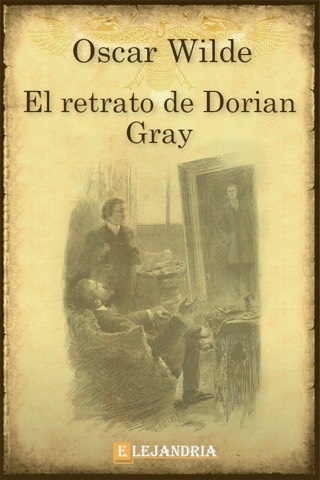
El retrato de Dorian Gray
Oscar Wilde · 1890 · Preface and chapters 1–2, ~10,500 words · level B2 · in English: The Picture of Dorian Gray
A young man stays beautiful while his portrait ages with every sin. Oscar Wilde’s only novel, in an anonymous Spanish translation.