Lazarillo de Tormes in Spanish, with English translation
Anonymous · 1554 · Opening, ~738 words · level C1
Lázaro, born by the river Tormes, is handed over as a boy to a blind beggar, the first and craftiest of his masters. The short book that began the picaresque novel.
Add the whole book to your wishlist Only the opening is ready so far. Free: the books readers ask for most are the next ones we prepare in full. Read the opening in Lexico.The opening, as you read it in Lexico
The first 750 words of the Spanish text. Tap any sentence for its English translation, then any word for its meaning: that is what the app does on every page.
Cuenta Lázaro su vida, y cuyo hijo fue
Lázaro tells of his life, and whose son he was.
Pues sepa V. M. ante todas cosas que a mí llaman Lázaro de Tormes, hijo de Tomé González y de Antona Pérez, naturales de Tejares, aldea de Salamanca. Mi nacimiento fue dentro del río Tormes, por la cual causa tomé el sobrenombre, y fue desta manera. Mi padre, que Dios perdone, tenía cargo de proveer una molienda de una aceña, que está ribera de aquel río, en la cual fue molinero más de quince años; y estando mi madre una noche en la aceña, preñada de mí, tomóle el parto y parióme allí: de manera que con verdad puedo decir nacido en el río. Pues siendo yo niño de ocho años, achacaron a mi padre ciertas sangrías mal hechas en los costales de los que allí a moler venían, por lo que fue preso, y confesó y no negó y padeció persecución por justicia. Espero en Dios que está en la Gloria, pues el Evangelio los llama bienaventurados. En este tiempo se hizo cierta armada contra moros, entre los cuales fue mi padre, que a la sazón estaba desterrado por el desastre ya dicho, con cargo de acemilero de un caballero que allá fue, y con su señor, como leal criado, feneció su vida.
Well, let Your Grace know. Above all, Your Grace should know that they call me Lázaro de Tormes, son of Tomé González and of Antona Pérez, natives of Tejares, a village of Salamanca. My birth was within the Tormes river, for which reason I took the nickname, and it was in this way. My father, God rest him, was in charge of supplying the grinding for a water mill that stood on the bank of that river, where he was the miller for more than fifteen years; and while my mother was one night in the mill, pregnant with me, her labor came on and she gave birth to me there; so that truthfully I can say I was born in the river. Then, when I was a boy of eight, they blamed my father for certain badly made skimmings from the sacks of those who came there to grind, for which he was taken prisoner, and he confessed and did not deny it, and suffered persecution by justice. I trust in God, who is in Glory, since the Gospel calls them blessed. At that time a certain fleet was made against the Moors, among whom was my father, who at the time was banished for the aforementioned disaster, as muleteer of a gentleman who went there, and with his master, as a loyal servant, he ended his life.
Mi viuda madre, como sin marido y sin abrigo se viese, determinó arrimarse a los buenos por ser uno dellos, y vínose a vivir a la ciudad, y alquiló una casilla, y metióse a guisar de comer a ciertos estudiantes, y lavaba la ropa a ciertos mozos de caballos del Comendador de la Magdalena, de manera que fue frecuentando las caballerizas. Ella y un hombre moreno de aquellos que las bestias curaban, vinieron en conocimiento. Éste algunas veces se venía a nuestra casa, y se iba a la mañana; otras veces de día llegaba a la puerta, en achaque de comprar huevos, y entrábase en casa. Yo al principio de su entrada, pesábame con él y habíale miedo, viendo el color y mal gesto que tenía; mas de que vi que con su venida mejoraba el comer, fuile queriendo bien, porque siempre traía pan, pedazos de carne, y en el invierno leños, a que nos calentábamos. De manera que, continuando con la posada y conversación, mi madre vino a darme un negrito muy bonito, el cual yo brincaba y ayudaba a calentar. Y acuérdome que, estando el negro de mi padre trebejando con el mozuelo, como el niño vía a mi madre y a mí blancos, y a él no, huía dél con miedo para mi madre, y señalando con el dedo decía: "¡Madre, coco!
My widowed mother, finding herself without husband and without shelter, decided to take refuge with good people by becoming one of them, and she came to live in the city, rented a small house, and began to cook meals for some students, and washed clothes for some stable boys of the Commander of the Magdalena, so that she kept frequenting the stables. She and a dark-skinned man, one of those who tended the animals, became acquainted. This man would sometimes come to our house and leave in the morning; other times he would arrive by day at the door, on the pretext of buying eggs, and go into the house. At first, when he arrived, I resented him and feared him, seeing the color and bad expression he had; but as soon as I saw that with his coming the food improved, I came to love him, because he always brought bread, pieces of meat, and in winter logs for which we warmed ourselves. So, with the lodging and companionship going on, my mother came to give me a very pretty little black boy, whom I used to bounce and help warm. And I remember that, while my father's black boy was playing with the little boy, since the child saw my mother and me as white, and him not, he fled from him in fear toward my mother, and pointing with his finger, he said, "Mother, bogeyman!"
Respondió él riendo: "¡Hideputa!
He replied, laughing: "Son of a bitch!"
Yo, aunque bien mochacho, noté aquella palabra de mi hermanico, y dije entre mí:
I, though quite a boy, noticed that word from my little brother, and said to myself:
"¡Cuántos debe de haber en el mundo que huyen de otros porque no se ven a sí mesmos!
How many there must be in the world who flee from others because they do not see themselves!
Quiso nuestra fortuna que la conversación del Zaide, que así se llamaba, llegó a oídos del mayordomo, y hecha pesquisa, hallóse que la mitad por medio de la cebada, que para las bestias le daban, hurtaba, y salvados, leña, almohazas, mandiles, y las mantas y sábanas de los caballos hacía perdidas, y cuando otra cosa no tenía, las bestias desherraba, y con todo esto acudía a mi madre para criar a mi hermanico. No nos maravillemos de un clérigo ni fraile, porque el uno hurta de los pobres y el otro de casa para sus devotas y para ayuda de otro tanto, cuando a un pobre esclavo el amor le animaba a esto. Y probósele cuanto digo y aun más, porque a mí con amenazas me preguntaban, y como niño respondía, y descubría cuanto sabía con miedo, hasta ciertas herraduras que pormandado de mi madre a un herrero vendí. Al triste de mi padrastro azotaron y pringaron, y a mi madre pusieron pena por justicia, sobre el acostumbrado centenario, que en casa del sobredicho Comendador no entrase, ni al lastimado Zaide en la suya acogiese.
Fate would have it that the talk about Zaide, who was so called, reached the steward's ears, and on inquiry it was found that he stole half of the barley they gave him for the beasts, and bran, firewood, currycombs, and aprons, and ruined the blankets and sheets of the horses, and when he had nothing else he unshod the beasts, and with all this he provided for my mother to raise my little brother. Let us not be surprised at a cleric or a friar, for one of them steals from the poor and the other from the house, for his devotees and for help of as much again, when for a poor slave love encouraged him to this. And all I say was proven against me, and even more, because they questioned me with threats, and as a child I answered, and revealed all I knew out of fear, up to certain horseshoes that I sold to a smith on my mother's orders. The poor wretch of my stepfather was flogged and basted, and they imposed on my mother a penalty by judicial order, besides the customary century-long ban that she not enter the house of the aforementioned Commander, nor take in the injured Zaide in her own house.
Por no echar la soga tras el caldero, la triste se esforzó y cumplió la sentencia; y por evitar peligro y quitarse de malas lenguas, se fue a servir a los que al presente vivían en el mesón de la Solana; y allí, padeciendo mil importunidades, se acabó de criar mi hermanico hasta que supo andar, y a mí hasta ser buen mozuelo, que iba a los huéspedes por vino y candelas y por lo demás que me mandaban.
To avoid making things worse, the poor woman forced herself and carried out the sentence; and to avoid danger and to escape gossip, she went to serve those who at present lived in the inn of La Solana; and there, enduring a thousand hardships, she finally finished raising my little brother until he could walk, and me until I became a good lad, who went to the guests for wine and candles and for whatever else they ordered me.
Want the rest? Lexico has the opening of Lazarillo de Tormes so far. Add the book to your wishlist: the titles readers ask for most are the next ones we prepare in full, with the same sentence-by-sentence translation, every word explained in context, and flashcards from the words you look up.
Add the whole book to your wishlistWords from this passage
20 words from the opening worth knowing for the rest of the book, with the meaning they have here.
| Spanish | English |
|---|---|
| contar | to tell |
| la vida | life |
| el hijo | son |
| saber | to know how to do something |
| la cosa | thing |
| llamar | to call |
| natural | native |
| la aldea | village |
| el nacimiento | birth |
| el río | river |
| la causa | reason |
| tomar | to take |
| el sobrenombre | nickname, sobriquet |
| la manera | way |
| el padre | father |
| perdonar | to pardon, excuse |
| el cargo | charge, position |
| proveer | to provide, purvey |
| la molienda | grinding, milling |
| la aceña | water mill |
More Spanish books with English translation
El almohadón de plumas
Horacio Quiroga · 1907 · ~1,000 words · level B1 · in English: The Feather Pillow
A young bride wastes away in a cold, silent house, and nobody can find out why. Horacio Quiroga’s best-known horror story, and the shortest book on Lexico.
La gallina degollada
Horacio Quiroga · 1909 · ~4,500 words · level B1–B2 · in English: The Decapitated Chicken
An illness leaves a couple’s four sons severely disabled, and all their hopes move to their healthy daughter. A short, brutal horror story by Quiroga.
Los ojos sombríos
Horacio Quiroga · ~6,000 words · level B2 · in English: The Dark Eyes
At a dance, a man just out of a break-up listens to an old friend’s tangled love story. Quiroga in a romantic, feverish mood.
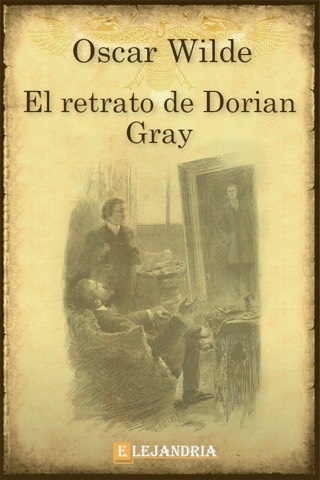
El retrato de Dorian Gray
Oscar Wilde · 1890 · Preface and chapters 1–2, ~10,500 words · level B2 · in English: The Picture of Dorian Gray
A young man stays beautiful while his portrait ages with every sin. Oscar Wilde’s only novel, in an anonymous Spanish translation.