Fortunata y Jacinta in Spanish, with English translation
Benito Pérez Galdós · 1887 · Opening, ~891 words · level C1
Juanito Santa Cruz, the pampered heir of a Madrid merchant family, has a wife from his own class and a lover from the slums. Galdós begins with Juanito’s student days.
Add the whole book to your wishlist Only the opening is ready so far. Free: the books readers ask for most are the next ones we prepare in full. Read the opening in Lexico.The opening, as you read it in Lexico
The first 900 words of the Spanish text. Tap any sentence for its English translation, then any word for its meaning: that is what the app does on every page.
Las noticias más remotas que tengo de la persona que lleva este nombre me las ha dado Jacinto María Villalonga, y alcanzan al tiempo en que este amigo mío y el otro y el de más allá, Zalamero, Joaquinito Pez, Alejandro Miquis, iban a las aulas de la Universidad. No cursaban todos el mismo año, y aunque se reunían en la cátedra de Camús, separábanse en la de Derecho Romano: el chico de Santa Cruz era discípulo de Novar, y Villalonga de Coronado. Ni tenían todos el mismo grado de aplicación: Zalamero, juicioso y circunspecto como pocos, era de los que se ponen en la primera fila de bancos, mirando con faz complacida al profesor mientras explica, y haciendo con la cabeza discretas señales de asentimiento a todo lo que dice. Por el contrario, Santa Cruz y Villalonga se ponían siempre en la grada más alta, envueltos en sus capas y más parecidos a conspiradores que a estudiantes. Allí pasaban el rato charlando por lo bajo, leyendo novelas, dibujando caricaturas o soplándose recíprocamente la lección cuando el catedrático les preguntaba. Juanito Santa Cruz y Miquis llevaron un día una sartén (no sé si a la clase de Novar o a la de Uribe, que explicaba Metafísica) y frieron un par de huevos. Otras muchas tonterías de este jaez cuenta Villalonga, las cuales no copio por no alargar este relato. Todos ellos, a excepción de Miquis que se murió en el 64 soñando con la gloria de Schiller, metieron infernal bulla en el célebre alboroto de la noche de San Daniel. Hasta el formalito Zalamero se descompuso en aquella ruidosa ocasión, dando pitidos y chillando como un salvaje, con lo cual se ganó dos bofetadas de un guardia veterano, sin más consecuencias. Pero Villalonga y Santa Cruz lo pasaron peor, porque el primero recibió un sablazo en el hombro que le tuvo derrengado por espacio de dos meses largos, y el segundo fue cogido junto a la esquina del Teatro Real y llevado a la prevención en una cuerda de presos, compuesta de varios estudiantes decentes y algunos pilluelos de muy mal pelaje. A la sombra me lo tuvieron veinte y tantas horas, y aún durara más su cautiverio, si de él no le sacara el día 11 su papá, sujeto respetabilísimo y muy bien relacionado.
The most remote news I have of the person who bears this name was given to me by Jacinto María Villalonga, and it reaches back to the time when this friend of mine, the other one, the one over there, Zalamero, Joaquinito Pez and Alejandro Miquis were going to the lecture halls of the University. Not all of them took the same year, and although they met in Camús's lecture hall, they split up for Roman Law: the boy from Santa Cruz was a disciple of Novar, and Villalonga of Coronado. Nor did they all have the same degree of diligence: Zalamero, as judicious and circumspect as few others, was one of those who sit in the front row of benches, looking with a pleased face at the professor while he explains, and making discreet signs of assent with his head to everything he says. On the contrary, Santa Cruz and Villalonga always sat in the highest tier, wrapped in their capes and looking more like conspirators than students. There they spent their time chatting in low voices, reading novels, drawing caricatures, or mutually prompting each other with the lesson when the professor questioned them. Juanito Santa Cruz and Miquis one day took a frying pan (I don't know whether to Novar's class or to Uribe's, who taught Metaphysics) and fried a couple of eggs. Villalonga tells many other silly things of this kind, which I do not copy so as not to lengthen this story. All of them, except Miquis, who died in '64 dreaming of the glory of Schiller, made a tremendous racket in the famous uproar of the night of San Daniel. Even the prim Zalamero lost his composure on that noisy occasion, blowing whistles and screaming like a savage, which earned him two slaps from a veteran guard, with no further consequences. But Villalonga and Santa Cruz had a worse time of it, because the first one took a saber blow to the shoulder that left him crippled for two long months, and the second was caught near the corner of the Teatro Real and taken to the police station in a line of prisoners made up of several respectable students and some very shady urchins. In jail they kept him from me for twenty-some hours, and his captivity would have lasted even longer had his very respectable and well-connected father not gotten him out on the eleventh.
¡Ay!, el susto que se llevaron D. Baldomero Santa Cruz y Barbarita no es para contado. ¡Qué noche de angustia la del 10 al 11! Ambos creían no volver a ver a su adorado nene, en quien, por ser único, se miraban y se recreaban con inefables goces de padres chochos de cariño, aunque no eran viejos. Cuando el tal Juanito entró en su casa, pálido y hambriento, descompuesta la faz graciosa, la ropita llena de sietes y oliendo a pueblo, su mamá vacilaba entre reñirle y comérsele a besos. El insigne Santa Cruz, que se había enriquecido honradamente en el comercio de paños, figuraba con timidez en el antiguo partido progresista; mas no era socio de la revoltosa Tertulia, porque las inclinaciones antidinásticas de Olózaga y Prim le hacían muy poca gracia. Su club era el salón de un amigo y pariente, al cual iban casi todas las noches D. Manuel Cantero, D. Cirilo Álvarez y D. Joaquín Aguirre, y algunas D. Pascual Madoz. No podía ser, pues, D. Baldomero, por razón de afinidades personales, sospechoso al poder. Creo que fue Cantero quien le acompañó a Gobernación para ver a González Bravo, y éste dio al punto la orden para que fuese puesto en libertad el revolucionario, el anarquista, el descamisado Juanito.
Oh, the fright that D. Baldomero Santa Cruz and Barbarita got is not to be told! What a night of anguish the one from the tenth to the eleventh! Both of them thought they would not see their adored little boy again, in whom, since he was an only child, they took delight, and they delighted themselves with the ineffable joys of doting parents, although they were not old. When that Juanito entered his house, pale and hungry, his charming face disheveled, his little clothes full of rips and smelling of the village, his mother hesitated between scolding him and smothering him with kisses. The distinguished Santa Cruz, who had grown rich honestly in the cloth trade, was timidly counted among the old progressive party; but he was not a member of the rebellious Tertulia, because the anti-dynastic leanings of Olózaga and Prim did not appeal to him at all. His club was the salon of a friend and relative, to which almost every night went D. Manuel Cantero, D. Cirilo Álvarez and D. Joaquín Aguirre, and some D. Pascual Madoz. It could not be, then, that D. Baldomero, because of personal affinities, was suspect to those in power. I think it was Cantero who accompanied him to the Ministry of the Interior to see González Bravo, and he immediately gave the order for the revolutionary, the anarchist, the ragamuffin Juanito to be set free.
Cuando el niño estudiaba los últimos años de su carrera, verificose en él uno de esos cambiazos críticos que tan comunes son en la edad juvenil. De travieso y alborotado volviose tan juiciosillo, que al mismo Zalamero daba quince y raya. Entrole la comezón de cumplir religiosamente sus deberes escolásticos y aun de instruirse por su cuenta con lecturas sin tasa y con ejercicios de controversia y palique declamatorio entre amiguitos. No sólo iba a clase puntualísimo y cargado de apuntes, sino que se ponía en la grada primera para mirar al profesor con cara de aprovechamiento, sin quitarle ojo, cual si fuera una novia, y aprobar con cabezadas la explicación, como diciendo: «yo también me sé eso y algo más». Al concluir la clase, era de los que le cortan el paso al catedrático para consultarle un punto oscuro del texto o que les resuelva una duda. Con estas dudas declaran los tales su furibunda aplicación. Fuera de la Universidad, la fiebre de la ciencia le traía muy desasosegado. Por aquellos días no era todavía costumbre que fuesen al Ateneo los sabios de pecho que están mamando la leche del conocimiento. Juanito se reunía con otros cachorros en la casa del chico de Tellería (Gustavito) y allí armaban grandes peloteras. Los temas más sutiles de Filosofía de la Historia y del Derecho, de Metafísica y de otras ciencias especulativas (pues aún no estaban de moda los estudios experimentales, ni el transformismo, ni Darwin, ni Haeckel eran para ellos, lo que para otros el trompo o la cometa. ¡Qué gran progreso en los entretenimientos de la niñez! ¡Cuando uno piensa que aquellos mismos nenes, si hubieran vivido en edades remotas, se habrían pasado el tiempo mamándose el dedo, o haciendo y diciendo toda suerte de boberías...!
When the boy was in the last years of his degree, one of those critical changes so common at a young age came over him. From being mischievous and rowdy he became so well-behaved that he outdid even Zalamero by a mile. He was seized by a strong urge to fulfill his scholastic duties religiously, and even to educate himself on his own with unlimited readings and with exercises of debate and declamatory chatter among little friends. He not only went to class most punctually and loaded with notes, but he also placed himself in the front row to look at the professor with a diligent face, never taking his eyes off him, as if he were a sweetheart, and to approve the explanation with nods, as if saying: «I also know that and something more». Upon the class ending, he was one of those who block the professor's way to consult him about an obscure point in the text, or to have him resolve a doubt. With these doubts, such people declare their furious diligence. Outside the University, the fever for science kept him very restless. At that time it was not yet customary for the infant sages who are suckling on the milk of knowledge to go to the Ateneo. Juanito used to meet with other young pups at the house of Tellería's boy (Gustavito), and there they raised great rows. The most subtle topics of the Philosophy of History and of Law, of Metaphysics and of other speculative sciences (for experimental studies were not yet in fashion, nor were transformism, Darwin or Haeckel what the top or the kite are to them, what they are to others. What great progress in the amusements of childhood! When one thinks that those same kids, had they lived in remote ages, would have spent their time sucking their thumbs or doing and saying all sorts of silly things...!)
Want the rest? Lexico has the opening of Fortunata y Jacinta so far. Add the book to your wishlist: the titles readers ask for most are the next ones we prepare in full, with the same sentence-by-sentence translation, every word explained in context, and flashcards from the words you look up.
Add the whole book to your wishlistWords from this passage
20 words from the opening worth knowing for the rest of the book, with the meaning they have here.
| Spanish | English |
|---|---|
| la noticia | news, piece of news |
| remoto | remote, far-flung |
| la persona | person |
| el nombre | name |
| alcanzar | to reach |
| el tiempo | time |
| el amigo | friend |
| mío | of mine |
| el aula | classroom (here: lecture halls) |
| cursar | to attend |
| el año | year |
| reunir | to satisfy, to meet |
| la cátedra | lecture hall |
| separar | to break up, to split up |
| el derecho | law |
| romano | Roman |
| el chico | boy |
| el discípulo | disciple |
| el grado | degree |
| la aplicación | application, dedication |
More Spanish books with English translation
El almohadón de plumas
Horacio Quiroga · 1907 · ~1,000 words · level B1 · in English: The Feather Pillow
A young bride wastes away in a cold, silent house, and nobody can find out why. Horacio Quiroga’s best-known horror story, and the shortest book on Lexico.
La gallina degollada
Horacio Quiroga · 1909 · ~4,500 words · level B1–B2 · in English: The Decapitated Chicken
An illness leaves a couple’s four sons severely disabled, and all their hopes move to their healthy daughter. A short, brutal horror story by Quiroga.
Los ojos sombríos
Horacio Quiroga · ~6,000 words · level B2 · in English: The Dark Eyes
At a dance, a man just out of a break-up listens to an old friend’s tangled love story. Quiroga in a romantic, feverish mood.
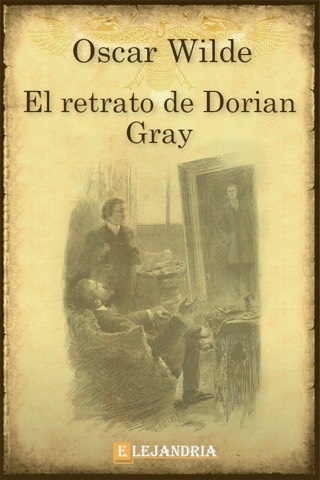
El retrato de Dorian Gray
Oscar Wilde · 1890 · Preface and chapters 1–2, ~10,500 words · level B2 · in English: The Picture of Dorian Gray
A young man stays beautiful while his portrait ages with every sin. Oscar Wilde’s only novel, in an anonymous Spanish translation.