Historia de la vida del Buscón in Spanish, with English translation
Francisco de Quevedo · 1626 · Chapter 1, ~960 words · level C1 · in English: The Swindler
Pablos of Segovia, son of a thieving barber and a mother suspected of witchcraft, sets out to become a gentleman and becomes a rogue. Quevedo’s picaresque novel, savage and funny.
Add the whole book to your wishlist Only chapter 1 is ready so far. Free: the books readers ask for most are the next ones we prepare in full. Read chapter 1 in Lexico.The opening, as you read it in Lexico
The first 800 words of the Spanish text. Tap any sentence for its English translation, then any word for its meaning: that is what the app does on every page.
Libro Primero: Capítulo I: En que cuenta quién es el Buscón.
Book One: Chapter I: In which he tells who the Buscón is.
Yo, señora, soy de Segovia. Mi padre se llamó Clemente Pablo, natural del mismo pueblo; Dios le tenga en el cielo. Fue, tal como todos dicen, de oficio barbero, aunque eran tan altos sus pensamientos que se corría de que le llamasen así, diciendo que él era tundidor de mejillas y sastre de barbas. Dicen que era de muy buena cepa, y según él bebía es cosa para creer. Estuvo casado con Aldonza de San Pedro, hija de Diego de San Juan y nieta de Andrés de San Cristóbal. Sospechábase en el pueblo que no era cristiana vieja, aun viéndola con canas y rota, aunque ella, por los nombres y sobrenombres de sus pasados, quiso esforzar que era descendiente de la gloria. Tuvo muy buen parecer para letrado; mujer de amigas y cuadrilla, y de pocos enemigos, porque hasta los tres del alma no los tuvo por tales; persona de valor y conocida por quien era. Padeció grandes trabajos recién casada, y aun después, porque malas lenguas daban en decir que mi padre metía el dos de bastos para sacar el as de oros. Probósele que a todos los que hacía la barba a navaja, mientras les daba con el agua levantándoles la cara para el lavatorio, un mi hermanico de siete años les sacaba muy a su salvo los tuétanos de las faldriqueras. Murió el angelico de unos azotes que le dieron en la cárcel. Sintiólo mucho mi madre, por ser tal que robaba a todos las voluntades. Por estas y otras niñerías estuvo preso, y rigores de justicia, de que hombre no se puede defender, le sacaron por las calles. En lo que toca de medio abajo tratáronle aquellos señores regaladamente. Iba a la brida en bestia segura y de buen paso, con mesura y buen día. Mas de medio arriba, etcétera, que no hay más que decir para quien sabe lo que hace un pintor de suela en unas costillas. Diéronle doscientos escogidos, que de allí a seis años se le contaban por encima de la ropilla. Más se movía el que se los daba que él, cosa que pareció muy bien; divirtióse algo con las alabanzas que iba oyendo de sus buenas carnes, que le estaba de perlas lo colorado.
I, madam, am from Segovia. My father was called Clemente Pablo, a native of the same town; God keep him in heaven. He was, as everyone says, a barber by trade, though his thoughts were so lofty that he was ashamed of being called that, saying he was a shearer of cheeks and a tailor of beards. They say he was of very good stock, and, to judge by how much he drank, it is a thing to believe. He was married to Aldonza de San Pedro, daughter of Diego de San Juan and granddaughter of Andrés de San Cristóbal. In town they suspected she was not an old Christian, even seeing her grey-haired and worn out; yet she, by the names and nicknames of her ancestors, wanted to insist she was a descendant of glory. She had a very good appearance for a lawyer's wife; a woman of friends and company, with few enemies, since until the three of the soul he did not count them as such; a person of worth and known for who she was. She suffered great hardships as a newlywed, and even afterwards, because wicked tongues kept saying that my father slipped in the two of clubs to draw the ace of coins. It was proven that while he shaved with a razor everyone who came to him, while he washed them and lifted their faces for the rinse, a little brother of mine, seven years old, very safely drew the marrow out of their pockets. The little angel died from some lashes they gave him in prison. My mother took it very hard, since he was such a man that he stole everyone's affections. For these and other childish things he was imprisoned, and the rigors of justice, against which no man can defend himself, dragged him through the streets. As for the lower half, those gentlemen treated him very well. He rode at a leisurely pace on a sure-footed mount, at a good gait, with composure and a good day. But as for the upper half, et cetera, there is nothing more to say to anyone who knows what a leather painter does to some ribs. They gave him two hundred picked blows, which six years later were still being counted on his doublet. The one who gave them to him moved more than he did, which seemed very good; he was somewhat amused by the praises he kept hearing about his fine flesh, since the redness of his face suited him perfectly.
Mi madre, pues, ¡no tuvo calamidades! Un día, alabándomela una vieja que me crió, decía que era tal su agrado que hechizaba a cuantos la trataban. Y decía, no sin sentimiento:
My mother, for her part, had no misfortunes! One day, an old woman who had raised me was praising her to me, saying her charm was such that it bewitched everyone who dealt with her. And she said, not without feeling:
-En su tiempo, hijo, eran los virgos como soles, unos amanecidos y otros puestos, y los más en un día mismo amanecidos y puestos.
In her time, son, hymens were like suns: some rising, others setting, and most of them rising and setting on the same day.
Hubo fama que reedificaba doncellas, resuscitaba cabellos encubriendo canas, empreñaba piernas con pantorrillas postizas. Y con no tratarla nadie que se le cubriese pelo, solas las calvas se la cubría, porque hacía cabelleras; poblaba quijadas con dientes; al fin vivía de adornar hombres y era remendona de cuerpos. Unos la llamaban zurcidora de gustos, otros, algebrista de voluntades desconcertadas; otros, juntona; cuál la llamaba enflautadora de miembros y cuál tejedora de carnes y por mal nombre alcahueta. Para unos era tercera, primera para otros y flux para los dineros de todos. Ver, pues, con la cara de risa que ella oía esto de todos era para dar mil gracias a Dios.
There was a rumor that she could rebuild maidenheads, revive hair while hiding grey hairs, and impregnate legs with false calves. And, though no one dealt with her who had hair that she could cover, she covered only the bald, because she made wigs; she filled jaws with teeth; in the end she lived by adorning men, and she was a mender of bodies. Some called her a darner of tastes, others a bonesetter of disordered wills, others a matchmaker; some called her a joiner of limbs and another a weaver of flesh, and by an ill name, a procuress. For some she was a go-between, first-rate for others, and a drain on everyone's money. Seeing her face full of laughter as she heard all this from everyone, it was enough to thank God a thousand times.
Hubo grandes diferencias entre mis padres sobre a quién había de imitar en el oficio, mas yo, que siempre tuve pensamientos de caballero desde chiquito, nunca me apliqué a uno ni a otro. Decíame mi padre:
There were great disagreements between my parents over whom I should imitate in the trade; but I, who always had the thoughts of a gentleman since I was small, never applied myself to either. My father used to say to me:
-Hijo, esto de ser ladrón no es arte mecánica sino liberal.
Son, this business of being a thief is not a mechanical art but a liberal one.
Y de allí a un rato, habiendo suspirado, decía de manos:
And after a while, having sighed, he went on, gesturing with his hands:
-Quien no hurta en el mundo, no vive. ¿Por qué piensas que los alguaciles y jueces nos aborrecen tanto? Unas veces nos destierran, otras nos azotan y otras nos cuelgan..., no lo puedo decir sin lágrimas (lloraba como un niño el buen viejo, acordándose de las que le habían batanado las costillas). Porque no querrían que donde están hubiese otros ladrones sino ellos y sus ministros. Mas de todo nos libró la buena astucia. En mi mocedad siempre andaba por las iglesias, y no de puro buen cristiano. Muchas veces me hubieran llorado en el asno si hubiera cantado en el potro. Nunca confesé sino cuando lo mandaba la Santa Madre Iglesia. Preso estuve por pedigüeño en caminos y a pique de que me esteraran el tragar y de acabar todos mis negocios con diez y seis maravedís: diez de soga y seis de cáñamo. Mas de todo me ha sacado el punto en boca, el chitón y los nones. Y con esto y mi oficio, he sustentado a tu madre lo más honradamente que he podido.
Whoever does not steal in this world does not live. Why do you think the constables and judges hate us so much? Sometimes they banish us, other times they whip us, and at other times they hang us... I cannot say it without tears (the good old man wept like a child, remembering those who had beaten his ribs). Because they would not want other thieves to be where they are, other than themselves and their officials. But good cunning freed us from all of that. In my youth I was always going round the churches, and not out of pure good Christianity. Many times they would have wept for me on the donkey, if I had sung on the rack. I never confessed except when Holy Mother Church ordered it. I was imprisoned for begging on the roads, and close to having them stretch my neck and end all my affairs for sixteen maravedis: ten for the rope and six for the hemp. But above all, keeping my mouth shut, hushing up, and denying everything have saved me. And with this and my trade I have supported your mother as honorably as I could.
Want the rest? Lexico has chapter 1 of Historia de la vida del Buscón so far. Add the book to your wishlist: the titles readers ask for most are the next ones we prepare in full, with the same sentence-by-sentence translation, every word explained in context, and flashcards from the words you look up.
Add the whole book to your wishlistWords from this passage
20 words from the opening worth knowing for the rest of the book, with the meaning they have here.
| Spanish | English |
|---|---|
| el libro | book |
| primero | first, first up |
| el capítulo | chapter |
| contar | to count, to tell |
| la señora | madam |
| llamar | to call |
| natural | native |
| mismo | same |
| el pueblo | town, village |
| el cielo | heaven |
| el oficio | trade |
| el barbero | barber |
| alto | lofty |
| el pensamiento | thought |
| correr | to run, to jog |
| el tundidor | shearer |
| la mejilla | cheek |
| el sastre | tailor |
| la barba | beard |
| la cepa | grapevine stock, grapevine |
More Spanish books with English translation
El almohadón de plumas
Horacio Quiroga · 1907 · ~1,000 words · level B1 · in English: The Feather Pillow
A young bride wastes away in a cold, silent house, and nobody can find out why. Horacio Quiroga’s best-known horror story, and the shortest book on Lexico.
La gallina degollada
Horacio Quiroga · 1909 · ~4,500 words · level B1–B2 · in English: The Decapitated Chicken
An illness leaves a couple’s four sons severely disabled, and all their hopes move to their healthy daughter. A short, brutal horror story by Quiroga.
Los ojos sombríos
Horacio Quiroga · ~6,000 words · level B2 · in English: The Dark Eyes
At a dance, a man just out of a break-up listens to an old friend’s tangled love story. Quiroga in a romantic, feverish mood.
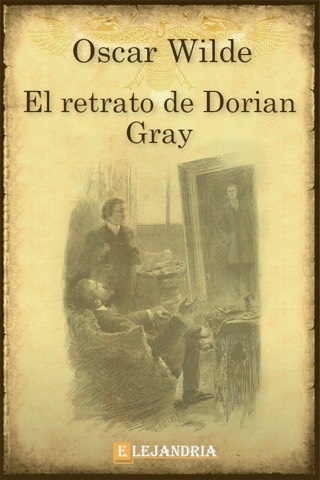
El retrato de Dorian Gray
Oscar Wilde · 1890 · Preface and chapters 1–2, ~10,500 words · level B2 · in English: The Picture of Dorian Gray
A young man stays beautiful while his portrait ages with every sin. Oscar Wilde’s only novel, in an anonymous Spanish translation.