
Doña Perfecta in Spanish, with English translation
Benito Pérez Galdós · 1876 · Chapter 1, ~744 words · level B2
A young engineer from Madrid gets off the train at a cold, sleepy station on his way to marry his cousin, in a cathedral town that has already made up its mind about him. Galdós’s novel of two Spains.
Add the whole book to your wishlist Only chapter 1 is ready so far. Free: the books readers ask for most are the next ones we prepare in full. Read chapter 1 in Lexico.The opening, as you read it in Lexico
The first 750 words of the Spanish text. Tap any sentence for its English translation, then any word for its meaning: that is what the app does on every page.
Cuando el tren mixto descendente número 65 (no es preciso nombrar la línea), se detuvo en la pequeña estación situada entre los kilómetros 171 y 172, casi todos los viajeros de segunda y tercera clase se quedaron durmiendo o bostezando dentro de los coches, porque el frío penetrante de la madrugada no convidaba a pasear por el desamparado andén. El único viajero de primera que en el tren venía bajó apresuradamente, y dirigiéndose a los empleados, preguntóles si aquél era el apeadero de Villahorrenda. (Este nombre, como otros muchos que después se verán, es propiedad del autor.)
When the down mixed train number 65 (there is no need to name the line) stopped at the small station between kilometers 171 and 172, almost all the second- and third-class passengers stayed inside the carriages dozing or yawning, because the piercing cold of the early morning did not invite walking along the deserted platform. The only first-class passenger who had come on the train got down hurriedly, and addressing the employees, asked them whether that was the Villahorrenda halt. (This name, like many others that will be seen later, is the author's property.)
—En Villahorrenda estamos—repuso el conductor, cuya voz se confundió con el cacarear de las gallinas que en aquel momento eran subidas al furgón. —Se me había olvidado llamarle a usted, Sr. de Rey. Creo que ahí le esperan a usted con las caballerías.
"We are in Villahorrenda," replied the conductor, whose voice blended with the clucking of the hens that were being loaded into the van at that moment. I had forgotten to call you, Mr. de Rey. I think they are waiting for you there with the mounts.
—¡Pero hace aquí un frío de tres mil demonios! —dijo el viajero envolviéndose en su manta. —¿No hay en el apeadero algún sitio donde descansar y reponerse antes de emprender un viaje a caballo por este país de hielo?
But it is awfully cold here! said the traveler, wrapping himself in his blanket. "Isn't there some place at the halt where one can rest and recover before setting out on a journey on horseback through this land of ice?"
No había concluído de hablar, cuando el conductor, llamado por las apremiantes obligaciones de su oficio, marchóse, dejando a nuestro desconocido caballero con la palabra en la boca. Vió éste que se acercaba otro empleado con un farol pendiente de la derecha mano, el cual movíase al compás de la marcha, proyectando geométricas series de ondulaciones luminosas. La luz caía sobre el piso del andén, formando un zig zag semejante al que describe la lluvia de una regadera.
He had hardly finished speaking when the conductor, called away by the pressing duties of his job, left, leaving our unknown gentleman standing there with his words unanswered. He saw another employee approaching with a lantern hanging from his right hand, which swung in time with his walk, casting geometric series of luminous undulations. The light fell on the platform floor, forming a zigzag like the one a watering can's rain makes.
—¿Hay fonda o dormitorio en la estación de Villahorrenda? preguntó el viajero al del farol.
"Is there an inn or dormitory at the Villahorrenda station?" the traveler asked the man with the lantern.
—Aquí no hay nada—respondió éste secamente, corriendo hacia los que cargaban y echándoles tal rociada de votos, juramentos, blasfemias y atroces invocaciones, que hasta las gallinas, escandalizadas de tan grosera brutalidad, murmuraron dentro de sus cestas.
"There's nothing here," the man replied curtly, running toward those who were loading and showering them with such a torrent of oaths, curses, blasphemies and appalling invocations that even the hens, scandalized by such coarse brutality, clucked inside their baskets.
—Lo mejor será salir de aquí a toda prisa—dijo el caballero para su capote. —El conductor me anunció que ahí estaban las caballerías.
"The best thing is to get out of here in a hurry," said the gentleman, muttering into his cloak. The conductor told me that the mounts were waiting there.
Esto pensaba, cuando sintió que una sutil y respetuosa mano le tiraba suavemente del abrigo. Volvióse y vió una obscura masa de paño pardo sobre sí misma revuelta y por cuyo principal pliegue asomaba el avellanado rostro astuto de un labriego castellano. Fijóse en la desgarbada estatura que recordaba al chopo entre los vegetales; vió los sagaces ojos que bajo el ala de ancho sombrero de terciopelo viejo resplandecían; vió la mano morena y acerada que empuñaba una vara verde y el ancho pie que, al moverse, hacía sonajear el hierro de la espuela.
He was thinking this when he felt a subtle, respectful hand gently tugging at his coat. He turned and saw a dark mass of brown cloth, curled up on itself, from whose main fold peeked the hazel-colored, sly face of a Castilian peasant. He fixed his gaze on the gangly stature that recalled the poplar among the plants; he saw the shrewd eyes that gleamed under the brim of a wide, old velvet hat; he saw the tanned, steely hand gripping a green stick and the broad foot that, as it moved, made the iron of the spur jingle.
—¿Es usted el Sr. D. José de Rey? —preguntó, echando mano al sombrero.
Are you Mr. Don José de Rey? he asked, reaching for his hat.
—Sí; y usted—repuso el caballero con alegría—será el criado de doña Perfecta, que viene a buscarme a este apeadero para conducirme a Orbajosa.
"Yes; and you," replied the gentleman joyfully, "must be Doña Perfecta's servant, who has come to fetch me at this halt to take me to Orbajosa."
—El mismo. Cuando usted guste marchar... La jaca corre como el viento. Me parece que el Sr. D. José ha de ser buen ginete. Verdad es que a quien de casta le viene...
The very one. Whenever you like to leave... The pony runs like the wind. It seems to me that Mr. Don José must be a good rider. True enough: it comes naturally to one of good stock.
—¿Por dónde se sale? —dijo el viajero con impaciencia.
Which way is the exit? said the traveler impatiently.
—Vamos, vámonos de aquí, señor... ¿Cómo se llama usted?
"Come on, let's get out of here, sir... What is your name?"
—Me llamo Pedro Lucas—respondió el del paño pardo, repitiendo la intención de quitarse el sombrero; pero me llaman el tío Licurgo. ¿En dónde está el equipaje del señorito?
"My name is Pedro Lucas," replied the man in brown cloth, repeating his intention to take off his hat; but they call me Uncle Licurgo. Where is the young master's luggage?
—Allí bajo el reloj lo veo. Son tres bultos. Dos maletas y un mundo de libros para el Sr. D. Cayetano. Tome usted el talón.
"I see it there under the clock." There are three bundles. Two suitcases and a whole load of books for Mr. Don Cayetano. Please take the claim ticket.
Un momento después señor y escudero hallábanse a espaldas de la barraca llamada estación, frente a un caminejo que partiendo de allí se perdía en las vecinas lomas desnudas, donde confusamente se distinguía el miserable caserío de Villahorrenda. Tres caballerías debían transportar todo, hombres y mundos. Una jaca de no mala estampa era destinada al caballero. El tío Licurgo oprimiría los lomos de un cuartago venerable, algo desvencijado, aunque seguro; y el macho, cuyo freno debía regir un joven zagal de piernas listas y fogosa sangre, cargaría el equipaje.
A moment later the gentleman and squire found themselves behind the shed called a station, facing a path that, leaving from there, vanished into the nearby bare hills, where the wretched hamlet of Villahorrenda could dimly be made out. Three mounts were to carry everything, men and things alike. A pony of decent appearance was assigned to the gentleman. Uncle Licurgo would bestride the back of a venerable, somewhat rickety but sure-footed old nag; and the mule, whose bridle a young lad with nimble legs and fiery blood was to guide, would carry the luggage.
Antes de que la caravana se pusiese en movimiento, partió el tren, que se iba escurriendo por la vía con la parsimoniosa cachaza de un tren mixto. Sus pasos, retumbando cada vez más lejanos, producían ecos profundos bajo tierra. Al entrar en el túnel del kilómetro 172, lanzó el vapor por el silbato y un aullido estrepitoso resonó en los aires. El túnel, echando por su negra boca un hálito blanquecino, clamoreaba como una trompeta, y al oír su enorme voz, despertaban aldeas, villas, ciudades, provincias. Aquí cantaba un gallo, más allá otro. Principiaba a amanecer.
Before the caravan could get moving, the train left, slipping along the track with the unhurried sluggishness of a mixed train. Its steps, rumbling ever more distant, produced deep echoes under the ground. Upon entering the tunnel at kilometer 172, it let off steam through the whistle, and a deafening howl echoed through the air. The tunnel, sending a whitish breath out of its black mouth, bellowed like a trumpet, and at the sound of its enormous voice villages, towns, cities and provinces awoke. Here one rooster crowed, farther off another. Dawn was beginning to break.
Want the rest? Lexico has chapter 1 of Doña Perfecta so far. Add the book to your wishlist: the titles readers ask for most are the next ones we prepare in full, with the same sentence-by-sentence translation, every word explained in context, and flashcards from the words you look up.
Add the whole book to your wishlistWords from this passage
20 words from the opening worth knowing for the rest of the book, with the meaning they have here.
| Spanish | English |
|---|---|
| mixto | mixed |
| descendente | down-line |
| el número | number |
| preciso | necessary |
| nombrar | to name |
| la línea | line |
| detener | to stop, halt |
| pequeño | small |
| situado | located, situated |
| el kilómetro | kilometer |
| segundo | second |
| tercero | third |
| la clase | class |
| quedar | to be, to end up |
| dormir | to sleep |
| bostezar | to yawn |
| el coche | carriage, coach |
| el frío | cold, coldness |
| penetrante | penetrating, piercing |
| la madrugada | early hours of the morning, before dawn (here: early morning) |
More Spanish books with English translation
El almohadón de plumas
Horacio Quiroga · 1907 · ~1,000 words · level B1 · in English: The Feather Pillow
A young bride wastes away in a cold, silent house, and nobody can find out why. Horacio Quiroga’s best-known horror story, and the shortest book on Lexico.
La gallina degollada
Horacio Quiroga · 1909 · ~4,500 words · level B1–B2 · in English: The Decapitated Chicken
An illness leaves a couple’s four sons severely disabled, and all their hopes move to their healthy daughter. A short, brutal horror story by Quiroga.
Los ojos sombríos
Horacio Quiroga · ~6,000 words · level B2 · in English: The Dark Eyes
At a dance, a man just out of a break-up listens to an old friend’s tangled love story. Quiroga in a romantic, feverish mood.
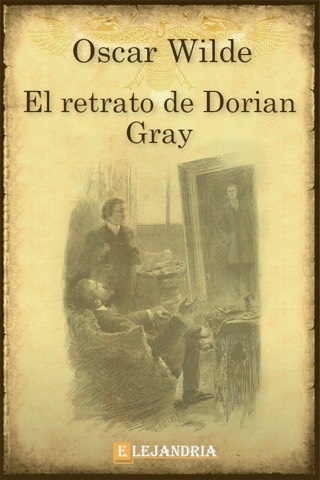
El retrato de Dorian Gray
Oscar Wilde · 1890 · Preface and chapters 1–2, ~10,500 words · level B2 · in English: The Picture of Dorian Gray
A young man stays beautiful while his portrait ages with every sin. Oscar Wilde’s only novel, in an anonymous Spanish translation.