Abel Sánchez in Spanish, with English translation
Miguel de Unamuno · 1917 · Opening, ~696 words · level B2
Abel and Joaquín have known each other since before they can remember; Abel is liked without trying, and Joaquín is consumed by it. Unamuno’s novel of envy, a modern Cain and Abel.
Add the whole book to your wishlist Only the opening is ready so far. Free: the books readers ask for most are the next ones we prepare in full. Read the opening in Lexico.The opening, as you read it in Lexico
The first 700 words of the Spanish text. Tap any sentence for its English translation, then any word for its meaning: that is what the app does on every page.
No recordaban Abel Sánchez y Joaquín Monegro desde cuándo se conocían. Eran conocidos desde antes de la niñez, desde la primera infancia, pues ya sus sendas nodrizas se juntaban y los juntaban cuando aun ellos no sabían hablar. Aprendió cada uno de ellos a conocerse conociendo al otro. Y así vivieron y se hicieron juntos amigos desde nacimiento casi, más bien hermanos de crianza.
Abel Sánchez and Joaquín Monegro could not remember since when they had known each other. They had known each other since before childhood, since early infancy, because their respective wet-nurses were already bringing them together even before they could talk. Each of them learned to know each other by getting to know the other. And so they lived, and from almost birth they became close friends, or rather brothers by upbringing.
En sus paseos, en sus juegos, en sus otras amistades comunes, parecía dominar e iniciarlo todo Joaquín, el más voluntarioso; pero era Abel quien, pareciendo ceder, hacía la suya siempre. Y es que le importaba más no obedecer que mandar. Casi nunca reñían. «Por mí como tú quieras...!» le decía Abel a Joaquín, y éste se exasperaba a las veces porque con aquel «como tú quieras...!» esquivaba las disputas.
In their walks, their games and their other shared friendships, Joaquín seemed to dominate and start everything, the more willful of the two; but it was Abel who, seeming to yield, always got his own way. The truth is that he cared more about not obeying than about commanding. They almost never quarrelled. "Whatever you want, as far as I am concerned...!" Abel would say to Joaquín, and the latter would sometimes get exasperated, because with that "whatever you want...!" he dodged the arguments.
—Nunca me dices que no! —exclamaba Joaquín.
You never say no to me! Joaquín exclaimed.
—Y para qué? —respondía el otro.
And what for? the other one replied.
—Bueno, este no quiere que vayamos al Pinar—dijo una vez aquel cuando varios compañeros se disponían a un paseo.
"Well, he doesn't want us to go to the Pinar," that one once said, when several classmates were getting ready for a walk.
—Yo? pues no he de quererlo...! —exclamó Abel. —Sí, hombre, sí; como tú quieras. Vamos allá!
Me? Well, I won't want it...! Abel exclaimed. Yes, come on, yes; whatever you like. Let's go then!
—No, como yo quiera, no! Ya te he dicho otras veces que no! Como yo quiera no! Tú no quieres ir!
No, not the way I want it, no! I've already told you before, no! Not the way I want it, no! You don't want to go!
—Que sí, hombre...
Yes, I'm telling you, man...
—Pues entonces no lo quiero yo...
Well then, I don't want it either...
—Ni yo tampoco...
Nor do I...
—Eso no vale—gritó ya Joaquín. —O con él o conmigo!
"That doesn't count," Joaquín shouted. Either with him or with me!
Y todos se fueron con Abel, dejándole a Joaquín solo.
And everyone went off with Abel, leaving Joaquín alone.
Al comentar éste en sus Confesiones tal suceso de la infancia, escribía: «Ya desde entonces era él simpático, no sabía por qué, y antipático yo, sin que se me alcanzara mejor la causa de ello, y me dejaban solo. Desde niño me aislaron mis amigos».
In commenting on such an event from childhood in his Confessions, he wrote: "Even then he was likeable, I didn't know why, and I was unlikeable, without ever understanding the reason, and they left me alone. Since I was a child, my friends shunned me."
Durante los estudios del bachillerato, que siguieron juntos, Joaquín era el empollón, el que iba a la caza de los premios, el primero en las aulas y el primero Abel fuera de ellas, en el patio del Instituto, en la calle, en el campo, en los novillos, entre los compañeros. Abel era el que hacía reir con sus gracias y, sobre todo, obtenía triunfos de aplauso por las caricaturas que de los catedráticos hacía. «Joaquín es mucho más aplicado, pero Abel es más listo... si se pusiera a estudiar...» Y este juicio común de los compañeros, sabido por Joaquín, no hacía sino envenenarle el corazón. Llegó a sentir la tentación de descuidar el estudio y tratar de vencer al otro en el otro campo, pero diciéndose: «bah! qué saben ellos...» siguió fiel a su propio natural. Además, por más que procuraba aventajar al otro en ingenio y donosura no lo conseguía. Sus chistes no eran reídos y pasaba por ser fundamentalmente serio. «Tú eres fúnebre»—solía decirle Federico Cuadrado—«tus chistes son chistes de duelo».
During their secondary-school years, which they spent together, Joaquín was the swot, the one chasing prizes, first in class, while Abel was first outside it: in the schoolyard of the Institute, in the street, in the countryside, playing truant, among their classmates. Abel was the one who made people laugh with his jokes and, above all, won applause for the caricatures he drew of the professors. "Joaquín is much more diligent, but Abel is cleverer... if he would only set himself to studying..." And this common opinion of the classmates, known to Joaquín, did nothing but poison his heart. He came to feel the temptation to neglect his studies and try to beat the other in the other field, but, telling himself, "bah! what do they know...", he remained faithful to his own nature. Moreover, however much he tried to outdo the other in wit and grace, he did not achieve it. His jokes were not laughed at, and he was considered essentially serious. "You are gloomy," Federico Cuadrado used to tell him; "your jokes are funeral jokes."
Concluyeron ambos el bachillerato. Abel se dedicó a ser artista siguiendo el estudio de la pintura y Joaquín se matriculó en la Facultad de Medicina. Veíanse con frecuencia y hablaba cada uno al otro de los progresos que en sus respectivos estudios hacían, empeñándose Joaquín en probarle a Abel que la Medicina era también un arte y hasta un arte bella, en que cabía inspiración poética. Otras veces, en cambio, daba en menospreciar las bellas artes, enervadoras del espíritu, exaltando la ciencia, que es la que eleva, fortifica y ensancha el espíritu con la verdad.
Both finished secondary school. Abel devoted himself to being an artist, pursuing the study of painting, and Joaquín enrolled at the Faculty of Medicine. They saw each other often, and each would talk to the other about the progress they were making in their respective studies, Joaquín insisting on proving to Abel that Medicine was also an art, even a beautiful one, in which poetic inspiration had room. At other times, on the other hand, he would take to disparaging the fine arts, enervating to the spirit, while extolling science, which is what elevates, strengthens and broadens the spirit with truth.
—Pero es que la Medicina tampoco es ciencia—le decía Abel. —No es sino un arte, una práctica derivada de ciencias.
"But the thing is that medicine isn't science either," Abel would say to him. "It is nothing but an art, a practice derived from the sciences."
—Es que yo no he de dedicarme al oficio de curar enfermos—replicaba Joaquín.
"The thing is I'm not going to devote myself to the profession of treating patients," Joaquín would reply.
—Oficio muy honrado y muy útil...—añadía el otro.
"A very honorable and very useful profession..." the other would add.
—Sí, pero no para mí. Será todo lo honrado y todo lo útil que quieras, pero detesto esa honradez y esa utilidad. Para otros el hacer dinero tomando el pulso, mirando la lengua y recetando cualquier cosa. Yo aspiro a más.
Yes, but not for me. It will be as honorable and as useful as you like, but I detest that honesty and that usefulness. For others, making money by taking pulses, looking at tongues and prescribing anything at all. I aspire to more.
—A más?
To more?
—Sí, yo aspiro a abrir nuevos caminos. Pienso dedicarme a la investigación científica. La gloria médica es de los que descubrieron el secreto de alguna enfermedad y no de los que aplicaron el descubrimiento con mayor o menor fortuna.
Yes, I aspire to open new paths. I plan to devote myself to scientific research. Medical glory belongs to those who discovered the secret of some disease, and not to those who applied the discovery with greater or lesser success.
—Me gusta verte así, tan idealista.
I like seeing you like this, so idealistic.
—Pues qué, ¿crees que sólo vosotros, los artistas, los pintores, soñáis con la gloria?
Well then, do you think only you, the artists and the painters, dream of glory?
—Hombre, nadie te ha dicho que yo sueñe con tal cosa...
Come on, nobody has told you that I dream of such a thing...
Want the rest? Lexico has the opening of Abel Sánchez so far. Add the book to your wishlist: the titles readers ask for most are the next ones we prepare in full, with the same sentence-by-sentence translation, every word explained in context, and flashcards from the words you look up.
Add the whole book to your wishlistWords from this passage
20 words from the opening worth knowing for the rest of the book, with the meaning they have here.
| Spanish | English |
|---|---|
| recordar | to remember |
| conocer | to know, to be familiar with |
| conocido | acquainted |
| la niñez | childhood |
| primero | first, first up (here: early) |
| la infancia | childhood, infancy |
| senda | respective |
| la nodriza | wet nurse (here: wet-nurses) |
| juntar | to join together |
| saber | to know, to understand |
| hablar | to talk or speak regularly with someone |
| aprender | to learn |
| vivir | to live |
| junto | together |
| el amigo | friend |
| el nacimiento | birth |
| el hermano | brother |
| la crianza | upbringing |
| el paseo | walk, stroll |
| el juego | game |
More Spanish books with English translation
El almohadón de plumas
Horacio Quiroga · 1907 · ~1,000 words · level B1 · in English: The Feather Pillow
A young bride wastes away in a cold, silent house, and nobody can find out why. Horacio Quiroga’s best-known horror story, and the shortest book on Lexico.
La gallina degollada
Horacio Quiroga · 1909 · ~4,500 words · level B1–B2 · in English: The Decapitated Chicken
An illness leaves a couple’s four sons severely disabled, and all their hopes move to their healthy daughter. A short, brutal horror story by Quiroga.
Los ojos sombríos
Horacio Quiroga · ~6,000 words · level B2 · in English: The Dark Eyes
At a dance, a man just out of a break-up listens to an old friend’s tangled love story. Quiroga in a romantic, feverish mood.
El retrato de Dorian Gray
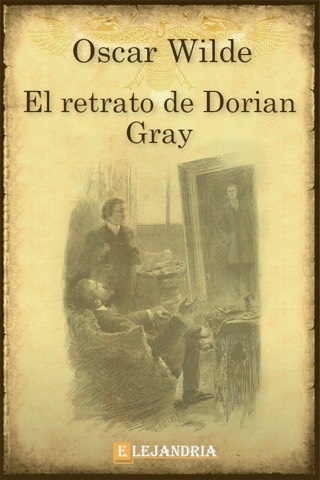
Oscar Wilde · 1890 · Preface and chapters 1–2, ~10,500 words · level B2 · in English: The Picture of Dorian Gray
A young man stays beautiful while his portrait ages with every sin. Oscar Wilde’s only novel, in an anonymous Spanish translation.