
Zadig ou la Destinée in French, with English translation
Voltaire · 1747 · Opening, ~921 words · level B2 · in English: Zadig, or Destiny
In ancient Babylon the young Zadig is rich, handsome, wise and good, and expects to be happy. Voltaire’s philosophical tale shows what fate does with such expectations, in short, quick chapters.
Add the whole book to your wishlist Only the opening is ready so far. Free: the books readers ask for most are the next ones we prepare in full. Read the opening in Lexico.The opening, as you read it in Lexico
The first 900 words of the French text. Tap any sentence for its English translation, then any word for its meaning: that is what the app does on every page.
Du temps du roi Moabdar il y avait à Babylone un jeune homme nommé Zadig, né avec un beau naturel fortifié par l'éducation. Quoique riche et jeune, il savait modérer ses passions; il n'affectait rien; il ne voulait point toujours avoir raison, et savait respecter la faiblesse des hommes. On était étonné de voir qu'avec beaucoup d'esprit il n'insultât jamais par des railleries à ces propos si vagues, si rompus, si tumultueux, à ces médisances téméraires, à ces décisions ignorantes, à ces turlupinades grossières, à ce vain bruit de paroles, qu'on appelait conversation dans Babylone. Il avait appris, dans le premier livre de Zoroastre, que l'amour-propre est un ballon gonflé de vent, dont il sort des tempêtes quand on lui a fait une piqûre. Zadig surtout ne se vantait pas de mépriser les femmes et de les subjuguer. Il était généreux; il ne craignait point d'obliger des ingrats, suivant ce grand précepte de Zoroastre, Quand tu manges, donne à manger aux chiens, dussent-ils te mordre. Il était aussi sage qu'on peut l'être; car il cherchait à vivre avec des sages. Instruit dans les sciences des anciens Chaldéens, il n'ignorait pas les principes physiques de la nature, tels qu'on les connaissait alors, et savait de la métaphysique ce qu'on en a su dans tous les âges, c'est-à-dire fort peu de chose. Il était fermement persuadé que l'année était de trois cent soixante et cinq jours et un quart, malgré la nouvelle philosophie de son temps, et que le soleil était au centre du monde; et quand les principaux mages lui disaient, avec une hauteur insultante, qu'il avait de mauvais sentiments, et que c'était être ennemi de l'état que de croire que le soleil tournait sur lui-même, et que l'année avait douze mois, il se taisait sans colère et sans dédain.
In the time of King Moabdar there was, in Babylon, a young man named Zadig, born with a fine nature strengthened by education. Though rich and young, he knew how to restrain his passions; he affected nothing; he did not always need to be right, and knew how to respect human weakness. One was astonished to see that, with much wit, he never mocked with derision those vague, broken, tumultuous remarks, those rash slanders, those ignorant judgments, those crude jokes, that empty noise of words that people in Babylon called conversation. He had learned, in the first book of Zoroaster, that self-love is a balloon full of wind, from which storms come out when someone has pricked it. Zadig in particular did not boast of despising women and subduing them. He was generous; he was not afraid to oblige ungrateful people, following that great precept of Zoroaster: When you eat, give food to the dogs, even if they should bite you. He was as wise as one can be, for he sought to live with the wise. Educated in the sciences of the ancient Chaldeans, he was not ignorant of the physical principles of nature, as they were then known, and he knew of metaphysics what has been known in every age, that is to say, very little. He was firmly convinced that the year was 365 and a quarter days, despite the new philosophy of his time, and that the sun was at the center of the world; and when the chief magi told him, with insulting haughtiness, that he had bad sentiments, and that it was to be an enemy of the state to believe the sun turned on itself, and that the year had twelve months, he kept silent without anger or disdain.
Zadig, avec de grandes richesses, et par conséquent avec des amis, ayant de la santé, une figure aimable, un esprit juste et modéré, un coeur sincère et noble, crut qu'il pouvait être heureux. Il devait se marier à Sémire, que sa beauté, sa naissance et sa fortune rendaient le premier parti de Babylone. Il avait pour elle un attachement solide et vertueux, et Sémire l'aimait avec passion. Ils touchaient au moment fortuné qui allait les unir, lorsque, se promenant ensemble vers une porte de Babylone, sous les palmiers qui ornaient le rivage de l'Euphrate, ils virent venir à eux des hommes armés de sabres et de flèches. C'étaient les satellites du jeune Orcan, neveu d'un ministre, à qui les courtisans de son oncle avaient fait accroire que tout lui était permis. Il n'avait aucune des grâces ni des vertus de Zadig; mais, croyant valoir beaucoup mieux, il était désespéré de n'être pas préféré. Cette jalousie, qui ne venait que de sa vanité, lui fit penser qu'il aimait éperdument Sémire. Il voulait l'enlever. Les ravisseurs la saisirent, et dans les emportements de leur violence ils la blessèrent, et firent couler le sang d'une personne dont la vue aurait attendri les tigres du mont Imaüs. Elle perçait le ciel de ses plaintes. Elle s'écriait, Mon cher époux! on m'arrache à ce que j'adore. Elle n'était point occupée de son danger; elle ne pensait qu'à son cher Zadig. Celui-ci, dans le même temps, la défendait avec toute la force que donnent la valeur et l'amour. Aidé seulement de deux esclaves, il mit les ravisseurs en fuite, et ramena chez elle Sémire évanouie et sanglante, qui en ouvrant les yeux vit son libérateur. Elle lui dit: O Zadig! je vous aimais comme mon époux, je vous aime comme celui à qui je dois l'honneur et la vie. Jamais il n'y eut un coeur plus pénétré que celui de Sémire; jamais bouche plus ravissante n'exprima des sentiments plus touchants par ces paroles de feu qu'inspirent le sentiment du plus grand des bienfaits et le transport le plus tendre de l'amour le plus légitime. Sa blessure était légère; elle guérit bientôt. Zadig était blessé plus dangereusement; un coup de flèche reçu près de l'oeil lui avait fait une plaie profonde. Sémire ne demandait aux dieux que la guérison de son amant. Ses yeux étaient nuit et jour baignés de larmes: elle attendait le moment où ceux de Zadig pourraient jouir de ses regards; mais un abcès survenu à l'oeil blessé fit tout craindre. On envoya jusqu'à Memphis chercher le grand médecin Hermès, qui vint avec un nombreux cortège. Il visita le malade, et déclara qu'il perdrait l'oeil; il prédit même le jour et l'heure où ce funeste accident devait arriver. Si c'eût été l'oeil droit, dit-il, je l'aurais guéri; mais les plaies de l'oeil gauche sont incurables. Tout Babylone, en plaignant la destinée de Zadig, admira la profondeur de la science d'Hermès. Deux jours après l'abcès perça de lui-même; Zadig fut guéri parfaitement. Hermès écrivit un livre où il lui prouva qu'il n'avait pas dû guérir. Zadig ne le lut point; mais, dès qu'il put sortir, il se prépara à rendre visite à celle qui fesait l'espérance du bonheur de sa vie, et pour qui seule il voulait avoir des yeux. Sémire était à la campagne depuis trois jours. Il apprit en chemin que cette belle dame, ayant déclaré hautement qu'elle avait une aversion insurmontable pour les borgnes, venait de se marier à Orcan la nuit même. A cette nouvelle il tomba sans connaissance; sa douleur le mit au bord du tombeau; il fut long-temps malade, mais enfin la raison l'emporta sur son affliction; et l'atrocité de ce qu'il éprouvait servit même à le consoler.
Zadig, with great wealth, and consequently with friends, enjoying good health, a pleasant appearance, a fair and moderate mind, and a sincere and noble heart, believed he could be happy. He was to marry Semire, whose beauty, birth and fortune made her the best match in Babylon. He had for her a solid and virtuous attachment, and Semire loved him with passion. They were on the verge of the fortunate moment that was about to unite them, when, strolling together toward a gate of Babylon, under the palm trees that adorned the shore of the Euphrates, they saw armed men with sabers and arrows coming toward them. They were the henchmen of young Orcan, nephew of a minister, to whom the courtiers of his uncle had led people to believe that everything was permitted to him. He had none of the graces or virtues of Zadig; but, believing himself much better, he was desperate at not being preferred. This jealousy, which came only from his vanity, made him think that he madly loved Semire. He wanted to abduct her. The abductors seized her, and in the fits of their violence they wounded her and drew the blood of a person whose sight would have moved the tigers of Mount Imaus. She pierced the sky with her cries. She cried out: My dear husband! They are tearing me away from what I adore. She was not at all concerned for her danger; she thought only of her dear Zadig. Meanwhile he defended her with all the strength that courage and love give. Helped by only two slaves, he put the abductors to flight, and brought Semire, fainted and bloody, back to her home, who, opening her eyes, saw her rescuer. She said to him: O Zadig! I loved you as my husband, I love you as the one to whom I owe honor and life. Never was a heart more moved than Semire's; never did a more ravishing mouth express feelings more touching with those words of fire that the sense of the greatest of benefits and the most tender transport of the most legitimate love inspire. His wound was slight; it soon healed. Zadig was more seriously wounded; an arrow blow received near the eye had made a deep gash. Semire asked the gods only for the recovery of her lover. His eyes were, night and day, bathed in tears; she waited for the moment when those of Zadig could enjoy her gaze; but an abscess that arose in the wounded eye gave cause for everything to be feared. They sent as far as Memphis to fetch the great physician Hermes, who came with a numerous retinue. He examined the patient and declared that he would lose the eye; he even predicted the day and the hour when this fatal accident was to happen. If it had been the right eye, he said, I would have healed it; but wounds to the left eye are incurable. All Babylon, while pitying Zadig's fate, admired the depth of Hermes' learning. Two days later the abscess burst on its own; Zadig was perfectly healed. Hermes wrote a book in which he proved to him that he should not have been able to heal. Zadig did not read it; but, as soon as he was able to go out, he prepared to pay a visit to her who was the hope of the happiness of his life, and for whom alone he wished to have eyes. Semire had been in the countryside for three days. On the way he learned that this beautiful lady, having openly declared that she had an insurmountable aversion to one-eyed men, had just married Orcan that very night. At this news he fell unconscious; his grief brought him to the brink of the grave; he was ill for a long time, but at last reason prevailed over his affliction; and the horror of what he was feeling even served to console him.
Want the rest? Lexico has the opening of Zadig ou la Destinée so far. Add the book to your wishlist: the titles readers ask for most are the next ones we prepare in full, with the same sentence-by-sentence translation, every word explained in context, and flashcards from the words you look up.
Add the whole book to your wishlistWords from this passage
20 words from the opening worth knowing for the rest of the book, with the meaning they have here.
| French | English |
|---|---|
| le temps | time |
| le roi | king |
| jeune | young |
| l’homme | man |
| nommer | to name, to call |
| naître | to be born |
| beau | handsome, fine |
| le naturel | nature |
| fortifier | to fortify |
| l’éducation | education |
| riche | rich |
| savoir | to know |
| modérer | to moderate, temper |
| la passion | Passion, suffering |
| affecter | to feign, affect |
| vouloir | to want, wish |
| la raison | reason (here: right) |
| respecter | to respect |
| la faiblesse | weakness |
| étonner | to surprise |
More French books with English translation
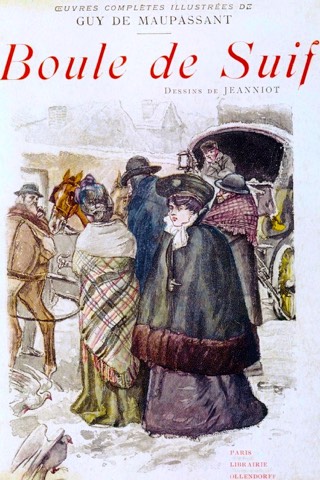
Boule de Suif
Guy de Maupassant · 1880 · ~10,500 words · level B2 · in English: Ball of Fat
During the Franco-Prussian War, a coach of respectable citizens flees occupied Rouen together with a prostitute nicknamed Boule de Suif, and their gratitude to her does not last. The story that made Maupassant famous.
Bel-Ami
Guy de Maupassant · 1885 · Chapter 1, ~5,000 words · level B2
Georges Duroy, a penniless former soldier, arrives in Paris and climbs through journalism and the beds of well-connected women. Maupassant’s novel of ambition.
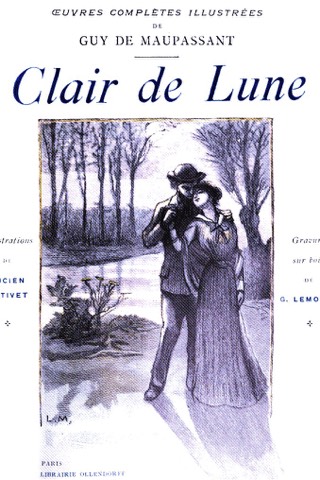
Clair de lune
Guy de Maupassant · 1884 · ~24,500 words · level B2 · in English: Moonlight
Three stories from Maupassant’s collection: “Clair de lune”, in which a priest who distrusts women sets out to catch his niece with her lover, “Conte de Noël” and “Mademoiselle Cocotte”.
La Vénus d'Ille
Prosper Mérimée · 1837 · ~10,500 words · level B2–C1 · in English: The Venus of Ille
An antiquarian visits a village in Roussillon where a bronze Venus has just been dug up, a few days before his host’s son is to be married. Mérimée’s tale of the fantastic, told with a straight face.