Clair de lune in French, with English translation
Guy de Maupassant · 1884 · ~24,500 words · level B2 · in English: Moonlight
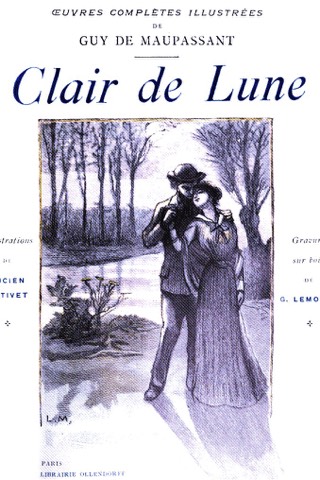
Three stories from Maupassant’s collection: “Clair de lune”, in which a priest who distrusts women sets out to catch his niece with her lover, “Conte de Noël” and “Mademoiselle Cocotte”.
Read the whole book free in Lexico In your browser. Tap any word for its meaning and keep it as a flashcard.The opening, as you read it in Lexico
The first 750 words of the French text. Tap any sentence for its English translation, then any word for its meaning: that is what the app does on every page.
Il portait bien son nom de bataille, l'abbé Marignan. C'était un grand prêtre maigre, fanatique, d'âme toujours exaltée, mais droite. Toutes ses croyances étaient fixes, sans jamais d'oscillations. Il s'imaginait sincèrement connaître son Dieu, pénétrer ses desseins, ses volontés, ses intentions.
He bore well his battle name, Father Marignan. He was a tall, thin, fanatical priest, always exalted in spirit, but upright. All his beliefs were fixed, without any oscillations ever. He sincerely imagined he knew his God, understood his plans, his wills, his intentions.
Quand il se promenait à grands pas dans l'allée de son petit presbytère de campagne, quelquefois une interrogation se dressait dans son esprit: «Pourquoi Dieu a-t-il fait cela?» Et il cherchait obstinément, prenant en sa pensée la place de Dieu, et il trouvait presque toujours. Ce n'est pas lui qui eût murmuré dans un élan de pieuse humilité: «Seigneur, vos desseins sont impénétrables!» ICI se disait: «Je suis le serviteur de Dieu, je dois connaître ses raisons d'agir, et les deviner si je ne les connais pas.»
When he was walking quickly down the lane of his small country presbytery, sometimes a question arose in his mind: "Why did God do that?" And he stubbornly searched, taking God’s place in his thoughts, and he almost always found an answer. It was not he who would have murmured in a burst of pious humility: “Lord, your plans are impenetrable!” Here he said to himself: “I am the servant of God; I must know his reasons for acting and guess them if I do not know them.”
Tout lui paraissait créé dans la nature avec une logique absolue et admirable. Les «Pourquoi» et les «Parce que» se balançaient toujours. Les aurores étaient faites pour rendre joyeux les réveils, les jours pour mûrir les moissons, les pluies pour les arroser, les soirs pour préparer au sommeil et les nuits sombres pour dormir.
Everything seemed to him created in nature with absolute and admirable logic. The "Whys" and the "Because" were always swinging back and forth. The dawns were made to make awakenings joyful, the days to ripen the harvests, the rains to water them, the evenings to prepare for sleep, and the dark nights to sleep.
Les quatre saisons correspondaient parfaitement à tous les besoins de l'agriculture; et jamais le soupçon n'aurait pu venir au prêtre que la nature n'a point d'intentions et que tout ce qui vit s'est plié, au contraire, aux dures nécessités des époques, des climats et de la matière.
The four seasons matched perfectly all the needs of agriculture; and never could the priest suspect that nature has no intentions and that everything living has instead yielded to the hard necessities of the times, climates, and matter.
Mais il haïssait la femme, il la haïssait inconsciemment, et la méprisait par instinct. Il répétait souvent la parole du Christ: «Femme, qu'y a-t-il de commun entre vous et moi?» et il ajoutait: «On disait que Dieu lui-même se sentait mécontent de cette oeuvre-là.» La femme était bien pour lui l'enfant douze fois impure dont parle le poète. Elle était le tentateur qui avait entraîné le premier homme et qui continuait toujours son oeuvre de damnation, l'être faible, dangereux, mystérieusement troublant. Et plus encore que leur corps de perdition, il haïssait leur âme aimante.
But he hated the woman; he unconsciously hated her and instinctively despised her. He often repeated the words of Christ: "Woman, what do you and I have in common?" and he added: "They said that even God himself felt dissatisfied with that work." The woman was indeed to him the child twelve times impure of whom the poet speaks. She was the tempter who had led the first man astray and who always continued her work of damnation, the weak, dangerous, mysteriously troubling being. And more than their body of perdition, he hated their loving soul.
Souvent il avait senti leur tendresse attachée à lui et, bien qu'il se sût inattaquable, il s'exaspérait de ce besoin d'aimer qui frémissait toujours en elles.
Often he had felt their tenderness attached to him and, although he knew himself to be untouchable, he was exasperated by that need to love which always trembled within them.
Dieu, à son avis, n'avait créé la femme que pour tenter l'homme et l'éprouver. Il ne fallait approcher d'elle qu'avec des précautions défensives, et les craintes qu'on a des pièges. Elle était, en effet, toute pareille à un piège avec ses bras tendus et ses lèvres ouvertes vers l'homme.
God, in his opinion, had created woman only to tempt and test man. One should only approach her with defensive precautions and the fears one has of traps. She was, indeed, just like a trap with her arms outstretched and lips open toward the man.
Il n'avait d'indulgence que pour les religieuses que leur voeu rendait inoffensives; mais il les traitait durement quand même, parce qu'il la sentait toujours vivante au fond de leur coeur enchaîné, de leur coeur humilié, cette éternelle tendresse qui venait encore à lui, bien qu'il fût un prêtre.
He had indulgence only for the nuns whom their vow made harmless; but he treated them harshly anyway, because he always felt alive deep in their chained, humbled hearts, that eternal tenderness that still came to him, even though he was a priest.
Il la sentait dans leurs regards plus mouillés de piété que les regards des moines, dans leurs extases où leur sexe se mêlait, dans leurs élans d'amour vers le Christ, qui l'indignaient parce que c'était de l'amour de femme, de l'amour charnel; il la sentait, cette tendresse maudite, dans leur docilité même, dans la douceur de leur voix en lui parlant, dans leurs yeux baissés, et dans leurs larmes résignées quand il les reprenait avec rudesse.
He felt it in their gazes, wetter with piety than the looks of monks, in their ecstasies where their sex mingled, in their bursts of love toward Christ, which outraged him because it was a woman's, carnal love; he felt that cursed tenderness even in their docility, in the softness of their voices when speaking to him, in their lowered eyes, and in their resigned tears when he reproached them harshly.
Et il secouait sa soutane en sortant des portes du couvent, et il s'en allait en allongeant les jambes comme s'il avait fui devant un danger.
And he shook his cassock as he left the convent gates, and he walked away stretching his legs as if fleeing from danger.
Il avait une nièce qui vivait avec sa mère dans une petite maison voisine. Il s'acharnait à en faire une soeur de charité.
He had a niece who lived with her mother in a small neighboring house. He was relentlessly determined to make her a Sister of Charity.
Elle était jolie, écervelée et moqueuse. Quand l'abbé sermonnait, elle riait; et quand il se fâchait contre elle, elle l'embrassait avec véhémence, le serrant contre son coeur, tandis qu'il cherchait involontairement à se dégager de cette étreinte qui lui faisait goûter cependant une joie douce, éveillant au fond de lui cette sensation de paternité qui sommeille en tout homme.
She was pretty, scatterbrained, and mocking. When the abbot was preaching, she laughed; and when he became angry with her, she kissed him vehemently, holding him close to her heart, while he involuntarily tried to free himself from that embrace which yet made him savor a gentle joy, awakening deep inside him that sensation of fatherhood that sleeps in every man.
Souvent il lui parlait de Dieu, de son Dieu, en marchant à côté d'elle par les chemins des champs. Elle ne l'écoutait guère et regardait le ciel, les herbes, les fleurs, avec un bonheur de vivre qui se voyait dans ses yeux. Quelquefois elle s'élançait pour attraper une bête volante, et s'écriait en la rapportant: «Regarde, mon oncle, comme elle est jolie; j'ai envie de l'embrasser.» Et ce besoin «d'embrasser des mouches» ou des grains de lilas inquiétait, irritait, soulevait le prêtre, qui retrouvait encore là cette indéracinable tendresse qui germe toujours au coeur des femmes.
Often he spoke to her about God, about his God, while walking beside her along the country paths. She scarcely listened and looked at the sky, the grasses, the flowers, with a joy of living that showed in her eyes. Sometimes she would leap to catch a flying insect and exclaimed while bringing it back: "Look, uncle, how pretty it is; I want to kiss it." And this need "to kiss flies" or lilac blossoms worried, irritated, and aroused the priest, who again found there that ineradicable tenderness that always grows at the heart of women.
Keep reading. The rest of Clair de lune is free in Lexico, with the same sentence-by-sentence translation, every word explained in context, and flashcards from the words you look up.
Continue in LexicoWords from this passage
20 words from the opening worth knowing for the rest of the book, with the meaning they have here.
| French | English |
|---|---|
| la bataille | battle |
| l’abbé | abbot, the head of an abbey (here: father (priest)) |
| maigre | meagre, skinny |
| fanatique | fanatic, fanatical |
| exalter | to elate, thrill |
| droit | right, straight |
| la croyance | belief |
| fixe | fixed |
| imaginer | to imagine |
| le dessein | intention (here: plans) |
| la volonté | will |
| promener | to walk, to go for a walk |
| l’allée | path, lane |
| le presbytère | presbytery, rectory |
| la campagne | country, countryside |
| l’interrogation | questioning, interrogation |
| dresser | to raise, to erect |
| la pensée | thought |
| l’élan | burst/impulse |
| impénétrable | impenetrable |
More French books with English translation
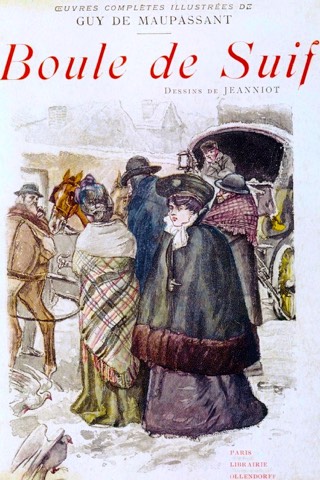
Boule de Suif
Guy de Maupassant · 1880 · ~10,500 words · level B2 · in English: Ball of Fat
During the Franco-Prussian War, a coach of respectable citizens flees occupied Rouen together with a prostitute nicknamed Boule de Suif, and their gratitude to her does not last. The story that made Maupassant famous.
Bel-Ami
Guy de Maupassant · 1885 · Chapter 1, ~5,000 words · level B2
Georges Duroy, a penniless former soldier, arrives in Paris and climbs through journalism and the beds of well-connected women. Maupassant’s novel of ambition.
La Vénus d'Ille
Prosper Mérimée · 1837 · ~10,500 words · level B2–C1 · in English: The Venus of Ille
An antiquarian visits a village in Roussillon where a bronze Venus has just been dug up, a few days before his host’s son is to be married. Mérimée’s tale of the fantastic, told with a straight face.