La Vénus d'Ille in French, with English translation
Prosper Mérimée · 1837 · ~10,500 words · level B2–C1 · in English: The Venus of Ille
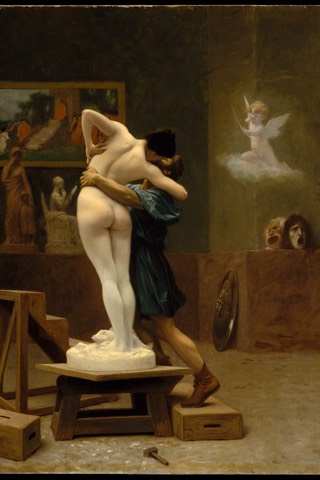
An antiquarian visits a village in Roussillon where a bronze Venus has just been dug up, a few days before his host’s son is to be married. Mérimée’s tale of the fantastic, told with a straight face.
Read the whole book free in Lexico In your browser. Tap any word for its meaning and keep it as a flashcard.The opening, as you read it in Lexico
The first 700 words of the French text. Tap any sentence for its English translation, then any word for its meaning: that is what the app does on every page.
Je descendais le dernier coteau du Canigou, et, bien que le soleil fût déjà couché, je distinguais dans la plaine les maisons de la petite ville d’Ille, vers laquelle je me dirigeais.
I was descending the last slope of the Canigou, and, although the sun had already set, I could make out the houses of the small town of Ille in the plain, towards which I was headed.
«Vous savez, dis-je au Catalan qui me servait de guide depuis la veille, vous savez sans doute où demeure M. de Peyrehorade?
"You know," I said to the Catalan who had been serving as my guide since the night before, "you probably know where Mr. de Peyrehorade lives?"
— Si je le sais! s’écria-t-il, je connais sa maison comme la mienne; et s’il ne faisait pas si noir, je vous la montrerais. C’est la plus belle d’Ille. Il a de l’argent, oui, M. de Peyrehorade; et il marie son fils à plus riche que lui encore.
"Yes, I do!" he exclaimed. "I know his house like my own; and if it weren’t so dark, I would show it to you." It is the most beautiful in Ille. He has money, yes, Mr. de Peyrehorade; and he is marrying his son to someone even richer than himself.
— Et ce mariage se fera-t-il bientôt? lui demandai-je.
And will this marriage take place soon? I asked him.
— Bientôt! il se peut que déjà les violons soient commandés pour la noce. Ce soir, peut-être, demain, après-demain, que sais-je! C’est à Puygarrig que ça se fera; car c’est mademoiselle de Puygarrig que monsieur le fils épouse. Ce sera beau, oui!»
"Soon! It may be that the violins are already ordered for the wedding." Tonight, maybe tomorrow, the day after tomorrow, who knows! It will take place at Puygarrig; because it is Mademoiselle de Puygarrig whom the young gentleman is marrying. It will be beautiful, yes!
J’étais recommandé à M. de Peyrehorade par mon ami M. de P. C’était, m’avait-il dit, un antiquaire fort instruit et d’une complaisance à toute épreuve. Il se ferait un plaisir de me montrer toutes les ruines à dix lieues à la ronde. Or je comptais sur lui pour visiter les environs d’Ille, que je savais riches en monuments antiques et du Moyen Âge. Ce mariage, dont on me parlait alors pour la première fois, dérangeait tous mes plans.
I was recommended to Mr. de Peyrehorade by my friend Mr. de P. He had told me he was a very learned antiquarian and unerringly courteous. He would be pleased to show me all the ruins within a ten-league radius. Now, I was counting on him to visit the surroundings of Ille, which I knew to be rich in ancient and medieval monuments. This marriage, which I was hearing about for the first time then, disrupted all my plans.
Je vais être un trouble-fête, me dis-je. Mais j’étais attendu; annoncé par M. de P., il fallait bien me présenter.
I'm going to be a party pooper, I said to myself. But I was expected; announced by Mr. de P., I had to introduce myself.
«Gageons, monsieur, me dit mon guide, comme nous étions déjà dans la plaine, gageons un cigare que je devine ce que vous allez faire chez M. de Peyrehorade?
"Let's bet, sir," said my guide, "since we were already in the plain, let's bet a cigar that I guess what you are going to do at Mr. de Peyrehorade's?"
— Mais, répondis-je en lui tendant un cigare, cela n’est pas bien difficile à deviner. À l’heure qu’il est, quand on a fait six lieues dans le Canigou, la grande affaire, c’est de souper.
— But, I replied, handing him a cigar, that is not very hard to guess. At this hour, after traveling six leagues in the Canigou, the main thing is to have supper.
— Oui, mais demain?… Tenez, je parierais que vous venez à Ille pour voir l’idole? j’ai deviné cela à vous voir tirer en portrait les saints de Serrabona.
— Yes, but tomorrow?… Here, I would bet that you come to Ille to see the idol? I guessed that by seeing you drawing portraits of the saints of Serrabona.
— L’idole! quelle idole?» Ce mot avait excité ma curiosité.
— The idol! What idol?" This word had sparked my curiosity.
«Comment! on ne vous a pas conté, à Perpignan, comment M. de Peyrehorade avait trouvé une idole en terre?
"How! Didn't they tell you in Perpignan how Mr. de Peyrehorade found an idol made of clay?"
— Vous voulez dire une statue en terre cuite, en argile?
— You mean a statue made of terracotta, made of clay?
— Non pas. Oui, bien en cuivre, et il y en a de quoi faire des gros sous. Elle vous pèse autant qu’une cloche d’église. C’est bien avant dans la terre, au pied d’un olivier, que nous l’avons eue.
— No, not that. Yes, quite well made of copper, and there is enough to make a lot of money. It weighs on you as much as a church bell. We got it well buried in the ground, at the foot of an olive tree.
— Vous étiez donc présent à la découverte?
— So you were present at the discovery?
— Oui, monsieur. M. de Peyrehorade nous dit, il y a quinze jours, à Jean Coll et à moi, de déraciner un vieil olivier qui était gelé de l’année dernière, car elle a été bien mauvaise, comme vous savez. Voilà donc qu’en travaillant Jean Coll qui y allait de tout cœur, il donne un coup de pioche, et j’entends bimm… comme s’il avait tapé sur une cloche. Qu’est-ce que c’est? que je dis. Nous piochons toujours, nous piochons, et voilà qu’il paraît une main noire, qui semblait la main d’un mort qui sortait de terre. Moi, la peur me prend. Je m’en vais à monsieur, et je lui dis: — Des morts, notre maître, qui sont sous l’olivier! Faut appeler le curé. — Quels morts? qu’il me dit. Il vient, et il n’a pas plutôt vu la main qu’il s’écrie: — Un antique! un antique! — Vous auriez cru qu’il avait trouvé un trésor. Et le voilà, avec la pioche, avec les mains, qui se démène et qui faisait quasiment autant d’ouvrage que nous deux.
— Yes, sir. Mr. de Peyrehorade told us, fifteen days ago, to Jean Coll and me, to uproot an old olive tree that had frozen last year, because the year had been very bad, as you know. So there was Jean Coll, working with all his heart, digging, he gave a pickaxe strike, and I heard bimm ... as if he had struck a bell. What is that? I say. We keep digging, we keep digging, and then a black hand appeared, which seemed the hand of a dead man coming out of the ground. Fear seizes me. I go to the gentleman, and I say to him: — The dead, our master, who are under the olive tree! We must call the priest. “Which dead?” he said to me. He comes, and no sooner had he seen the hand than he exclaimed: — An antique! An antique! You would have thought he had found a treasure. And there he was, with the pickaxe, with his hands, struggling and doing almost as much work as the two of us.
— Et enfin que trouvâtes-vous?
And finally, what did you find?
— Une grande femme noire plus qu’à moitié nue, révérence parler, monsieur, toute en cuivre, et M. de Peyrehorade nous a dit que c’était une idole du temps des païens… du temps de Charlemagne, quoi!
A tall black woman more than half naked, if I may say so, sir, all in copper, and Mr. de Peyrehorade told us that it was an idol from pagan times ... from Charlemagne’s time, you know!
— Je vois ce que c’est… Quelque bonne Vierge en bronze d’un couvent détruit.
I see what it is... Some good bronze Virgin from a destroyed convent.
— Une bonne Vierge! ah bien oui!… Je l’aurais bien reconnue, si ç’avait été une bonne Vierge. C’est une idole, vous dis-je; on le voit bien à son air. Elle vous fixe avec ses grands yeux blancs… On dirait qu’elle vous dévisage. On baisse les yeux, oui, en la regardant.
A good Virgin! Ah yes indeed!… I would have recognized her well, if it had been a good Virgin. It’s an idol, I tell you; you can clearly see it in her expression. She fixes you with her big white eyes… One would say that she is staring at you. One lowers one’s eyes, yes, when looking at her.
— Des yeux blancs? Sans doute ils sont incrustés dans le bronze. Ce sera peut-être quelque statue romaine.
White eyes? No doubt they are set in the bronze. It may perhaps be some Roman statue.
Keep reading. The rest of La Vénus d'Ille is free in Lexico, with the same sentence-by-sentence translation, every word explained in context, and flashcards from the words you look up.
Continue in LexicoWords from this passage
20 words from the opening worth knowing for the rest of the book, with the meaning they have here.
| French | English |
|---|---|
| descendre | to go down, to descend |
| dernier | last |
| coucher | to lay, to lay down |
| distinguer | to make out, to distinguish |
| la plaine | plain |
| la ville | town, city |
| diriger | to run |
| servir | to serve |
| le guide | guide person |
| la veille | the day before, the eve (here: night before) |
| le doute | doubt |
| demeurer | to live, stay |
| connaître | to know |
| noir | black, of black ethnicity |
| l’argent | silver, money |
| marier | to marry, to marry off |
| riche | rich |
| commander | to order |
| la noce | wedding |
| la mademoiselle | miss |
More French books with English translation
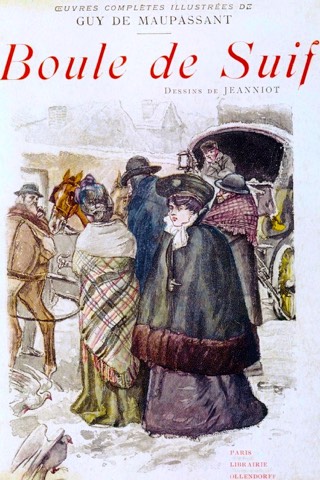
Boule de Suif
Guy de Maupassant · 1880 · ~10,500 words · level B2 · in English: Ball of Fat
During the Franco-Prussian War, a coach of respectable citizens flees occupied Rouen together with a prostitute nicknamed Boule de Suif, and their gratitude to her does not last. The story that made Maupassant famous.
Bel-Ami
Guy de Maupassant · 1885 · Chapter 1, ~5,000 words · level B2
Georges Duroy, a penniless former soldier, arrives in Paris and climbs through journalism and the beds of well-connected women. Maupassant’s novel of ambition.
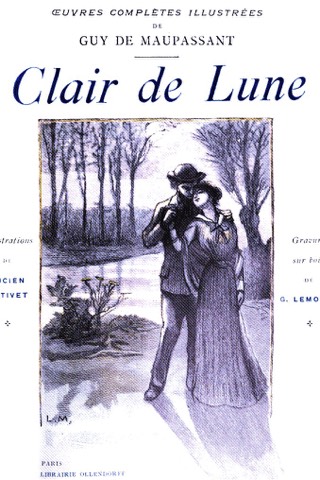
Clair de lune
Guy de Maupassant · 1884 · ~24,500 words · level B2 · in English: Moonlight
Three stories from Maupassant’s collection: “Clair de lune”, in which a priest who distrusts women sets out to catch his niece with her lover, “Conte de Noël” and “Mademoiselle Cocotte”.