
L’Île mystérieuse in French, with English translation
Jules Verne · 1875 · Opening, ~673 words · level B2 · in English: The Mysterious Island
March 1865: a balloon is falling into the Pacific in a hurricane, and the five men in it throw out everything they have. They are escaped prisoners of the American Civil War, and they land on an island that is on no map.
Add the whole book to your wishlist Only the opening is ready so far. Free: the books readers ask for most are the next ones we prepare in full. Read the opening in Lexico.The opening, as you read it in Lexico
The first 650 words of the French text. Tap any sentence for its English translation, then any word for its meaning: that is what the app does on every page.
CHAPITRE I
CHAPTER I
«Remontons-nous?
Shall we go back up?
— Non! Au contraire! Nous descendons!
No! On the contrary! We are going down!
— Pis que cela, monsieur Cyrus! Nous tombons!
Worse than that, Mr. Cyrus! We are falling!
— Pour Dieu! Jetez du lest!
For God's sake! Throw out the ballast!
— Voilà le dernier sac vidé!
There goes the last bag, emptied!
— Le ballon se relève-t-il?
Is the balloon rising again?
— Non!
No!
— J'entends comme un clapotement de vagues!
I hear something like the lapping of waves!
— La mer est sous la nacelle!
The sea is under the basket!
— Elle ne doit pas être à cinq cents pieds de nous!»
It must not be five hundred feet from us!
Alors une voix puissante déchira l'air, et ces mots retentirent:
Then a powerful voice tore through the air, and these words rang out:
«Dehors tout ce qui pèse!... tout! et à la grâce de Dieu!»
"Throw out everything that weighs! ... everything! And leave it to the grace of God!"
Telles sont les paroles qui éclataient en l'air, au-dessus de ce vaste désert d'eau du Pacifique, vers quatre heures du soir, dans la journée du 23 mars 1865.
Such are the words that burst out into the air, above this vast desert of water of the Pacific, around four in the afternoon, on the day of 23 March 1865.
Personne n'a sans doute oublié le terrible coup de vent de nord- est qui se déchaîna au milieu de l'équinoxe de cette année, et pendant lequel le baromètre tomba à sept cent dix millimètres. Ce fut un ouragan, sans intermittence, qui dura du 18 au 26 mars. Les ravages qu'il produisit furent immenses en Amérique, en Europe, en Asie, sur une zone large de dix-huit cents milles, qui se dessinait obliquement à l'équateur, depuis le trente-cinquième parallèle nord jusqu'au quarantième parallèle sud!
No one has doubtless forgotten the terrible northeast gale that broke loose in the middle of this year's equinox, and during which the barometer fell to seven hundred and ten millimetres. It was a hurricane, without interruption, that lasted from the 18th to the 26th of March. The ravages it produced were immense in America, in Europe, and in Asia, over a zone eighteen hundred miles wide, which stretched obliquely across the equator, from the thirty-fifth parallel north to the fortieth parallel south!
Villes renversées, forêts déracinées, rivages dévastés par des montagnes d'eau qui se précipitaient comme des mascarets, navires jetés à la côte, que les relevés du Bureau-Veritas chiffrèrent par centaines, territoires entiers nivelés par des trombes qui broyaient tout sur leur passage, plusieurs milliers de personnes écrasées sur terre ou englouties en mer: tels furent les témoignages de sa fureur, qui furent laissés après lui par ce formidable ouragan. Il dépassait en désastres ceux qui ravagèrent si épouvantablement la Havane et la Guadeloupe, l'un le 25 octobre 1810, l'autre le 26 juillet 1825.
Cities overturned, forests uprooted, shores laid waste by mountains of water that rushed on like tidal bores, ships thrown onto the coast, which the Bureau-Veritas records counted by the hundred, entire territories levelled by waterspouts that crushed everything in their path, several thousand people crushed on land or swallowed up at sea: such were the testimonies of its fury, left behind by this formidable hurricane. It surpassed in disasters those which had so terribly ravaged Havana and Guadeloupe, the one on 25 October 1810, the other on 26 July 1825.
Or, au moment même où tant de catastrophes s'accomplissaient sur terre et sur mer, un drame, non moins saisissant, se jouait dans les airs bouleversés. En effet, un ballon, porté comme une boule au sommet d'une trombe, et pris dans le mouvement giratoire de la colonne d'air, parcourait l'espace avec une vitesse de quatre- vingt-dix milles à l'heure, en tournant sur lui-même, comme s'il eût été saisi par quelque maelström aérien. Au-dessous de l'appendice inférieur de ce ballon oscillait une nacelle, qui contenait cinq passagers, à peine visibles au milieu de ces épaisses vapeurs, mêlées d'eau pulvérisée, qui traînaient jusqu'à la surface de l'Océan.
Now, at the very moment when so many catastrophes were taking place on land and on sea, a drama, no less gripping, was unfolding in the upturned skies. Indeed, a balloon, carried like a ball to the top of a waterspout and caught in the whirling motion of the column of air, was traversing space at a speed of ninety miles an hour, spinning on itself, as if it had been seized by some aerial maelstrom. Beneath the lower appendage of this balloon swung a gondola, which held five passengers, barely visible in the middle of these thick vapours, mixed with pulverised water, which trailed down to the surface of the Ocean.
D'où venait cet aérostat, véritable jouet de l'effroyable tempête? De quel point du monde s'était-il élancé? Il n'avait évidemment pas pu partir pendant l'ouragan. Or, l'ouragan durait depuis cinq jours déjà, et ses premiers symptômes s'étaient manifestés le 18. On eût donc été fondé à croire que ce ballon venait de très loin, car il n'avait pas dû franchir moins de deux mille milles par vingt-quatre heures? en tout cas, les passagers n'avaient pu avoir à leur disposition aucun moyen d'estimer la route parcourue depuis leur départ, car tout point de repère leur manquait. Il devait même se produire ce fait curieux, qu'emportés au milieu des violences de la tempête, ils ne les subissaient pas. Ils se déplaçaient, ils tournaient sur eux-mêmes sans rien ressentir de cette rotation, ni de leur déplacement dans le sens horizontal. Leurs yeux ne pouvaient percer l'épais brouillard qui s'amoncelait sous la nacelle. Autour d'eux, tout était brume. Telle était même l'opacité des nuages, qu'ils n'auraient pu dire s'il faisait jour ou nuit. Aucun reflet de lumière, aucun bruit des terres habitées, aucun mugissement de l'Océan n'avaient dû parvenir jusqu'à eux dans cette immensité obscure, tant qu'ils s'étaient tenus dans les hautes zones. Leur rapide descente avait seule pu leur donner connaissance des dangers qu'ils couraient au-dessus des flots.
Where had this airship come from, a true plaything of the frightful storm? From what point in the world had it launched itself? It obviously could not have left during the hurricane. Now, the hurricane had been lasting for five days already, and its first symptoms had appeared on the 18th. One would therefore have been justified in believing that this balloon had come from very far away, since it could not have covered fewer than two thousand miles in twenty-four hours; in any case, the passengers had had no means of estimating the route they had travelled since their departure, for every landmark was missing to them. Indeed there was even this curious fact: swept up in the violence of the storm, they did not feel it. They were moving, they were turning on themselves without feeling anything of this rotation, nor of their displacement in the horizontal direction. Their eyes could not pierce the thick fog that piled up beneath the gondola. Around them, everything was fog. Such was even the opacity of the clouds that they could not have said whether it was day or night. No reflection of light, no sound from the inhabited lands, no roar of the Ocean could have reached them in this dark immensity, so long as they had stayed in the high zones. Only their rapid descent had been able to give them knowledge of the dangers they were running above the waves.
Cependant, le ballon, délesté de lourds objets, tels que munitions, armes, provisions, s'était relevé dans les couches supérieures de l'atmosphère, à une hauteur de quatre mille cinq cents pieds. Les passagers, après avoir reconnu que la mer était sous la nacelle, trouvant les dangers moins redoutables en haut qu'en bas, n'avaient pas hésité à jeter par-dessus le bord les objets même les plus utiles, et ils cherchaient à ne plus rien perdre de ce fluide, de cette âme de leur appareil, qui les soutenait au-dessus de l'abîme.
However, the balloon, relieved of heavy objects such as ammunition, arms and provisions, had risen again into the upper layers of the atmosphere, to a height of four thousand five hundred feet. The passengers, after recognizing that the sea was beneath the gondola, finding the dangers less dreadful up high than down low, had not hesitated to throw overboard even the most useful objects, and they sought to lose nothing more of this fluid, this soul of their apparatus, which supported them above the abyss.
Want the rest? Lexico has the opening of L’Île mystérieuse so far. Add the book to your wishlist: the titles readers ask for most are the next ones we prepare in full, with the same sentence-by-sentence translation, every word explained in context, and flashcards from the words you look up.
Add the whole book to your wishlistWords from this passage
20 words from the opening worth knowing for the rest of the book, with the meaning they have here.
| French | English |
|---|---|
| le chapitre | chapter |
| remonter | to go up, to ride up |
| le contraire | contrary |
| descendre | to go down |
| le monsieur | Mr. |
| tomber | to fall |
| jeter | to throw |
| le lest | ballast |
| dernier | last |
| le sac | bag, sack |
| vidé | emptied |
| relever | to stand up |
| entendre | to hear |
| le clapotement | lapping of water |
| la vague | wave |
| le pied | foot (here: feet) |
| la voix | voice |
| puissant | powerful |
| déchirer | to tear |
| le mot | word |
More French books with English translation
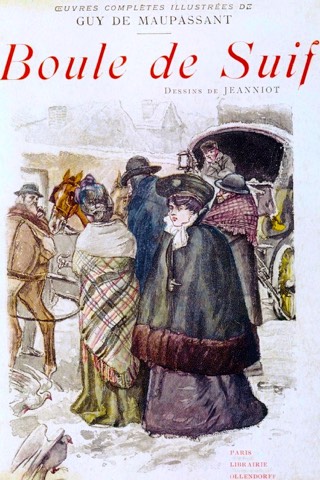
Boule de Suif
Guy de Maupassant · 1880 · ~10,500 words · level B2 · in English: Ball of Fat
During the Franco-Prussian War, a coach of respectable citizens flees occupied Rouen together with a prostitute nicknamed Boule de Suif, and their gratitude to her does not last. The story that made Maupassant famous.
Bel-Ami
Guy de Maupassant · 1885 · Chapter 1, ~5,000 words · level B2
Georges Duroy, a penniless former soldier, arrives in Paris and climbs through journalism and the beds of well-connected women. Maupassant’s novel of ambition.
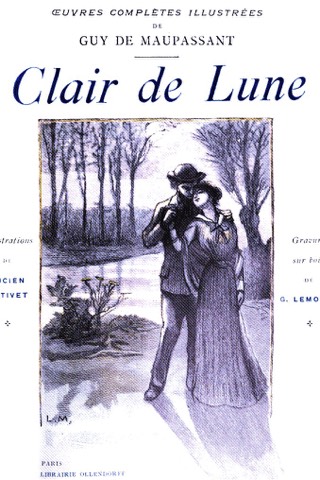
Clair de lune
Guy de Maupassant · 1884 · ~24,500 words · level B2 · in English: Moonlight
Three stories from Maupassant’s collection: “Clair de lune”, in which a priest who distrusts women sets out to catch his niece with her lover, “Conte de Noël” and “Mademoiselle Cocotte”.
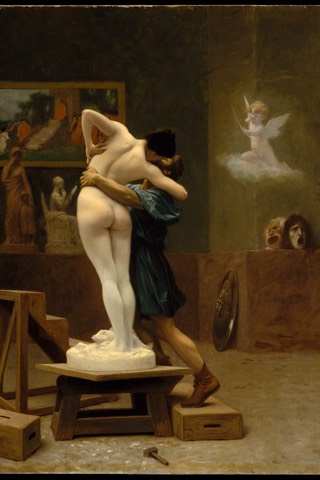
La Vénus d'Ille
Prosper Mérimée · 1837 · ~10,500 words · level B2–C1 · in English: The Venus of Ille
An antiquarian visits a village in Roussillon where a bronze Venus has just been dug up, a few days before his host’s son is to be married. Mérimée’s tale of the fantastic, told with a straight face.