Les Voisins: five easy French short stories for beginners
Five short stories written for learners · ~1,500 words · level A2 · in English: The Neighbours
Five short stories about the people of one building in Lyon: a retired trumpet player who likes quiet, a student who plays badly, a baker, a man who knows one sentence of French, and a cat with three names. Short sentences and everyday words. The first two stories are in the present tense, the others add the passé composé.
Start reading All five stories are on this page. No account needed.The five stories
Read each French sentence first and decide what you think it means, then tap it for the English translation and tap any word for its meaning.
- La nouvelle voisine
- Un croissant, s'il vous plaît
- Une mauvaise journée
- Le chat aux trois noms
- La fête des voisins
With a free Lexico account you read the same stories in the app and also get the full conjugation of every verb, flashcards from the words you tap, and your place kept in every book. Open Les Voisins in Lexico.
La nouvelle voisine
The New Neighbour
Paul a soixante-huit ans. Il habite seul au troisième étage d'un vieil immeuble, à Lyon. Il aime le calme. Le matin, il boit son café, il lit le journal et il parle un peu avec son chat, Moustache.
Paul is sixty-eight years old. He lives alone on the third floor of an old building in Lyon. He likes peace and quiet. In the morning, he drinks his coffee, reads the newspaper and talks a little with his cat, Moustache.
Un samedi, une jeune femme arrive dans l'immeuble. Elle porte des cartons, beaucoup de cartons. Elle monte et elle descend l'escalier dix fois. Paul regarde par la porte.
One Saturday, a young woman arrives in the building. She is carrying boxes, a lot of boxes. She goes up and down the stairs ten times. Paul watches through the door.
— Bonjour ! dit la jeune femme. Je m'appelle Inès. Je suis votre nouvelle voisine.
“Hello!” says the young woman. My name is Inès. I'm your new neighbour.
— Bonjour, dit Paul.
“Hello,” says Paul.
Et il ferme la porte.
And he closes the door.
Le soir, Paul est dans son fauteuil. Tout est calme. Et puis il entend un bruit. Ce n'est pas la télévision. Ce n'est pas la radio. C'est une trompette ! La nouvelle voisine joue de la trompette, et elle ne joue pas très bien.
In the evening, Paul is in his armchair. Everything is quiet. And then he hears a noise. It isn't the television. It isn't the radio. It's a trumpet! The new neighbour plays the trumpet, and she doesn't play very well.
Paul regarde Moustache. Moustache regarde Paul.
Paul looks at Moustache. Moustache looks at Paul.
— Ah non, dit Paul. Pas ça.
“Oh no,” says Paul. Not that.
Le dimanche, elle joue encore. Le lundi aussi. Le mardi, Paul ne peut pas lire son journal. Il se lève, il sort de chez lui et il frappe à la porte d'Inès.
On Sunday, she plays again. On Monday too. On Tuesday, Paul can't read his newspaper. He gets up, leaves his flat and knocks on Inès's door.
Inès ouvre. Elle a la trompette à la main.
Inès opens the door. She has the trumpet in her hand.
— Oh, pardon ! dit-elle. Je fais trop de bruit, c'est ça ?
“Oh, sorry!” she says. I'm making too much noise, is that it?
— Oui, dit Paul. Et vous jouez trop vite. Écoutez.
“Yes,” says Paul. And you play too fast. Listen.
Il prend la trompette et il joue. La musique est lente et très belle. Inès ouvre de grands yeux.
He takes the trumpet and plays. The music is slow and very beautiful. Inès's eyes open wide.
— Mais… vous êtes musicien ?
“But… are you a musician?”
— Je suis trompettiste, dit Paul. Enfin, je suis à la retraite maintenant.
“I'm a trumpet player,” says Paul. Well, I'm retired now.
— Alors vous pouvez m'aider ?
“Then can you help me?”
Paul ne répond pas tout de suite. Il regarde la trompette. Il ne joue plus depuis longtemps.
Paul doesn't answer right away. He looks at the trumpet. He hasn't played for a long time.
— Le jeudi, à cinq heures, dit-il enfin. Et vous apportez un gâteau.
“On Thursdays, at five o'clock,” he says at last. And you bring a cake.
Maintenant, tous les jeudis, il y a deux trompettes au troisième étage. Moustache, lui, dort chez la voisine du deuxième.
Now, every Thursday, there are two trumpets on the third floor. As for Moustache, he sleeps at the second-floor neighbour's.
Un croissant, s'il vous plaît
One Croissant, Please
En bas de l'immeuble, il y a une boulangerie. La boulangère s'appelle Madame Leroy. Elle se lève à quatre heures tous les matins et elle connaît tout le monde dans le quartier.
On the ground floor of the building, there is a bakery. The baker's name is Madame Leroy. She gets up at four o'clock every morning and she knows everyone in the neighbourhood.
Tous les matins, à sept heures, un homme entre dans la boulangerie. Il est grand, il porte un manteau gris et il sourit toujours.
Every morning, at seven o'clock, a man comes into the bakery. He is tall, he wears a grey coat and he always smiles.
— Un croissant, s'il vous plaît, dit-il.
“One croissant, please,” he says.
— Voilà, monsieur. Un euro vingt.
“Here you are, sir.” One euro twenty.
— Merci. Bonne journée !
“Thank you.” Have a good day!
C'est tout. Il ne dit jamais autre chose. Il paie, il sourit et il part.
That is all. He never says anything else. He pays, smiles and leaves.
Madame Leroy est curieuse. Qui est cet homme ? Où est-ce qu'il travaille ? Pourquoi est-ce qu'il mange un croissant tous les jours, et jamais un pain au chocolat ?
Madame Leroy is curious. Who is this man? Where does he work? Why does he eat a croissant every day, and never a pain au chocolat?
Un matin, elle a une idée.
One morning, she has an idea.
— Je n'ai plus de croissants, monsieur, dit-elle. Je suis désolée.
“I have no croissants left, sir,” she says. I'm sorry.
Ce n'est pas vrai. Il y a vingt croissants derrière elle.
It isn't true. There are twenty croissants behind her.
L'homme ne sourit plus. Il regarde le pain, les gâteaux, les tartes. Il ouvre la bouche, il ferme la bouche. Il devient tout rouge.
The man is no longer smiling. He looks at the bread, the cakes, the tarts. He opens his mouth, he closes his mouth. He turns bright red.
— Un croissant, s'il vous plaît, dit-il encore, très doucement.
“One croissant, please,” he says again, very softly.
Alors Madame Leroy comprend.
Then Madame Leroy understands.
— Vous ne parlez pas français ?
“You don't speak French?”
— Un peu, dit l'homme. Très peu. Je suis polonais. Je connais bien cette phrase. Les autres phrases, non.
“A little,” says the man. Very little. I'm Polish. I know this sentence well. The other sentences, no.
Madame Leroy rit. Elle prend un croissant et un pain au chocolat.
Madame Leroy laughs. She takes a croissant and a pain au chocolat.
— Ça, c'est un croissant. Et ça, c'est un pain au chocolat. Répétez !
“This is a croissant.” And this is a pain au chocolat. Repeat!
— Un pain au chocolat, dit l'homme.
“A pain au chocolat,” says the man.
— Très bien ! Demain, vous demandez une baguette.
“Very good!” Tomorrow, you ask for a baguette.
Six mois plus tard, l'homme parle bien français. Il s'appelle Tomasz et il connaît le nom de tous les gâteaux de la boulangerie. Le samedi, c'est lui qui vend le pain avec Madame Leroy.
Six months later, the man speaks French well. His name is Tomasz, and he knows the name of every cake in the bakery. On Saturdays, he is the one who sells the bread with Madame Leroy.
Une mauvaise journée
A Bad Day
Ce matin, le réveil d'Inès n'a pas sonné. À huit heures et quart, elle a ouvert les yeux. Son examen de musique était à neuf heures !
This morning, Inès's alarm clock didn't go off. At a quarter past eight, she opened her eyes. Her music exam was at nine o'clock!
Elle a sauté du lit. Elle n'a pas pris de douche. Elle n'a pas bu de café. Elle a mis un jean et un pull, elle a pris sa trompette et elle est sortie très vite.
She jumped out of bed. She didn't take a shower. She didn't drink any coffee. She put on jeans and a sweater, took her trumpet and went out very quickly.
Dans l'escalier, elle a vu Paul.
On the stairs, she saw Paul.
— Bonjour, Inès ! Vous allez où ?
“Hello, Inès!” Where are you going?
— Pas le temps ! J'ai un examen !
“No time!” I have an exam!
Dans la rue, il pleuvait. Inès n'avait pas de parapluie. Elle a couru jusqu'à l'arrêt de bus. Le bus est parti devant elle. Elle a attendu le bus suivant pendant quinze minutes, sous la pluie.
In the street, it was raining. Inès didn't have an umbrella. She ran to the bus stop. The bus left right in front of her. She waited fifteen minutes for the next bus, in the rain.
Dans le bus, elle a cherché son téléphone. Il n'était pas dans son sac. Il est resté sur la table de la cuisine.
On the bus, she looked for her phone. It wasn't in her bag. It was still on the kitchen table.
Elle est arrivée à l'école de musique à neuf heures dix, mouillée et fatiguée. Elle a poussé la porte. La porte était fermée. Elle a poussé encore. Rien.
She arrived at the music school at ten past nine, wet and tired. She pushed the door. The door was closed. She pushed again. Nothing.
Un vieux monsieur est passé avec son chien.
An old gentleman came by with his dog.
— L'école est fermée, mademoiselle.
“The school is closed, miss.”
— Fermée ? Mais j'ai un examen à neuf heures !
“Closed?” But I have an exam at nine o'clock!
— Aujourd'hui ? Un dimanche ?
“Today?” On a Sunday?
Inès a regardé le monsieur. Elle a regardé la porte. Elle a regardé le chien.
Inès looked at the gentleman. She looked at the door. She looked at the dog.
— On est dimanche ?
“It's Sunday?”
— Toute la journée, a dit le monsieur.
“All day,” said the gentleman.
Inès est rentrée chez elle à pied, lentement. Il ne pleuvait plus. Devant la boulangerie, Madame Leroy lui a donné un croissant.
Inès walked home, slowly. It was no longer raining. In front of the bakery, Madame Leroy gave her a croissant.
— Vous avez fait du sport ce matin ? a demandé la boulangère.
“Did you do some exercise this morning?” the baker asked.
— Oui, a dit Inès. Et demain, je recommence.
“Yes,” said Inès. And tomorrow, I'll do it again.
Le chat aux trois noms
The Cat with Three Names
Mercredi soir, Moustache n'est pas rentré. Paul a attendu jusqu'à minuit. Il a laissé la fenêtre ouverte. Le jeudi matin, toujours pas de chat.
On Wednesday evening, Moustache didn't come home. Paul waited until midnight. He left the window open. On Thursday morning, still no cat.
Paul était très inquiet. Il a pris une feuille et il a écrit trois phrases.
Paul was very worried. He took a sheet of paper and wrote three sentences.
« Chat perdu. Il est gris et gros, il a les yeux verts. Il s'appelle Moustache. »
“Lost cat. He is grey and fat, and he has green eyes. His name is Moustache.”
Il a mis la feuille sur la porte de l'immeuble.
He put the sheet on the door of the building.
À midi, quelqu'un a frappé chez lui. C'était Madame Costa, la voisine du deuxième étage.
At noon, someone knocked at his door. It was Madame Costa, the neighbour from the second floor.
— Monsieur Paul, j'ai lu votre feuille. Un gros chat gris, avec des yeux verts ?
“Monsieur Paul, I read your notice.” A fat grey cat, with green eyes?
— Oui ! Vous l'avez vu ?
“Yes!” Have you seen him?
— Je crois que oui. Mais il ne s'appelle pas Moustache. Il s'appelle Caramel, et c'est mon chat. Il mange chez moi tous les soirs depuis deux ans.
“I think so.” But his name isn't Moustache. His name is Caramel, and he's my cat. He has eaten at my place every evening for two years.
— Votre chat ? Mais non ! Il mange chez moi tous les matins !
“Your cat?” Of course not! He eats at my place every morning!
À ce moment-là, un petit garçon est monté dans l'escalier. C'était Malik, du premier étage. Il avait dix ans et un ballon sous le bras.
At that moment, a little boy came up the stairs. It was Malik, from the first floor. He was ten years old and had a ball under his arm.
— Vous cherchez Zidane ? a-t-il demandé.
“Are you looking for Zidane?” he asked.
— Qui ?
“Who?”
— Zidane. Mon chat. Le gros gris. Il dort sur mon lit tous les après-midi. Mais aujourd'hui, il n'est pas venu.
“Zidane.” My cat. The fat grey one. He sleeps on my bed every afternoon. But today, he didn't come.
Paul a regardé Madame Costa. Madame Costa a regardé Malik. Personne n'a parlé.
Paul looked at Madame Costa. Madame Costa looked at Malik. Nobody spoke.
— Trois repas par jour, a dit enfin Paul. Voilà pourquoi il est si gros.
“Three meals a day,” Paul said at last. That's why he is so fat.
Ils ont cherché ensemble : dans la cave, dans la cour, dans la rue. Rien. Et puis Malik a eu une idée. Il a couru jusqu'à la boulangerie.
They searched together: in the cellar, in the courtyard, in the street. Nothing. And then Malik had an idea. He ran to the bakery.
Le chat était là, derrière le comptoir, sur un sac de farine. Il dormait.
The cat was there, behind the counter, on a sack of flour. He was sleeping.
— Ah, vous connaissez Croissant ? a dit Tomasz.
“Oh, you know Croissant?” said Tomasz.
La fête des voisins
The Neighbours' Party
Samedi, c'est la fête des voisins. Madame Costa a tout organisé. Dans la cour de l'immeuble, il y a une grande table, des chaises et des lumières de toutes les couleurs.
On Saturday, it's the neighbours' party. Madame Costa has organised everything. In the courtyard of the building, there is a big table, chairs and lights of every colour.
Chacun apporte quelque chose. Madame Leroy a fait trois tartes aux pommes. Tomasz a préparé un plat polonais. Personne ne peut dire son nom, mais tout le monde en reprend. Malik a apporté son ballon. Ce n'est pas un plat, mais il est content.
Everyone brings something. Madame Leroy has made three apple tarts. Tomasz has prepared a Polish dish. Nobody can say its name, but everyone takes a second helping. Malik has brought his ball. It isn't a dish, but he is happy.
À huit heures, tout le monde est là. Tout le monde, sauf Paul.
At eight o'clock, everyone is there. Everyone except Paul.
— Il ne va pas venir, dit Madame Costa. Je lui ai demandé trois fois. Il n'aime pas les fêtes. Il dit qu'il y a trop de bruit.
“He isn't going to come,” says Madame Costa. I asked him three times. He doesn't like parties. He says there is too much noise.
— Il est à sa fenêtre, dit Malik. Il nous regarde.
“He is at his window,” says Malik. He is watching us.
Tout le monde lève la tête. Au troisième étage, un rideau bouge, et il n'y a plus personne.
Everyone looks up. On the third floor, a curtain moves, and there is no one there any more.
— J'ai une idée, dit Inès.
“I have an idea,” says Inès.
Elle va chercher sa trompette. Elle se met au milieu de la cour, sous la fenêtre de Paul, et elle commence à jouer. Elle joue fort. Elle joue vite. Elle joue très, très mal.
She goes to fetch her trumpet. She stands in the middle of the courtyard, under Paul's window, and starts to play. She plays loudly. She plays fast. She plays very, very badly.
Les voisins se regardent. Malik met les mains sur ses oreilles. Le chat part sous la table.
The neighbours look at each other. Malik puts his hands over his ears. The cat goes off under the table.
Une minute passe. Puis deux. Puis la fenêtre du troisième étage s'ouvre.
A minute passes. Then two. Then the third-floor window opens.
— Non, non, non ! crie Paul. Pas comme ça ! Qu'est-ce que je vous ai dit jeudi ?
“No, no, no!” shouts Paul. Not like that! What did I tell you on Thursday?
— Je ne sais plus ! répond Inès. Venez me montrer !
“I don't remember!” answers Inès. Come and show me!
La fenêtre se ferme. Dans la cour, tout le monde attend. Et puis la porte de l'immeuble s'ouvre. Paul est là, avec sa vieille trompette et sa plus belle chemise.
The window closes. In the courtyard, everyone waits. And then the door of the building opens. Paul is there, with his old trumpet and his best shirt.
Ce soir-là, ils ont joué jusqu'à onze heures. Paul a mangé deux parts de tarte et il a dansé avec Madame Costa. Le lendemain matin, il a parlé à Moustache.
That evening, they played until eleven o'clock. Paul ate two slices of tart and danced with Madame Costa. The next morning, he spoke to Moustache.
— Trop de bruit, a-t-il dit. Vraiment trop de bruit.
“Too much noise,” he said. Really too much noise.
Mais il souriait.
But he was smiling.
Keep the words you learned. Sign in to Lexico, free, and read Les Voisins there: you get the full conjugation of every verb, flashcards from the words you tap, and your place kept in every book. When these stories feel easy, the shelf has the next step.
Open in LexicoWords from these stories
20 words from the stories, with the meaning they have here.
| French | English |
|---|---|
| nouveau | new, novel |
| le voisin | neighbour, neighbor |
| soixante-huit | sixty-eight |
| l’an | year |
| habiter | to live |
| seul | alone |
| troisième | third |
| l’étage | floor, storey |
| vieux | old |
| l’immeuble | building |
| aimer | to like |
| le calme | quiet |
| boire | to drink |
| le café | coffee |
| lire | to read |
| le journal | newspaper |
| parler | to speak, talk |
| le samedi | Saturday |
| jeune | young |
| la femme | woman |
More French books with English translation
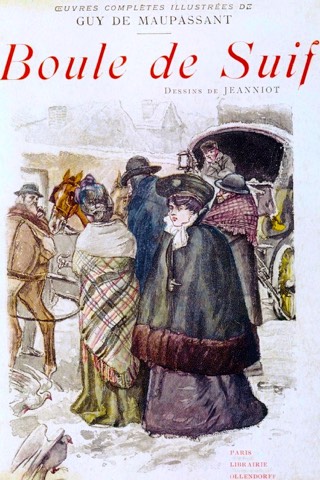
Boule de Suif
Guy de Maupassant · 1880 · ~13,500 words · level B2 · in English: Ball of Fat
During the Franco-Prussian War, a coach of respectable citizens flees occupied Rouen together with a prostitute nicknamed Boule de Suif, and their gratitude to her does not last. The story that made Maupassant famous.
Bel-Ami
Guy de Maupassant · 1885 · Chapter 1, ~5,000 words · level B2
Georges Duroy, a penniless former soldier, arrives in Paris and climbs through journalism and the beds of well-connected women. Maupassant’s novel of ambition.
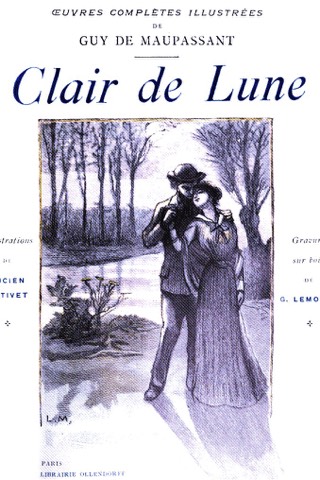
Clair de lune
Guy de Maupassant · 1884 · ~24,500 words · level B2 · in English: Moonlight
Three stories from Maupassant’s collection: “Clair de lune”, in which a priest who distrusts women sets out to catch his niece with her lover, “Conte de Noël” and “Mademoiselle Cocotte”.
La Vénus d'Ille
Prosper Mérimée · 1837 · ~10,500 words · level B2–C1 · in English: The Venus of Ille
An antiquarian visits a village in Roussillon where a bronze Venus has just been dug up, a few days before his host’s son is to be married. Mérimée’s tale of the fantastic, told with a straight face.