
Le Petit Chose in French, with English translation
Alphonse Daudet · 1868 · Opening, ~844 words · level B2
Daniel Eyssette is born in a town in the Languedoc on the day his father’s factory begins to fail, and is too small and too poor everywhere he goes afterwards. Daudet’s novel of his own childhood and youth.
Add the whole book to your wishlist Only the opening is ready so far. Free: the books readers ask for most are the next ones we prepare in full. Read the opening in Lexico.The opening, as you read it in Lexico
The first 850 words of the French text. Tap any sentence for its English translation, then any word for its meaning: that is what the app does on every page.
Je suis né le 13 mai 18..., dans une ville du Languedoc, où l'on trouve, comme dans toutes les villes du Midi, beaucoup de soleil, pas mal de poussière, un couvent de carmélites et deux ou trois monuments romains. Mon père, M. Eyssette, qui faisait à cette époque le commerce des foulards, avait, aux portes de la ville, une grande fabrique dans un pan de laquelle il s'était taillé une habitation commode, tout ombragée de platanes, et séparée des ateliers par un vaste jardin. C'est là que je suis venu au monde et que j'ai passé les premières, les seules bonnes années de ma vie. Aussi ma mémoire reconnaissante a-t-elle gardé du jardin, de la fabrique et des platanes un impérissable souvenir, et lorsque à la ruine de mes parents il m'a fallu me séparer de ces choses, je les ai positivement regrettées comme des êtres.
I was born on 13 May 18..., in a town in Languedoc, where one finds, as in all the towns of the Midi, a great deal of sunshine, quite a lot of dust, a convent of Carmelite nuns and two or three Roman monuments. My father, Mr Eyssette, who was in the scarf trade at that time, had, at the gates of the town, a large factory, in a corner of which he had carved out a comfortable house, completely shaded by plane trees, and separated from the workshops by a vast garden. It was there that I came into the world and that I spent the first, the only good years of my life. And so my grateful memory has kept an undying remembrance of the garden, the factory and the plane trees, and when, through my parents' ruin, I had to part from these things, I genuinely mourned them as if they were living beings.
Je dois dire, pour commencer, que ma naissance ne porta pas bonheur à la maison Eyssette. La vieille Annou, notre cuisinière, m'a souvent conté depuis comme quoi mon père, en voyage à ce moment, reçut en même temps la nouvelle de mon apparition dans le monde et celle de la disparition d'un de ses clients de Marseille, qui lui emportait plus de quarante mille francs; si bien que M. Eyssette, heureux et désolé du même coup, se demandait, comme l'autre, s'il devait pleurer pour la disparition du client de Marseille, ou rire pour l'heureuse arrivée du petit Daniel.... Il fallait pleurer, mon bon monsieur Eyssette, il fallait pleurer doublement.
I must say, to begin with, that my birth brought no luck to the Eyssette house. Our old cook Annou has often told me since how my father, travelling at the time, received the news of my appearance in the world and at the same time that of the disappearance of one of his Marseille clients, who owed him more than forty thousand francs; so that Mr Eyssette, happy and distressed all at once, wondered, like the other man, whether he should mourn the disappearance of the Marseille client or laugh at the happy arrival of little Daniel.... He ought to have mourned, my good Mr Eyssette, he ought to have mourned doubly.
C'est une vérité, je fus la mauvaise étoile de mes parents. Du jour de ma naissance, d'incroyables malheurs les assaillirent par vingt endroits. D'abord nous eûmes donc le client de Marseille, puis deux fois le feu dans la même année, puis la grève des ourdisseuses, puis notre brouille avec l'oncle Baptiste, puis un procès très coûteux avec nos marchands de couleurs, puis, enfin, la révolution de 18—, qui nous donna le coup de grâce.
It is the truth: I was my parents' bad luck. From the day of my birth, incredible misfortunes assailed them from twenty directions. First we had the Marseille client, then twice fire in the same year, then the warpers' strike, then our quarrel with uncle Baptiste, then a very costly lawsuit with our dye merchants, then, finally, the revolution of 18, which gave us the coup de grâce.
A partir de ce moment, la fabrique ne battit plus que d'une aile; petit à petit, les ateliers se vidèrent: chaque semaine un métier à bas, chaque mois une table d'impression de moins. C'était pitié de voir la vie s'en aller de notre maison comme d'un corps malade, lentement, tous les jours un peu. Une fois, on n'entra plus dans les salles du second. Une autre fois, la cour du fond fut condamnée. Cela dura ainsi pendant deux ans; pendant deux ans, la fabrique agonisa. Enfin, un jour, les ouvriers ne vinrent plus, la cloche des ateliers ne sonna pas, le puits à roue cessa de grincer, l'eau des grands bassins, dans lesquels on lavait les tissus, demeura immobile, et bientôt, dans toute la fabrique, il ne resta plus que M. et Mme Eyssette, la vieille Annou, mon frère Jacques et moi; puis, là-bas, dans le fond, pour garder les ateliers, le concierge Colombe et son fils le petit Rouget.
From that moment on the factory was going downhill; little by little the workshops emptied: each week one stocking loom fewer, each month one printing table fewer. It was painful to watch life drain out of our house like from a sick body, slowly, a little more every day. At one point we no longer entered the rooms on the second floor. Another time, the back courtyard was condemned. That went on like this for two years; for two years the factory languished. At last, one day, the workers no longer came, the bell of the workshops did not ring, the well-wheel stopped creaking, the water of the large basins, in which the cloth was washed, lay still, and soon, throughout the whole factory, there remained only Mr and Mrs Eyssette, old Annou, my brother Jacques and me; then, over there at the back, to keep watch over the workshops, the caretaker Colombe and his son little Rouget.
C'était fini, nous étions ruinés.
It was all over; we were ruined.
J'avais alors six ou sept ans. Comme j'étais très frêle et maladif, mes parents n'avaient pas voulu m'envoyer à l'école. Ma mère m'avait seulement appris à lire et à écrire, plus quelques mots d'espagnol et deux ou trois airs de guitare, à l'aide desquels on m'avait fait, dans la famille, une réputation de petit prodige. Grâce à ce système d'éducation, je ne bougeais jamais de chez nous, et je pus assister dans tous ses détails à l'agonie de la maison Eyssette. Ce spectacle me laissa froid, je l'avoue; même je trouvai à notre ruine ce côté très agréable que je pouvais gambader à ma guise par toute la fabrique, ce qui, du temps des ouvriers, ne m'était permis que le dimanche. Je disais gravement au petit Rouget: «Maintenant, la fabrique est à moi; on me l'a donnée pour jouer.» Et le petit Rouget me croyait. Il croyait tout ce que je lui disais, cet imbécile.
I was then six or seven years old. Since I was very frail and sickly, my parents had not wanted to send me to school. My mother had only taught me to read and write, plus a few words of Spanish and two or three guitar tunes, with the help of which I had been given, within the family, a reputation as a little prodigy. Thanks to this education system, I never left our house, and I was able to witness every detail of the agony of the Eyssette house. That sight left me cold, I admit; I even found in our ruin this very pleasant side: I could frolic about as I pleased throughout the whole factory, which, in the days of the workers, I was allowed to do only on Sundays. I gravely told little Rouget: "Now the factory is mine; they have given it to me to play with." And little Rouget believed me. He believed everything I told him, that idiot.
A la maison, par exemple, tout le monde ne prit pas notre débâcle aussi gaiement. Tout à coup, M. Eyssette devint terrible: c'était dans l'habitude une nature enflammée, violente, exagérée, aimant les cris, la casse et les tonnerres; au fond, un très excellent homme, ayant seulement la main leste, le verbe haut et l'impérieux besoin de donner le tremblement à tout ce qui l'entourait. La mauvaise fortune, au lieu de l'abattre, l'exaspéra. Du soir au matin, ce fut une colère formidable qui, ne sachant à qui s'en prendre, s'attaquait à tout, au soleil, au mistral, à Jacques, à la vieille Annou, à la Révolution, oh! surtout à la Révolution!... A entendre mon père, vous auriez juré que cette révolution de 18—, qui nous avait mis à mal, était spécialement dirigée contre nous. Aussi, je vous prie de croire que les révolutionnaires n'étaient pas en odeur de sainteté dans la maison Eyssette. Dieu sait ce que nous avons dit de ces messieurs dans ce temps-là.... Encore aujourd'hui, quand le vieux papa Eyssette (que Dieu me le conserve!) sent venir son accès de goutte, il s'étend péniblement sur sa chaise longue, et nous l'entendons dire: «Oh! ces révolutionnaires!...»
At home, for instance, not everyone took our collapse so cheerfully. All of a sudden Mr Eyssette turned terrible: he was usually a fiery, violent, exaggerated nature, fond of shouting, of breaking things and of thunderstorms; at heart a most excellent man, merely having a quick hand, a loud voice and the imperious need to make everything around him tremble. Bad fortune, instead of bringing him down, exasperated him. From morning till night, a tremendous rage, which, not knowing whom to blame, attacked everything: the sun, the mistral, Jacques, old Annou, the Revolution, oh! above all the Revolution!... Judging by what my father said, you would have sworn that this revolution of 18, which had ruined us, was specifically aimed against us. So, I beg you to believe that the revolutionaries were not in good odour in the Eyssette household. God knows what we said about those gentlemen in those days.... Still today, when old papa Eyssette (may God keep him for me!) feels his gout attack coming on, he stretches out painfully on his deckchair, and we hear him say: "Oh! those revolutionaries!..."
Want the rest? Lexico has the opening of Le Petit Chose so far. Add the book to your wishlist: the titles readers ask for most are the next ones we prepare in full, with the same sentence-by-sentence translation, every word explained in context, and flashcards from the words you look up.
Add the whole book to your wishlistWords from this passage
20 words from the opening worth knowing for the rest of the book, with the meaning they have here.
| French | English |
|---|---|
| naître | to be born |
| le mai | May |
| la ville | town, city |
| trouver | to find |
| le soleil | sun |
| la poussière | dust |
| le couvent | convent, nunnery |
| la carmélite | Carmelite nun |
| romain | Roman |
| le père | father |
| l’époque | time |
| le commerce | commerce, trade |
| le foulard | headscarf (here: scarves) |
| la porte | gate |
| grand | large |
| le pan | corner |
| tailler | to cut |
| l’habitation | house |
| commode | comfortable |
| ombrager | to shade |
More French books with English translation
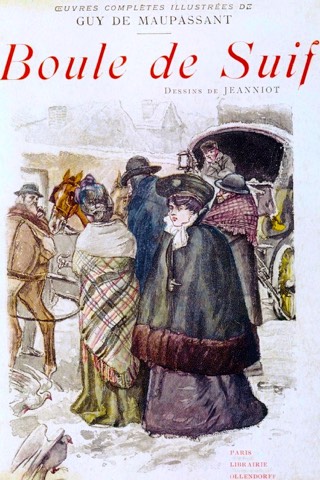
Boule de Suif
Guy de Maupassant · 1880 · ~10,500 words · level B2 · in English: Ball of Fat
During the Franco-Prussian War, a coach of respectable citizens flees occupied Rouen together with a prostitute nicknamed Boule de Suif, and their gratitude to her does not last. The story that made Maupassant famous.
Bel-Ami
Guy de Maupassant · 1885 · Chapter 1, ~5,000 words · level B2
Georges Duroy, a penniless former soldier, arrives in Paris and climbs through journalism and the beds of well-connected women. Maupassant’s novel of ambition.
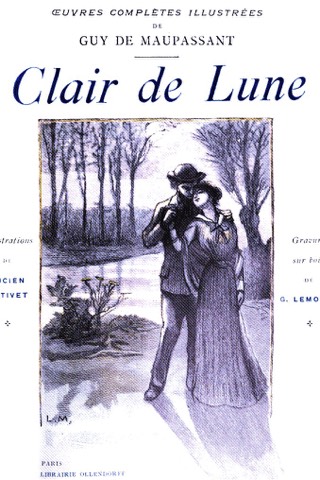
Clair de lune
Guy de Maupassant · 1884 · ~24,500 words · level B2 · in English: Moonlight
Three stories from Maupassant’s collection: “Clair de lune”, in which a priest who distrusts women sets out to catch his niece with her lover, “Conte de Noël” and “Mademoiselle Cocotte”.
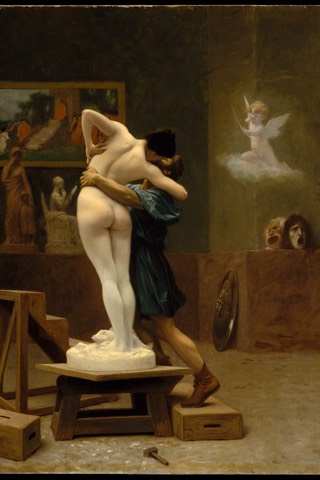
La Vénus d'Ille
Prosper Mérimée · 1837 · ~10,500 words · level B2–C1 · in English: The Venus of Ille
An antiquarian visits a village in Roussillon where a bronze Venus has just been dug up, a few days before his host’s son is to be married. Mérimée’s tale of the fantastic, told with a straight face.