Le Horla in French, with English translation
Guy de Maupassant · 1887 · Opening, ~680 words · level B2
A man living contentedly by the Seine begins a diary on a perfect May day. Entry by entry he comes to believe that an invisible being is living in his house and feeding on him. Maupassant’s most famous tale of the fantastic.
Add the whole book to your wishlist Only the opening is ready so far. Free: the books readers ask for most are the next ones we prepare in full. Read the opening in Lexico.The opening, as you read it in Lexico
The first 700 words of the French text. Tap any sentence for its English translation, then any word for its meaning: that is what the app does on every page.
J'ai passé toute la matinée étendu sur l'herbe, devant ma maison, sous l'énorme platane qui la couvre, l'abrite et l'ombrage tout entière. J'aime ce pays, et j'aime y vivre parce que j'y ai mes racines, ces profondes et délicates racines, qui attachent un homme à la terre où sont nés et morts ses aïeux, qui l'attachent à ce qu'on pense et à ce qu'on mange, aux usages comme aux nourritures, aux locutions locales, aux intonations des paysans, aux odeurs du sol, des villages et de l'air lui-même.
I spent the whole morning stretched out on the grass, in front of my house, under the huge plane tree that covers it, shelters it, and shades it entirely. I love this country, and I love living here because I have my roots here, those deep and delicate roots that attach a man to the earth where his ancestors were born and died, that attach him to what one thinks and what one eats, to customs as well as foods, to local expressions, to the intonations of the peasants, to the smells of the soil, the villages, and the air itself.
J'aime ma maison où j'ai grandi. De mes fenêtres, je vois la Seine qui coule, le long de mon jardin, derrière la route, presque chez moi, la grande et large Seine, qui va de Rouen au Havre, couverte de bateaux qui passent.
I love my house where I grew up. From my windows I see the Seine flowing past my garden, along the road, almost at my door, the big, wide Seine, which runs from Rouen to Le Havre, covered with passing boats.
A gauche, là-bas, Rouen, la vaste ville aux toits bleus, sous le peuple pointu des clochers gothiques. Ils sont innombrables, frêles ou larges, dominés par la flèche de fonte de la cathédrale, et pleins de cloches qui sonnent dans l'air bleu des belles matinées, jetant jusqu'à moi leur doux et lointain bourdonnement de fer, leur chant d'airain que la brise m'apporte, tantôt plus fort et tantôt plus affaibli, suivant qu'elle s'éveille ou s'assoupit.
To the left, over there, Rouen, the vast city with blue roofs, beneath the forest of pointed Gothic steeples. They are countless, slender or broad, dominated by the cast-iron spire of the cathedral, and full of bells that ring in the blue air of fine mornings, sending up to me their soft, distant humming of iron, their bronze song that the breeze brings me, now louder and now fainter, depending on whether it wakes or dozes off.
Comme il faisait bon ce matin!
How pleasant it was this morning!
Vers onze heures, un long convoi de navires, traînés par un remorqueur, gros comme une mouche, et qui râlait de peine en vomissant une fumée épaisse, défila devant ma grille.
Around eleven o'clock a long convoy of ships, towed by a tug, as big as a fly and groaning with effort as it spewed thick smoke, filed past my gate.
Après deux goëlettes anglaises, dont le pavillon rouge ondoyait sur le ciel, venait un superbe trois-mats brésilien, tout blanc, admirablement propre et luisant. Je le saluai, je ne sais pourquoi, tant ce navire me fit plaisir à voir.
After two English schooners, whose red flag was fluttering against the sky, came a superb Brazilian three-master, all white, admirably clean and gleaming. I saluted it, I don't know why, so much did this ship please me to see.
12 mai. —J'ai un peu de fièvre depuis quelques jours; je me sens souffrant, ou plutôt je me sens triste.
12 May. I have had a bit of fever for a few days; I feel unwell, or rather I feel sad.
D'où viennent ces influences mystérieuses qui changent en découragement notre bonheur et notre confiance en détresse. On dirait que l'air, l'air invisible est plein d'inconnaissables Puissances, dont nous subissons les voisinages mystérieux. Je m'éveille plein de gaîté, avec des envies de chanter dans la gorge. —Pourquoi? —Je descends le long de l'eau; et soudain, après une courte promenade, je rentre désolé, comme si quelque malheur m'attendait chez moi. —Pourquoi? —Est-ce un frisson de froid qui, frôlant ma peau, a ébranlé mes nerfs et assombri mon âme? Est-ce la forme des nuages, ou la couleur du jour, la couleur des choses, si variable, qui, passant par mes yeux, a troublé ma pensée? Sait-on? Tout ce qui nous entoure, tout ce que nous voyons sans le regarder, tout ce que nous frôlons sans le connaître, tout ce que nous touchons sans le palper, tout ce que nous rencontrons sans le distinguer, a sur nous, sur nos organes et, par eux, sur nos idées, sur notre coeur lui-même, des effets rapides, surprenants et inexplicables?
Where do these mysterious influences come from that turn our happiness into discouragement and our confidence into distress? It seems that the air, the invisible air, is full of unknowable Powers, whose mysterious proximity we endure. I wake up full of cheerfulness, with the urge to sing in my throat. Why? I go down along the water; and suddenly, after a short walk, I come back home distressed, as if some misfortune were waiting for me at home. Why? Is it a shiver of cold that, brushing my skin, has shaken my nerves and darkened my soul? Is it the shape of the clouds, or the colour of the day, the colour of things, so changeable, which, passing through my eyes, has disturbed my thought? Who can tell? Everything around us, everything we see without looking at it, everything we brush against without knowing it, everything we touch without feeling it, everything we encounter without distinguishing it, has upon us, upon our organs and, through them, upon our ideas, upon our very heart, rapid, surprising and inexplicable effects?
Comme il est profond, ce mystère de l'Invisible! Nous ne le pouvons sonder avec nos sens misérables, avec nos yeux qui ne savent apercevoir ni le trop petit, ni le trop grand, ni le trop près, ni le trop loin, ni les habitants d'une étoile, ni les habitants d'une goutte d'eau... avec nos oreilles qui nous trompent, car elles nous transmettent les vibrations de l'air en notes sonores. Elles sont des fées qui font ce miracle de changer en bruit ce mouvement et par cette métamorphose donnent naissance à la musique, qui rend chantante l'agitation muette de la nature... avec notre odorat, plus faible que celui du chien... avec notre goût, qui peut à peine discerner l'âge d'un vin!
How profound is this mystery of the Invisible! We cannot fathom it with our wretched senses, with our eyes that cannot perceive either the too small, or the too large, or the too near, or the too far, nor the inhabitants of a star, nor the inhabitants of a drop of water... with our ears that deceive us, for they transmit to us the vibrations of the air as sound notes. They are fairies who work this miracle of turning this motion into noise, and through this metamorphosis give birth to music, which makes the silent agitation of nature sing... with our sense of smell, weaker than a dog's... with our taste, which can barely tell the age of a wine!
Ah! si nous avions d'autres organes qui accompliraient en notre faveur d'autres miracles, que de choses nous pourrions découvrir encore autour de nous!
Ah! If only we had other organs that would accomplish other miracles on our behalf, how many more things we could still discover around us!
16 mai. —Je suis malade, décidément! Je me portais si bien le mois dernier! J'ai la fièvre, une fièvre atroce, ou plutôt un énervement fiévreux, qui rend mon âme aussi souffrante que mon corps. J'ai sans cesse cette sensation affreuse d'un danger menaçant, cette appréhension d'un malheur qui vient ou de la mort qui approche, ce pressentiment qui est sans doute l'atteinte d'un mal encore inconnu, germant dans le sang et dans la chair.
16 May. I am definitely ill! I was so well last month! I have the fever, a terrible fever, or rather a feverish agitation, which makes my soul as sick as my body. I constantly have this dreadful sensation of a threatening danger, this apprehension of a misfortune that is coming, or of death that is approaching, this presentiment which is no doubt the onset of some still unknown illness, germinating in the blood and in the flesh.
Want the rest? Lexico has the opening of Le Horla so far. Add the book to your wishlist: the titles readers ask for most are the next ones we prepare in full, with the same sentence-by-sentence translation, every word explained in context, and flashcards from the words you look up.
Add the whole book to your wishlistWords from this passage
20 words from the opening worth knowing for the rest of the book, with the meaning they have here.
| French | English |
|---|---|
| passer | to pass, to spend |
| la matinée | morning |
| étendre | to stretch |
| l’herbe | grass |
| la maison | house |
| énorme | enormous, huge |
| le platane | plane tree |
| couvrir | to cover |
| abriter | to shelter, to harbour |
| ombrager | to shade |
| entier | whole |
| aimer | to love |
| le pays | country |
| vivre | to live |
| la racine | root |
| profond | deep |
| délicat | delicate |
| attacher | to attach |
| l’homme | man |
| la terre | earth |
More French books with English translation
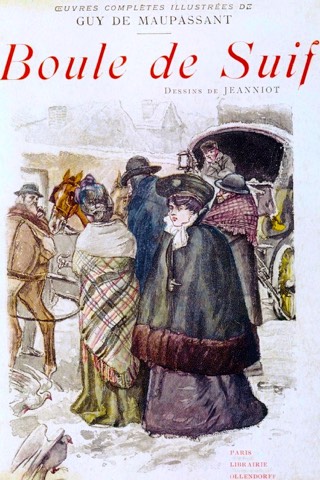
Boule de Suif
Guy de Maupassant · 1880 · ~10,500 words · level B2 · in English: Ball of Fat
During the Franco-Prussian War, a coach of respectable citizens flees occupied Rouen together with a prostitute nicknamed Boule de Suif, and their gratitude to her does not last. The story that made Maupassant famous.
Bel-Ami
Guy de Maupassant · 1885 · Chapter 1, ~5,000 words · level B2
Georges Duroy, a penniless former soldier, arrives in Paris and climbs through journalism and the beds of well-connected women. Maupassant’s novel of ambition.
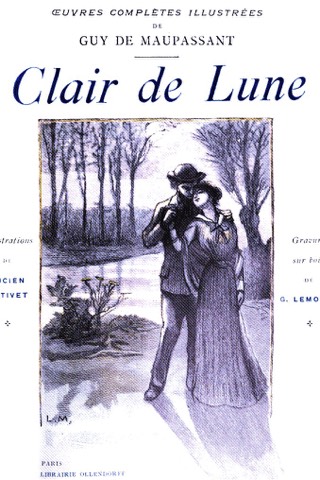
Clair de lune
Guy de Maupassant · 1884 · ~24,500 words · level B2 · in English: Moonlight
Three stories from Maupassant’s collection: “Clair de lune”, in which a priest who distrusts women sets out to catch his niece with her lover, “Conte de Noël” and “Mademoiselle Cocotte”.
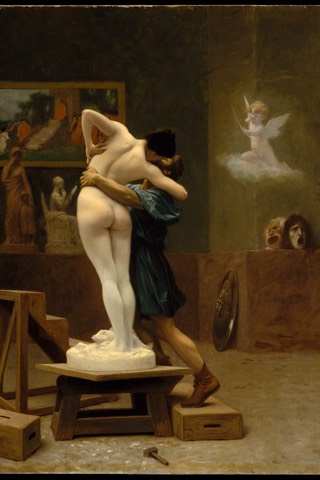
La Vénus d'Ille
Prosper Mérimée · 1837 · ~10,500 words · level B2–C1 · in English: The Venus of Ille
An antiquarian visits a village in Roussillon where a bronze Venus has just been dug up, a few days before his host’s son is to be married. Mérimée’s tale of the fantastic, told with a straight face.