Candide in French, with English translation
Voltaire · 1759 · Chapter 1, ~771 words · level B2
Candide grows up in a Westphalian castle, taught that all is for the best in the best of all possible worlds, until a kiss behind a screen gets him thrown out into it. Voltaire’s short, fast satire.
Add the whole book to your wishlist Only chapter 1 is ready so far. Free: the books readers ask for most are the next ones we prepare in full. Read chapter 1 in Lexico.The opening, as you read it in Lexico
The first 750 words of the French text. Tap any sentence for its English translation, then any word for its meaning: that is what the app does on every page.
Il y avait en Vestphalie, dans le château de M. le baron de Thunder-ten-tronckh, un jeune garçon à qui la nature avait donné les moeurs les plus douces. Sa physionomie annonçait son âme. Il avait le jugement assez droit, avec l’esprit le plus simple; c’est, je crois, pour cette raison qu’on le nommait Candide. Les anciens domestiques de la maison soupçonnaient qu’il était fils de la soeur de monsieur le baron et d’un bon et honnête gentilhomme du voisinage, que cette demoiselle ne voulut jamais épouser parce qu’il n’avait pu prouver que soixante et onze quartiers, et que le reste de son arbre généalogique avait été perdu par l’injure du temps.
There was once, in Westphalia, in the castle of Baron Thunder-ten-tronckh, a young boy to whom nature had given the gentlest manners. His face announced his soul. He had a fairly upright judgment and the simplest mind; it is, I believe, for this reason that they called him Candide. The old servants of the house suspected that he was the son of the baron's sister and of a good and honest gentleman of the neighborhood, whom this lady never wanted to marry because he could not prove more than seventy-one quarterings, and that the rest of his family tree had been lost through the injury of time.
Monsieur le baron était un des plus puissants seigneurs de la Westphalie, car son château avait une porte et des fenêtres. Sa grande salle même était ornée d’une tapisserie. Tous les chiens de ses basses-cours composaient une meute dans le besoin; ses palefreniers étaient ses piqueurs; le vicaire du village était son grand-aumônier. Ils l’appelaient tous monseigneur, et ils riaient quand il fesait des contes.
The baron was one of the most powerful lords of Westphalia, for his castle had a door and windows. Even his great hall was adorned with a tapestry. All the dogs in his farmyards made up a pack when needed; his grooms were his huntsmen; the village vicar was his grand almoner. They all called him "my lord," and they laughed when he told stories.
Madame la baronne, qui pesait environ trois cent cinquante livres, s’attirait par là une très grande considération, et fesait les honneurs de la maison avec une dignité qui la rendait encore plus respectable. Sa fille Cunégonde, âgée de dix-sept ans, était haute en couleur, fraîche, grasse, appétissante. Le fils du baron paraissait en tout digne de son père. Le précepteur Pangloss était l’oracle de la maison, et le petit Candide écoutait ses leçons avec toute la bonne foi de son âge et de son caractère.
Madam the baroness, who weighed about three hundred and fifty pounds, thereby gained great esteem, and did the honors of the house with a dignity that made her even more respectable. His daughter Cunégonde, seventeen years old, was high-colored, fresh, plump, appetizing. The baron's son seemed in every way worthy of his father. The tutor Pangloss was the oracle of the house, and little Candide listened to his lessons with all the good faith of his age and character.
Pangloss enseignait la métaphysico-théologo-cosmolonigologie. Il prouvait admirablement qu’il n’y a point d’effet sans cause, et que, dans ce meilleur des mondes possibles, le château de monseigneur le baron était le plus beau des châteaux, et madame la meilleure des baronnes possibles.
Pangloss taught metaphysico-theologo-cosmolonigology. He proved admirably that there is no effect without a cause, and that, in this best of all possible worlds, the castle of my lord the baron was the finest of castles, and my lady the best of possible baronesses.
Il est démontré, disait-il, que les choses ne peuvent être autrement; car tout étant fait pour une fin, tout est nécessairement pour la meilleure fin. Remarquez bien que les nez ont été faits pour porter des lunettes; aussi avons-nous des lunettes. Les jambes sont visiblement instituées pour être chaussées, et nous avons des chausses. Les pierres ont été formées pour être taillées et pour en faire des châteaux; aussi monseigneur a un très beau château: le plus grand baron de la province doit être le mieux logé; et les cochons étant faits pour être mangés, nous mangeons du porc toute l’année: par conséquent, ceux qui ont avancé que tout est bien ont dit une sottise; il fallait dire que tout est au mieux.
It is demonstrated, he said, that things cannot be otherwise; for, everything being made for an end, everything is necessarily for the best end. Notice well that noses were made to carry spectacles; that is why we have spectacles. Legs are visibly made to be shod, and we have stockings. Stones were formed to be cut and to make castles; so my lord has a very fine castle: the greatest baron in the province must be the best housed; and since pigs were made to be eaten, we eat pork all year round; therefore, those who claimed that all is well have said a foolish thing; one should have said that all is for the best.
Candide écoutait attentivement, et croyait innocemment; car il trouvait mademoiselle Cunégonde extrêmement belle, quoiqu’il ne prît jamais la hardiesse de le lui dire. Il concluait qu’après le bonheur d’être né baron de Thunder-ten-tronckh, le second degré de bonheur était d’être mademoiselle Cunégonde; le troisième, de la voir tous les jours; et le quatrième, d’entendre maître Pangloss, le plus grand philosophe de la province, et par conséquent de toute la terre.
Candide listened attentively and believed innocently; for he found Mademoiselle Cunégonde extremely beautiful, though he never dared to tell her so. He concluded that, after the happiness of being born a baron of Thunder-ten-tronckh, the second degree of happiness was being Mademoiselle Cunégonde; the third, seeing her every day; and the fourth, hearing Master Pangloss, the greatest philosopher of the province, and consequently of the whole world.
Un jour Cunégonde, en se promenant auprès du château, dans le petit bois qu’on appelait parc, vit entre des broussailles le docteur Pangloss qui donnait une leçon de physique expérimentale à la femme de chambre de sa mère, petite brune très jolie et très docile. Comme mademoiselle Cunégonde avait beaucoup de disposition pour les sciences, elle observa, sans souffler, les expériences réitérées dont elle fut témoin; elle vit clairement la raison suffisante du docteur, les effets et les causes, et s’en retourna tout agitée, toute pensive, toute remplie du désir d’être savante, songeant qu’elle pourrait bien être la raison suffisante du jeune Candide, qui pouvait aussi être la sienne.
One day Cunégonde, while walking near the castle, in the little wood that they called the park, saw, among the brambles, Doctor Pangloss giving a lesson in experimental physics to her mother's chambermaid, a small brunette very pretty and very docile. As Mademoiselle Cunégonde had a great aptitude for the sciences, she observed without breathing the repeated experiments of which she was a witness; she clearly saw the sufficient reason of the doctor, the effects and the causes, and went back all agitated, all pensive, all filled with the desire to be learned, thinking that she could well be the sufficient reason of young Candide, who could also be hers.
Elle rencontra Candide en revenant au château, et rougit: Candide rougit aussi. Elle lui dit bonjour d’une voix entrecoupée; et Candide lui parla sans savoir ce qu’il disait. Le lendemain, après le dîner, comme on sortait de table, Cunégonde et Candide se trouvèrent derrière un paravent; Cunégonde laissa tomber son mouchoir, Candide le ramassa; elle lui prit innocemment la main; le jeune homme baisa innocemment la main de la jeune demoiselle avec une vivacité, une sensibilité, une grâce toute particulière; leurs bouches se rencontrèrent, leurs yeux s’enflammèrent, leurs genoux tremblèrent, leurs mains s’égarèrent. M. le baron de Thunder-ten-tronckh passa auprès du paravent, et voyant cette cause et cet effet, chassa Candide du château à grands coups de pied dans le derrière. Cunégonde s’évanouit: elle fut souffletée par madame la baronne dès qu’elle fut revenue à elle-même; et tout fut consterné dans le plus beau et le plus agréable des châteaux possibles.
She met Candide on her way back to the castle, and blushed; Candide blushed too. She said hello to him in a broken voice; and Candide spoke to her without knowing what he was saying. The next day, after dinner, as they were leaving the table, Cunégonde and Candide found themselves behind a screen; Cunégonde let her handkerchief fall, Candide picked it up; she innocently took his hand; the young man innocently kissed the hand of the young lady with a vivacity, a sensitivity, a grace quite particular; their mouths met, their eyes flashed, their knees trembled, their hands wandered. Mr. Baron Thunder-ten-tronckh passed near the screen, and seeing this cause and this effect, drove Candide out of the castle with great kicks of the foot in the backside. Cunégonde fainted: she was slapped by my lady the baroness as soon as she came back to herself; and everything was dismayed in the finest and most pleasant of possible castles.
Want the rest? Lexico has chapter 1 of Candide so far. Add the book to your wishlist: the titles readers ask for most are the next ones we prepare in full, with the same sentence-by-sentence translation, every word explained in context, and flashcards from the words you look up.
Add the whole book to your wishlistWords from this passage
20 words from the opening worth knowing for the rest of the book, with the meaning they have here.
| French | English |
|---|---|
| le monsieur | mister, sir (here: mr.) |
| jeune | young |
| le garçon | boy |
| donner | to give |
| la moeurs | manners |
| doux | gentlest |
| la physionomie | face, physiognomy |
| annoncer | to announce |
| l’âme | soul |
| le jugement | judgment |
| droit | upright |
| l’esprit | mind |
| simple | simple, uncompounded |
| croire | to believe |
| la raison | reason |
| nommer | to be called, to call oneself |
| ancien | old, former |
| le domestique | servant |
| la maison | house |
| soupçonner | to suspect |
More French books with English translation
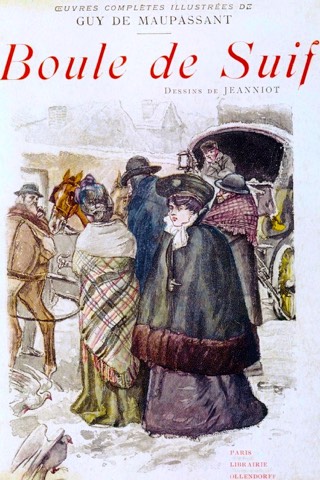
Boule de Suif
Guy de Maupassant · 1880 · ~10,500 words · level B2 · in English: Ball of Fat
During the Franco-Prussian War, a coach of respectable citizens flees occupied Rouen together with a prostitute nicknamed Boule de Suif, and their gratitude to her does not last. The story that made Maupassant famous.
Bel-Ami
Guy de Maupassant · 1885 · Chapter 1, ~5,000 words · level B2
Georges Duroy, a penniless former soldier, arrives in Paris and climbs through journalism and the beds of well-connected women. Maupassant’s novel of ambition.
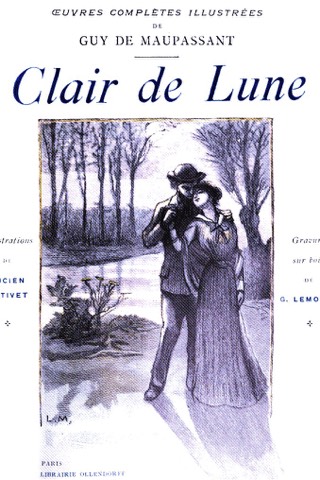
Clair de lune
Guy de Maupassant · 1884 · ~24,500 words · level B2 · in English: Moonlight
Three stories from Maupassant’s collection: “Clair de lune”, in which a priest who distrusts women sets out to catch his niece with her lover, “Conte de Noël” and “Mademoiselle Cocotte”.
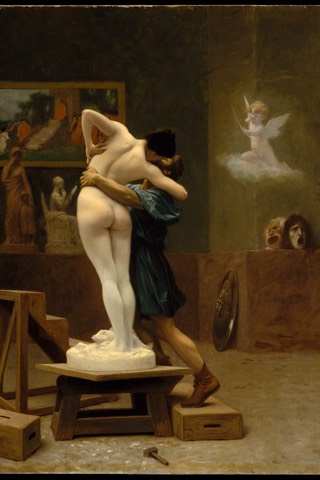
La Vénus d'Ille
Prosper Mérimée · 1837 · ~10,500 words · level B2–C1 · in English: The Venus of Ille
An antiquarian visits a village in Roussillon where a bronze Venus has just been dug up, a few days before his host’s son is to be married. Mérimée’s tale of the fantastic, told with a straight face.