Also sprach Zarathustra in German, with English translation
Friedrich Nietzsche · 1883 · The first section, ~258 words · level C1 · in English: Thus Spoke Zarathustra
After ten years alone in the mountains, Zarathustra goes down to mankind to teach what he has learned. Nietzsche’s philosophical poem in prose, in short sections.
Add the whole book to your wishlist Only the first section is ready so far. Free: the books readers ask for most are the next ones we prepare in full. Read the first section in Lexico.The opening, as you read it in Lexico
The first 250 words of the German text. Tap any sentence for its English translation, then any word for its meaning: that is what the app does on every page.
Als Zarathustra dreissig Jahr alt war, verliess er seine Heimat und den See seiner Heimat und ging in das Gebirge. Hier genoss er seines Geistes und seiner Einsamkeit und wurde dessen zehn Jahr nicht müde. Endlich aber verwandelte sich sein Herz,—und eines Morgens stand er mit der Morgenröthe auf, trat vor die Sonne hin und sprach zu ihr also:
When Zarathustra was thirty years old, he left his homeland and the lake of his homeland and went into the mountains. Here he enjoyed his spirit and his solitude, and for ten years he never grew weary of them. At last, however, his heart changed, and one morning he rose with the dawn, stepped before the sun and spoke to it thus:
„Du grosses Gestirn! Was wäre dein Glück, wenn du nicht Die hättest, welchen du leuchtest!
You great luminary! What would your happiness be if you did not have those to whom you shine!
Zehn Jahre kamst du hier herauf zu meiner Höhle: du würdest deines Lichtes und dieses Weges satt geworden sein, ohne mich, meinen Adler und meine Schlange.
For ten years you came up here to my cave: you would have grown weary of your light and this path, without me, my eagle and my serpent.
Aber wir warteten deiner an jedem Morgen, nahmen dir deinen Überfluss ab und segneten dich dafür.
But we waited for you every morning, took your surplus from you and blessed you for it.
Siehe! Ich bin meiner Weisheit überdrüssig, wie die Biene, die des Honigs zu viel gesammelt hat, ich bedarf der Hände, die sich ausstrecken.
Behold! I am weary of my wisdom, like the bee that has gathered too much honey; I need the hands that stretch out.
Ich möchte verschenken und austheilen, bis die Weisen unter den Menschen wieder einmal ihrer Thorheit und die Armen einmal ihres Reichthums froh geworden sind.
I want to give away and distribute, until the wise among men have once again become glad of their folly and the poor once glad of their wealth.
Dazu muss ich in die Tiefe steigen: wie du des Abends thust, wenn du hinter das Meer gehst und noch der Unterwelt Licht bringst, du überreiches Gestirn!
For this I must descend into the depths, as you do in the evening when you go behind the sea and still bring light to the underworld, you overflowing luminary!
Ich muss, gleich dir, untergehen, wie die Menschen es nennen, zu denen ich hinab will.
I must, like you, go under, as men call it, to those to whom I want to descend.
So segne mich denn, du ruhiges Auge, das ohne Neid auch ein allzugrosses Glück sehen kann!
So bless me, then, you calm eye, that can look without envy even on a far too great happiness!
Segne den Becher, welcher überfliessen will, dass das Wasser golden aus ihm fliesse und überallhin den Abglanz deiner Wonne trage!
Bless the cup that wants to overflow, so that the water may flow golden out of it and carry the reflection of your joy everywhere!
Siehe! Dieser Becher will wieder leer werden, und Zarathustra will wieder Mensch werden.
Behold! This cup wants to become empty again, and Zarathustra wants to become human again.
—Also begann Zarathustra’s Untergang.
Thus began Zarathustra’s downfall.
Want the rest? Lexico has the first section of Also sprach Zarathustra so far. Add the book to your wishlist: the titles readers ask for most are the next ones we prepare in full, with the same sentence-by-sentence translation, every word explained in context, and flashcards from the words you look up.
Add the whole book to your wishlistWords from this passage
20 words from the opening worth knowing for the rest of the book, with the meaning they have here.
| German | English |
|---|---|
| das Jahr | year |
| alt | old |
| verlassen | to leave, to abandon |
| die Heimat | home, home town |
| der See | lake |
| das Gebirge | group of mountains, mountain range |
| geniessen | to enjoy |
| der Geist | spirit |
| die Einsamkeit | solitude, lonesomeness |
| müde | tired |
| verwandeln | to turn, to change |
| das Herz | heart |
| der Morgen | morning |
| aufstehen | to rise up, to rebel |
| die Morgenröthe | redness of the sky at dawn |
| treten | to step |
| die Sonne | sun |
| sprechen | to speak |
| gross | great, grand |
| das Gestirn | luminary |
More German books with English translation
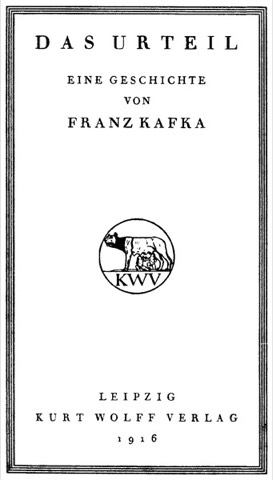
Das Urteil
Franz Kafka · 1913 · ~4,000 words · level B2 · in English: The Judgment
A young merchant writes to a friend in Russia about his engagement, then takes the letter to his father. Kafka wrote the story in a single night.
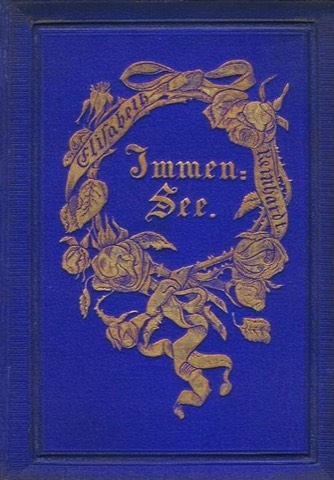
Immensee
Theodor Storm · 1849 · ~9,500 words · level B2
An old man sits in the dusk and remembers Elisabeth, the girl he grew up with and lost. Theodor Storm’s short, quiet novella, a German school classic.
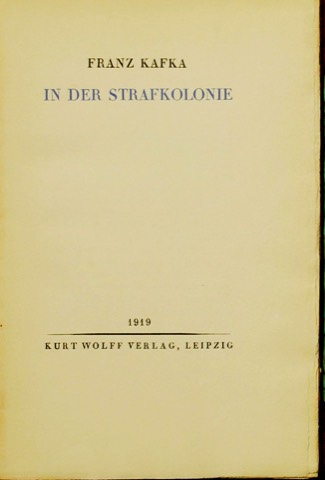
In der Strafkolonie
Franz Kafka · 1919 · ~10,500 words · level C1 · in English: In the Penal Colony
A traveller is invited to watch an execution by an elaborate machine that writes the sentence on the condemned man’s body. One of Kafka’s darkest stories.
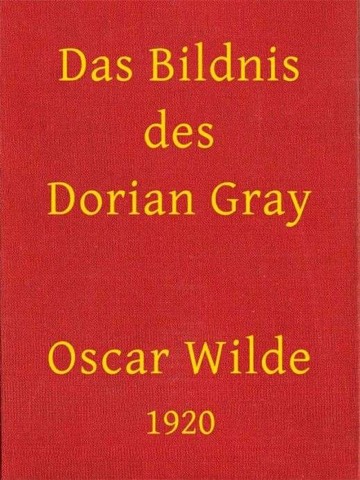
Das Bildnis des Dorian Gray
Oscar Wilde · 1890 · Preface and chapters 1–2, ~10,500 words · level B2–C1 · in English: The Picture of Dorian Gray
A young man stays beautiful while his portrait ages with every sin. Oscar Wilde’s only novel, in Richard Zoozmann’s German translation.